2026.09.09
 Industry News
Content
Marina staff pull the same kinds of failed lines out of the water every season: a polypropylene dockline that turned powdery after one summer of sun, or a nylon mooring rope that parted overnight at a sharp metal chock during a gale. Both failures were decided at the buying stage, not at the dock. The short answer for anyone equipping a boat right now is this: use nylon when the berth needs shock absorption, use polyester when low stretch and sunlight endurance matter more, and reserve polypropylene for jobs where flotation or price outweigh everything else. After the fibre choice, buy one diameter size larger than the minimum chart suggests, and protect every point where the line crosses metal, because mooring ropes for boats fail from chafe far more often than from overload.
A mooring line is not a static tie-down; it is a spring that works all night. When gusts hit a berthed hull or a wake rolls through a marina, the boat surges fore and aft and loads its lines in sharp cycles. A 12-metre yacht in 40-knot squalls can impose peak loads of several hundred kilograms on a single line, repeated hundreds of times in one night. The rope must absorb those peaks instead of passing them on as hammer blows to cleats, deck hardware, and pontoon fittings.
Alongside dynamic loading, four quieter factors decide how long the line lasts:
Nylon (polyamide) is the default dockline fibre for good reason. It offers the highest strength among commodity synthetics at a given diameter and stretches roughly 15 to 20 percent at working loads, so a snatched line decelerates the hull smoothly instead of jerking the cleats out of the deck. A 12 mm three-strand nylon line typically breaks in the region of 25 kN, which is why it remains the standard for bow lines, stern lines, and springs on sailing yachts and motorboats. Its weaknesses are wet-strength loss and gradual hardening with age.
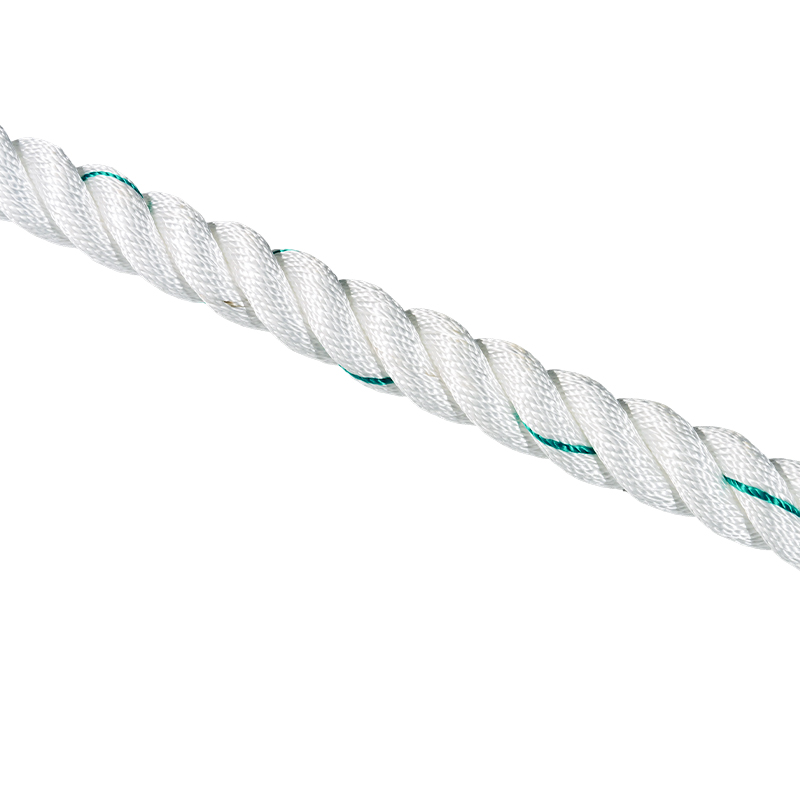
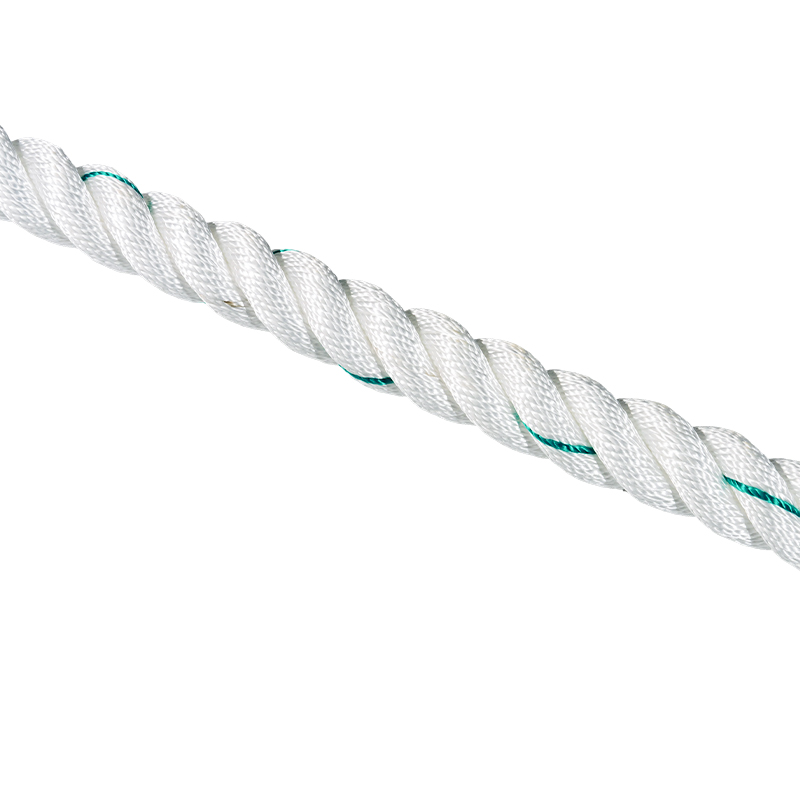
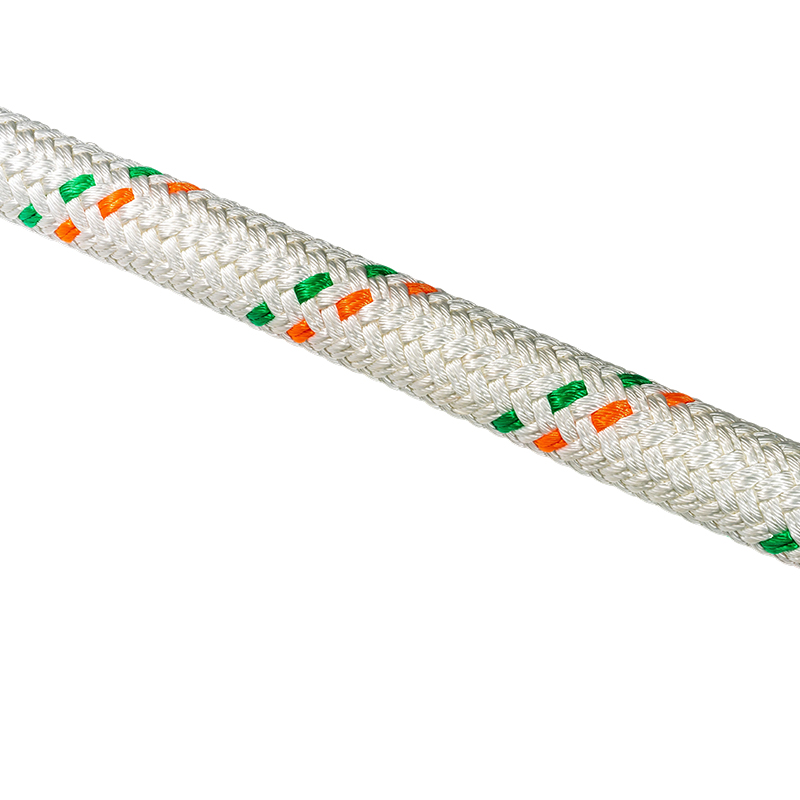 3-Strand Nylon Rope for DocklinesNylon is the standard dockline fibre for bow lines, stern lines, and springs because it stretches under load to absorb surge. This three-strand construction offers high strength and abrasion resistance at a working diameter.View Product →
Polyester gives up little strength to nylon but stretches about half as much or less, keeps its strength when wet, and resists ultraviolet light better than any other commodity fibre. That combination suits permanent moorings in sunny climates, tidal berths where lines stay taut under continuous load, and any position where stretch is less important than longevity. On a fully exposed berth with heavy surge, many owners still put nylon on the bow and stern and let polyester handle the springs.
Polypropylene floats and costs the least, which explains its shelf presence in every chandlery. As a primary mooring rope it is the weak link: the same 12 mm diameter that breaks near 25 kN in nylon may fail below 12 kN in polypropylene, and UV degradation can strip a large share of its strength in a single season. Treat it as a fender whip, a pickup line, or a dinghy painter, not as the line your boat sleeps on.
UHMWPE (ultra-high-molecular-weight polyethylene) sits in another class. It delivers several times the strength of nylon at equal diameter with almost no stretch, and it floats. Ports and ocean-engineering projects use it where a hawser must hold heavy tonnage without the recoil energy stored in a stretching nylon line. The trade-offs are price and a lower tolerance for sustained friction heat, so it rewards disciplined chafe management.
| Property | Nylon | Polyester | Polypropylene | UHMWPE |
|---|---|---|---|---|
| Strength at equal diameter | High | High | Low | Highest |
| Stretch at working load | High, 15-20% | Low, under 10% | Moderate | Very low |
| Wet strength | Loses 10-15% | Almost unchanged | Unchanged | Unchanged |
| UV resistance | Good | Excellent | Poor | Excellent |
| Floats in water | No | No | Yes | Yes |
| Best mooring role | Docklines, springs, snubbers | Permanent and tidal berths | Fender and pickup lines | Heavy hawsers, engineered moorings |
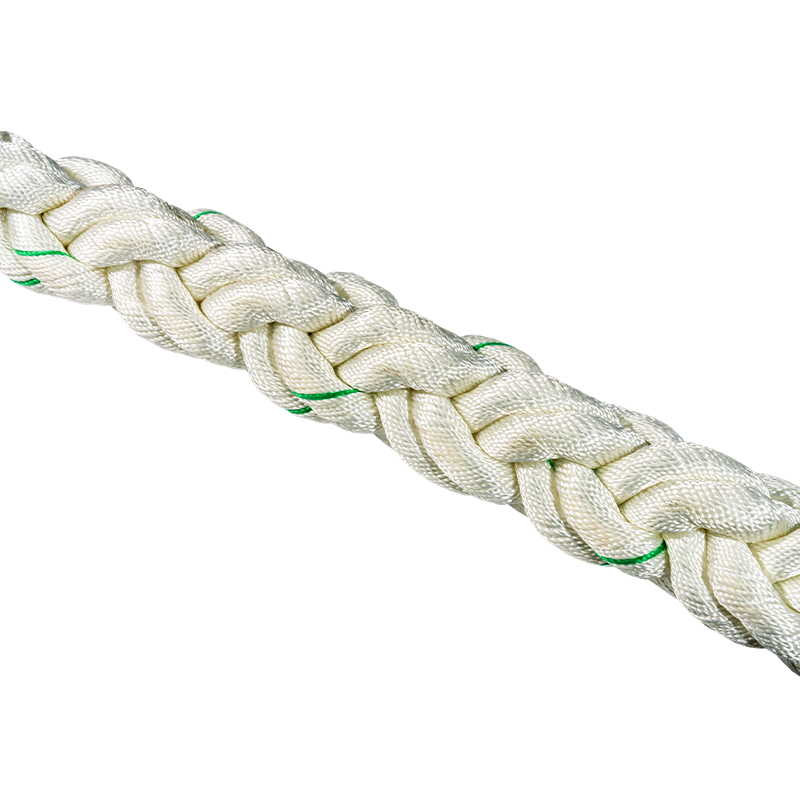
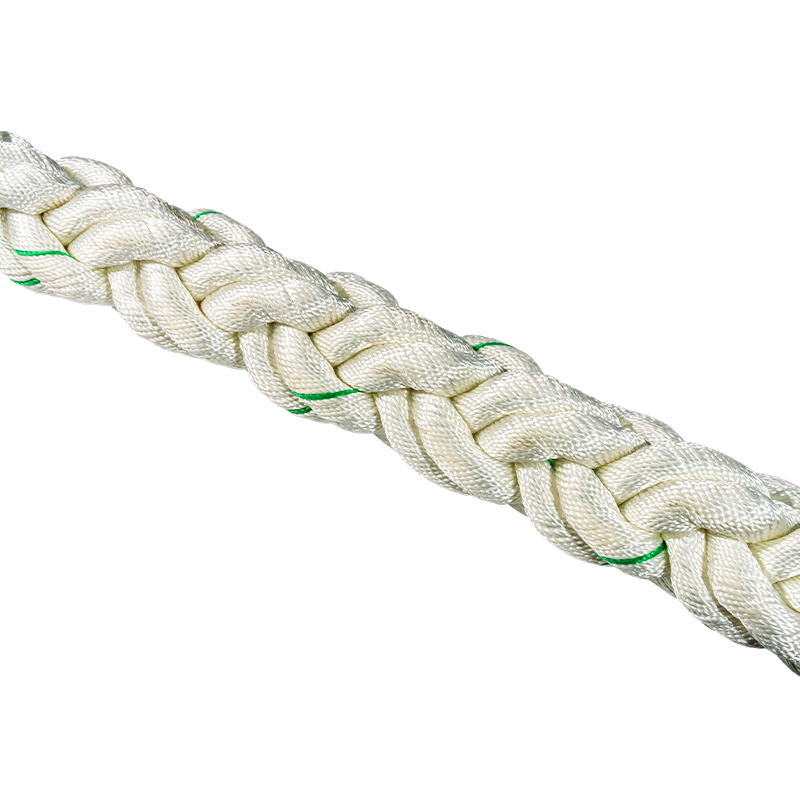
Fibre sets the ceiling; construction decides how much of it reaches the dock. Three-strand is the economical workhorse: it splices easily, stretches the most for a given material, and stays affordable in large diameters, at the cost of a tendency to kink and a rougher surface. Eight-strand plaited rope, the standard hawser construction on larger vessels, resists kinking and grips bitts and bollards securely. Twelve-strand single braid splices quickly and runs cleanly through fairleads and blocks, which is why it dominates modern large-diameter mooring programmes.
Double braid places a braided cover over a braided core and usually extracts the highest strength from a given diameter. The cover also shields the load-bearing core from exactly the abrasion that kills docklines. The costs are price and the fact that a cut cover can hide core damage, so inspections must look beyond the surface. For a closer look at how braid and twist behave under load, see our breakdown of braided versus twisted rope construction.
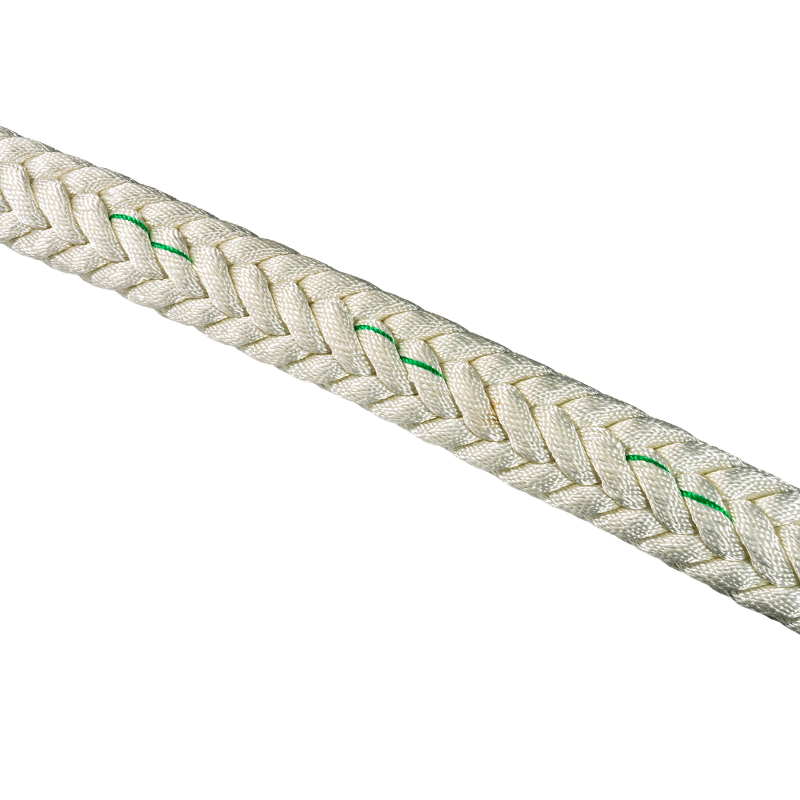 Nylon Double Braided Rope for MooringDouble braid extracts maximum strength from a given diameter, and its cover shields the load-bearing core from the chafe that typically kills docklines. A strong choice for demanding mooring applications.View Product →
Where a berth bakes in the sun and the line holds steady tension, a low-stretch polyester double braid keeps both its strength and its finish season after season, which is why marinas in strong-sunlight regions often specify it for permanent lines.
Polyester Double Braided Rope for Permanent LinesPolyester keeps its strength when wet, resists UV far better than nylon, and stretches little, making it well suited to permanent, taut moorings in sunny climates. Available in a range of diameters to match boat size.View Product →Diameter follows a simple rule of thumb: about one-eighth of an inch for every nine feet of boat length, rounding up. In metric terms that puts 10 mm lines under roughly 8-metre boats, 12 mm on boats up to about 12 metres, and 16 mm on yachts to around 18 metres. Larger vessels and commercial berths should move to 20 mm and above, sized against certified load data rather than a rule of thumb.
Lengths follow convention: bow and stern lines about two-thirds of the boat's overall length, and spring lines roughly equal to overall length. In tidal waters, make sure the spring still reaches and keeps a fair lead at low tide, because a bar-taut line absorbs almost nothing.
Keep peak expected loads at or below about one-fifth of the certified breaking strength. That margin sounds generous until you subtract wet-strength loss, years of UV and fatigue, and the chafe groove worn into one strand after a windy month. Extra diameter is the cheapest insurance in the whole mooring system.
Whether you are fitting out one yacht or tendering mooring equipment for a port project, a short checklist separates a rope that lasts from a claim waiting to happen:
Working with a manufacturer that runs its own fibre-to-finished-rope production, with diameters from 6 mm to 160 mm and structures from three-strand through forty-eight-strand braids, also shortens the path when you need a custom eye, a non-standard length, or a heavy hawser on short lead time.
Choose nylon for docklines that must absorb shock, polyester for low-stretch lines that live in the sun, polypropylene only where flotation or budget rules, and UHMWPE when the load justifies the price. Match construction to the berth: three-strand for value, eight- and twelve-strand for heavy hawsers, double braid when strength for diameter and abrasion protection matter most. Then size up, splice the eyes, guard the chafe points, and inspect the first metre past every chock every few weeks. Boats rarely part their moorings because a rope was too good; they part them because it was one size too small, one fibre too cheap, or one season past inspection.
Mar 12. 2026
What Are the Most Common Practical Uses for Polypropylene Rope?Core Applications of Polypropylene Rope in Marine and Water Activities In the modern rope industry, Polypropylene Rope (often referred to as “PP rope” or “floating rope”) has become an irreplaceable tool for water-based ...
Read MoreMar 12. 2026
Polyester Rope Guide: Types, Uses, Strength & Buying TipsPolyester rope is one of the most versatile and reliable cordage options available today. It outperforms nylon in UV resistance, holds its strength when wet, and stretches far less under load — making it the preferred c...
Read MoreMar 13. 2026
What is polyester rope and why is it the best choice for most applicationsWhat Is Polyester Rope? Understanding the Basics Polyester rope is one of the most widely used synthetic ropes in the world today, valued across industries for its exceptional balance of strength, durability, and resista...
Read More


 English
  русский
  Español
  عربى
عربى