2026.03.13
 Industry News
Content
Polyester rope is one of the most widely used synthetic ropes in the world today, valued across industries for its exceptional balance of strength, durability, and resistance to environmental degradation. Whether it appears on the deck of a sailing vessel, in an industrial rigging setup, or strung between two trees at a campsite, polyester rope has earned its reputation as a dependable, all-purpose cordage solution. To fully appreciate why polyester rope performs the way it does, it helps to understand what it is made of, how it is constructed, and what physical characteristics define it.
At its core, polyester rope is a synthetic fiber rope made from polyethylene terephthalate (PET) -- the same family of polymers used in plastic bottles and clothing fabric. The raw material begins as liquid polymer, which is extruded through spinnerets to form long, continuous filaments. These filaments are then drawn under tension to align the molecular chains, dramatically increasing the fiber's tensile strength and reducing its elongation rate.
The resulting polyester fibers are smooth, uniform, and highly resistant to moisture absorption. Unlike natural fiber ropes made from hemp, manila, or sisal, polyester rope does not swell, stiffen, or rot when exposed to water. This moisture-neutral behavior is one of the defining characteristics that makes polyester rope so attractive for marine, outdoor, and industrial use.
Polyester rope is typically produced from either multifilament polyester (many fine filaments twisted or braided together) or monofilament polyester (single, thicker strands). Multifilament construction is far more common in high-performance and general-use polyester rope because it produces a softer, more flexible, and stronger final product. Monofilament polyester tends to appear in utility and agricultural applications where stiffness and cost matter more than handling quality.
The manufacturing process for polyester rope follows a sequence of steps that transform raw PET fibers into finished cordage. Understanding this process helps explain why different constructions of polyester rope behave differently in the field.
Step 1 - Fiber production: PET chips are melted and extruded into fine filaments, which are then stretched to orient the polymer chains. This drawing process is critical -- it is what gives polyester fiber its characteristic low elongation and high tenacity.
Step 2 - Yarn formation: Individual filaments are grouped and twisted together to form yarns. The degree of twist applied at this stage influences how the finished polyester rope handles and wears.
Step 3 - Strand or braid construction: Yarns are assembled into strands (for twisted rope) or fed into braiding machines (for braided rope). The construction method chosen at this stage determines the rope's final geometry, surface texture, handling characteristics, and load distribution behavior.
Step 4 - Finishing: The completed polyester rope may be heat-set to stabilize the construction, coated with a protective finish to enhance abrasion resistance, or treated with UV inhibitors for outdoor applications.
The three primary construction types produced through this process are:
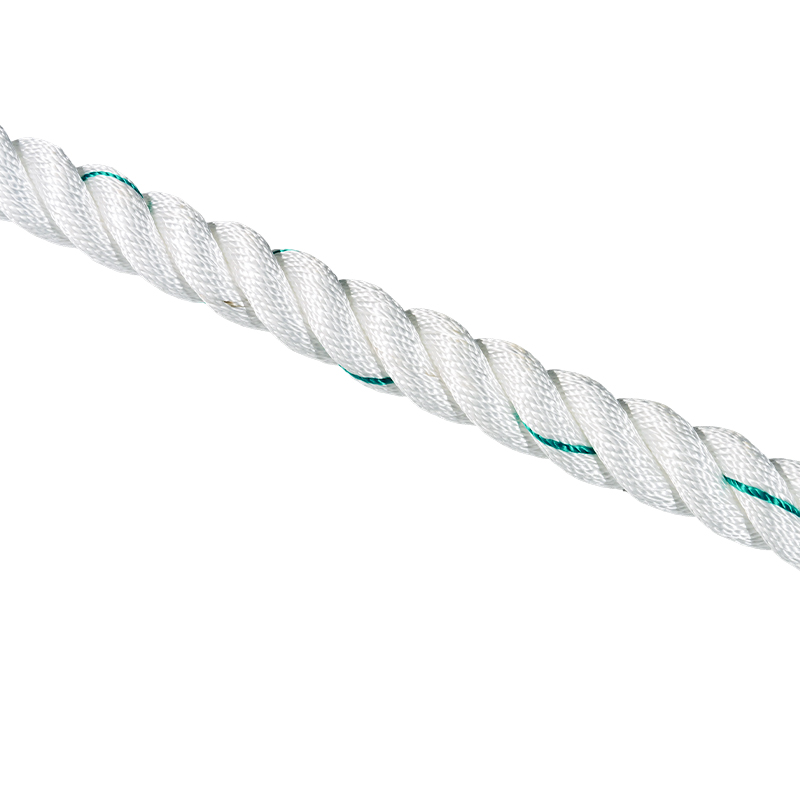
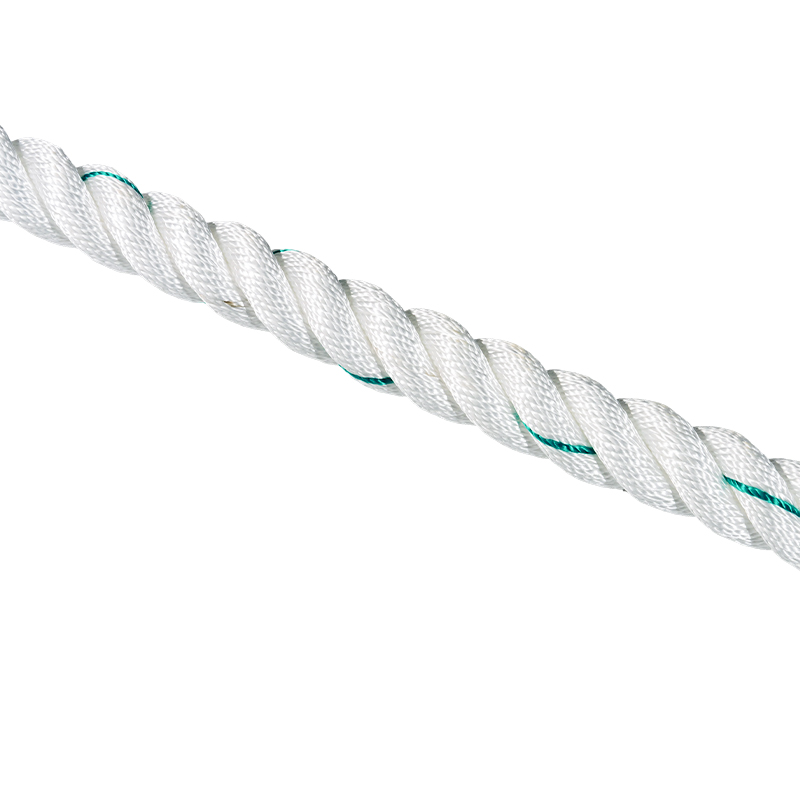
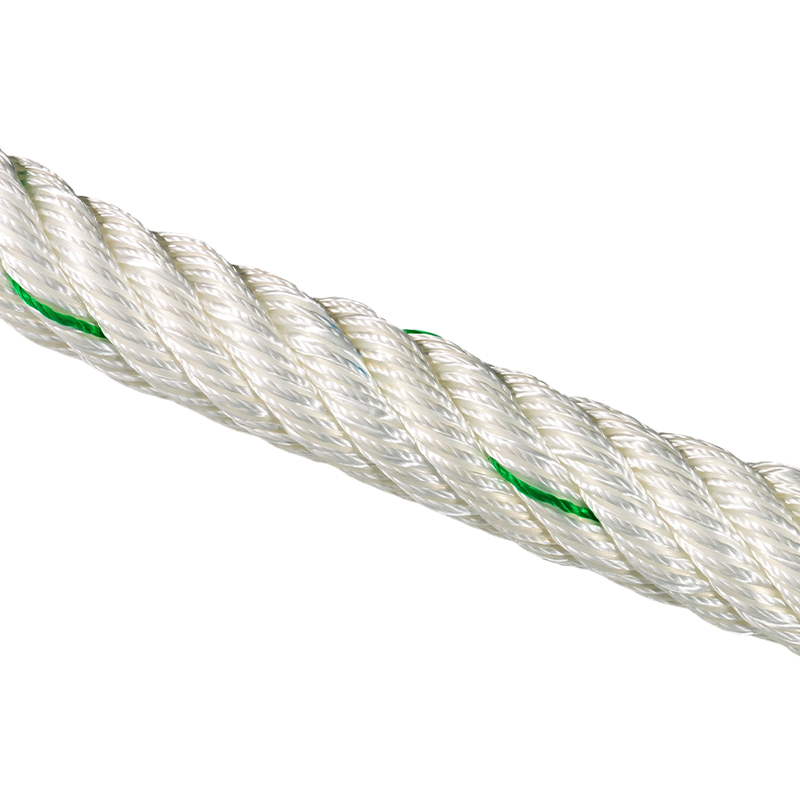
Twisted (3-strand) polyester rope -- formed by twisting three strands together in a helical pattern
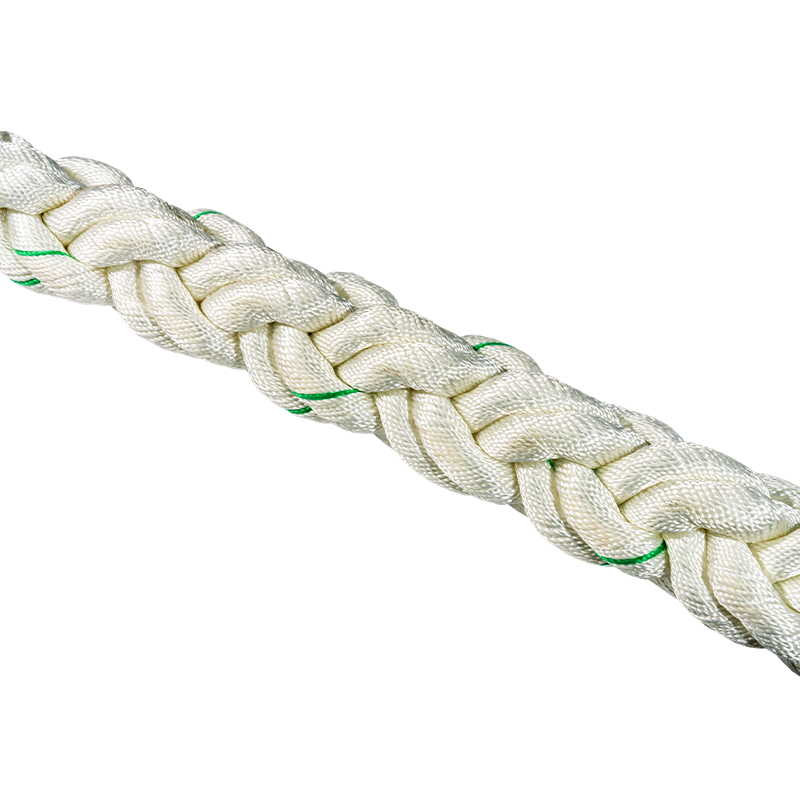
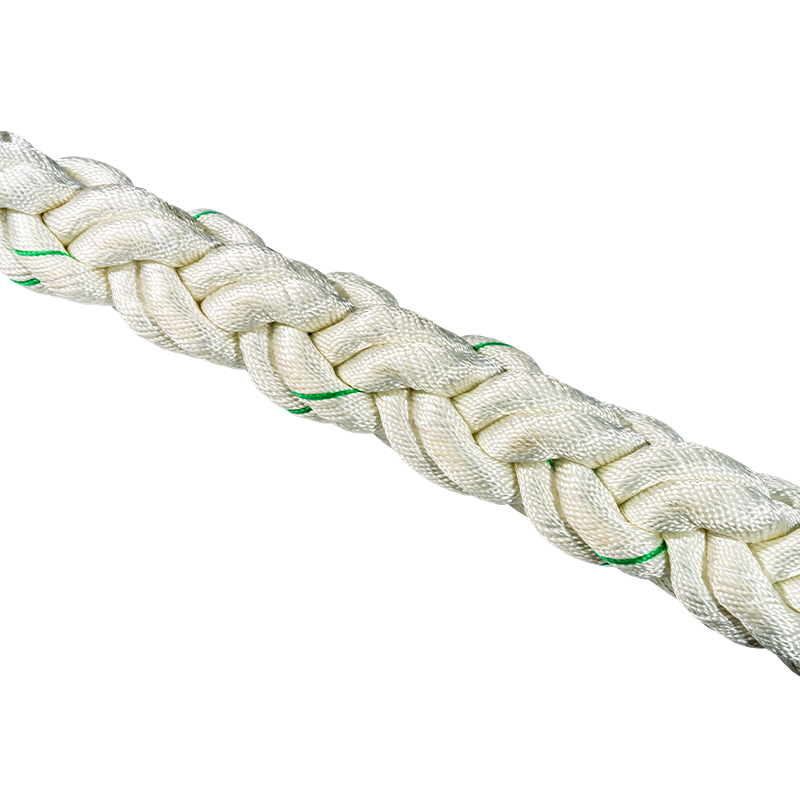
Braided polyester rope -- produced by interlacing multiple strands over and under one another in a diagonal pattern
Double braid polyester rope -- consisting of a braided core surrounded by a separately braided cover
Each construction yields a version of polyester rope with distinct properties suited to specific tasks.
The reason polyester rope occupies such a prominent place across so many industries comes down to a well-rounded set of physical properties that few other rope materials can match at the same price point.
Tensile Strength: Polyester rope offers high tensile strength relative to its weight. A standard 12mm double braid polyester rope, for example, typically carries a minimum breaking strength (MBS) in the range of 9,000-11,000 kg depending on construction quality and manufacturer standards. This level of strength makes polyester rope viable for demanding rigging, mooring, and load-securing tasks.
Low Elongation: One of the most operationally significant properties of polyester rope is its low elongation under load. Polyester rope typically stretches only 3-4% at 30% of its breaking load, compared to nylon rope, which can stretch 15-25% under similar conditions. This low-stretch behavior is critical in applications where precise load control is needed -- such as sailing halyards, crane rigging lines, and rescue systems -- because it means less energy is stored in the rope and position changes are minimal when tension is applied or released.
UV Resistance: Polyester rope exhibits excellent resistance to ultraviolet radiation, making it significantly more durable than polypropylene rope when used in long-term outdoor or marine environments. The molecular structure of PET absorbs and dissipates UV energy more effectively than polypropylene, resulting in a slower rate of fiber degradation.
Water and Moisture Behavior: Polyester rope absorbs very little water -- typically less than 0.4% by weight -- when submerged. This near-hydrophobic behavior means that polyester rope maintains virtually the same strength when wet as when dry. It does not swell, soften significantly, or change its handling characteristics after soaking.
Chemical Resistance: Polyester rope demonstrates good resistance to a wide range of chemicals encountered in industrial and marine environments. It resists dilute acids, bleach, most organic solvents, and common fuels. However, polyester rope is vulnerable to concentrated sulfuric acid and alkalis at elevated temperatures.
Abrasion Resistance: Polyester rope has good abrasion resistance, particularly in braided constructions where the outer cover bears the brunt of contact with surfaces, blocks, and hardware. While polyester rope does not match ultra-high-performance fibers in abrasion resistance, it significantly outperforms polypropylene and natural fiber ropes.
| Property | Typical Value for Polyester Rope |
|---|---|
| Fiber material | Polyethylene terephthalate (PET) |
| Elongation at 30% MBS | 3-4% |
| Water absorption | Less than 0.4% by weight |
| UV resistance | Excellent |
| Operating temperature range | -40°C to +120°C |
| Resistance to dilute acids | Good |
| Resistance to alkalis | Moderate |
| Abrasion resistance | Good |
| Floatation | Sinks (specific gravity approximately 1.38) |
| Melting point | Approximately 260°C |
While there are several synthetic rope materials available today -- nylon, polypropylene, HMPE, aramid -- polyester rope occupies a unique middle ground that makes it the default choice in a wide range of situations. It is not the strongest rope available, nor the lightest, nor the cheapest. But polyester rope consistently delivers a combination of attributes that no single competitor matches across all categories simultaneously.
Nylon is stronger and more elastic, making it better for shock-absorbing applications, but its high elongation and water absorption make it unsuitable where precision and consistency matter. Polypropylene is lighter and floats, but its UV degradation rate is far too rapid for long-term outdoor use. HMPE offers superior strength-to-weight ratio and near-zero stretch, but at a cost that is prohibitive for most standard applications.
Polyester rope, by contrast, is affordable, widely available, easy to handle, and reliable across a vast range of conditions. It is this comprehensive competence -- rather than any single standout property -- that explains why polyester rope remains the backbone of so many working rope applications around the world.
When selecting the right rope for a specific task, understanding how polyester rope compares to competing materials is essential. Each rope type carries its own set of strengths and limitations, and the wrong choice can result in equipment failure, safety risks, or unnecessary cost. This section provides a thorough, data-driven comparison between polyester rope and the four most commonly encountered alternatives: nylon rope, polypropylene rope, manila rope, and HMPE rope.
Nylon rope and polyester rope are the two dominant synthetic cordage materials, and they are frequently confused or treated as interchangeable. In reality, they behave quite differently under load and in environmental conditions, making each better suited to distinct applications.
The most fundamental difference lies in elongation. Nylon rope can stretch 15-25% under working loads, effectively acting as a shock absorber. This makes it highly effective for applications where sudden dynamic loads are common -- anchor rodes, tow lines, and dock lines in tidal conditions where a vessel surges repeatedly against its mooring. Polyester rope, with its 3-4% elongation, stores far less energy and transmits load changes more directly, which is precisely what is needed in halyards, control lines, and static rigging.
The second major distinction is water absorption. Nylon rope absorbs approximately 3-8% of its weight in water, which causes it to swell, lose up to 15% of its dry strength when wet, and become noticeably heavier and stiffer after prolonged submersion. Polyester rope absorbs less than 0.4% water, retains virtually all of its dry strength when wet, and handles almost identically whether dry or soaked. For any application involving prolonged water contact, polyester rope is the more predictable and reliable choice.
UV resistance also differentiates the two materials. Both nylon and polyester rope degrade under ultraviolet radiation, but polyester rope degrades at a significantly slower rate, making it the better long-term choice for outdoor and marine installations.
| Property | Polyester Rope | Nylon Rope |
|---|---|---|
| Elongation at working load | 3-4% | 15-25% |
| Water absorption | Less than 0.4% | 3-8% |
| Strength loss when wet | Negligible (less than 2%) | Up to 15% |
| UV resistance | Excellent | Good |
| Abrasion resistance | Good | Very Good |
| Shock load absorption | Low | High |
| Typical applications | Halyards, rigging, control lines | Anchor rodes, tow lines, dock lines |
| Relative cost | Moderate | Moderate-High |
Verdict: Choose polyester rope when low stretch, wet-strength retention, and UV stability are priorities. Choose nylon rope when shock load absorption is the primary requirement.
Polypropylene rope is often positioned as a budget-friendly alternative to polyester rope, and while it has certain advantages, its limitations are significant enough that the two should not be considered equivalent materials.
The single most important advantage polypropylene rope has over polyester rope is buoyancy. Polypropylene has a specific gravity of approximately 0.91, meaning it floats on water. This makes polypropylene rope the material of choice for throw lines, water rescue ropes, and any application where a floating rope is operationally necessary. Polyester rope, with a specific gravity of approximately 1.38, sinks -- a critical distinction in rescue and water-based applications.
However, polypropylene rope's UV resistance is poor. Extended exposure to sunlight causes rapid photooxidation of the polypropylene molecular chain, leading to significant strength loss, surface chalking, and brittleness. A polypropylene rope exposed to continuous outdoor conditions can lose 30-50% of its original breaking strength within a single year. Polyester rope, by contrast, is engineered to withstand prolonged UV exposure with minimal degradation, making it far superior for permanent outdoor installations.
Polypropylene rope also has lower tensile strength than polyester rope of the same diameter, a lower melting point (160-165°C vs. 260°C for polyester), and poorer abrasion resistance. It is softer and more prone to surface glazing when run over hardware.
| Property | Polyester Rope | Polypropylene Rope |
|---|---|---|
| Specific gravity | Approximately 1.38 (sinks) | Approximately 0.91 (floats) |
| UV resistance | Excellent | Poor |
| Elongation | 3-4% | 15-25% |
| Tensile strength (same diameter) | Higher | Lower |
| Melting point | Approximately 260°C | Approximately 160°C |
| Abrasion resistance | Good | Fair |
| Water absorption | Less than 0.4% | Nil |
| Long-term outdoor durability | Excellent | Poor-Fair |
| Relative cost | Moderate | Low |
Verdict: Choose polyester rope for any application requiring long-term outdoor durability, UV exposure tolerance, or higher strength. Choose polypropylene rope only when buoyancy or lowest possible cost is the overriding requirement.
Manila rope is a natural fiber rope made from the abaca plant and was historically the standard cordage material before synthetic ropes became widely available. Today, manila rope is still used in decorative, agricultural, and traditional maritime contexts, but it cannot match polyester rope in most performance categories.
The core weakness of manila rope is its response to moisture. When manila rope gets wet, it swells, becomes stiff, and loses a significant portion of its strength -- sometimes up to 30% of its dry breaking strength. Repeated wet/dry cycling accelerates internal fiber deterioration, meaning manila rope in a marine or outdoor environment has a very limited useful service life. Polyester rope, in the same environment, will outlast manila rope many times over with minimal maintenance.
UV resistance is another area where polyester rope holds a clear advantage. Manila rope exposed to prolonged sunlight becomes brittle, dry, and prone to surface cracking. Internal degradation from UV exposure can occur even without visible surface damage.
Manila rope does offer certain practical advantages. It has a natural texture that provides excellent grip, making it popular for climbing ropes, decorative knotwork, and playground equipment where the organic aesthetic is valued. It is also biodegradable, which matters in environmentally sensitive contexts. However, these advantages are specific and limited, and they do not offset manila rope's performance deficiencies in demanding working applications.
| Property | Polyester Rope | Manila Rope |
|---|---|---|
| Material origin | Synthetic (PET) | Natural (abaca plant) |
| Water resistance | Excellent | Poor |
| Strength loss when wet | Negligible | Up to 30% |
| UV resistance | Excellent | Poor |
| Rot and mildew resistance | Excellent | Poor |
| Abrasion resistance | Good | Fair |
| Biodegradability | No | Yes |
| Service life (outdoor) | Long (5-10+ years) | Short (1-3 years) |
| Relative cost | Moderate | Low-Moderate |
Verdict: Polyester rope is the superior working rope in virtually every performance category. Manila rope remains relevant for decorative use, traditional applications, and where biodegradability is a specific requirement.
High-modulus polyethylene (HMPE) rope represents the high-performance end of the synthetic rope market. A direct comparison with polyester rope reveals just how specialized HMPE is, and why polyester rope remains the practical choice for the vast majority of applications.
HMPE rope offers an extraordinary strength-to-weight ratio. It is approximately 8-10 times stronger than steel wire of the same weight, and roughly 2-4 times stronger than polyester rope of the same diameter. Its elongation is extremely low -- typically less than 1% at working load -- making it effectively a non-stretch rope. These properties make HMPE rope the material of choice in professional racing yacht rigging, deep-sea mooring systems, and high-load industrial applications where weight and stretch must be minimized at any cost.
However, HMPE rope has notable limitations that polyester rope does not share. Its UV resistance is moderate to poor without specialized coatings, meaning unprotected HMPE rope degrades faster in direct sunlight than polyester rope. HMPE rope also has a low melting point (approximately 130-150°C), making it vulnerable to heat generated by friction -- a critical consideration in high-speed applications running over winches and blocks. Polyester rope, with a melting point of approximately 260°C, tolerates friction heat far better.
The most significant barrier to HMPE rope adoption in standard applications is cost. HMPE rope typically costs 5-15 times more per meter than an equivalent polyester rope, placing it well outside the budget range of most commercial, agricultural, and recreational users.
| Property | Polyester Rope | HMPE Rope |
|---|---|---|
| Tensile strength (same diameter) | Good | Exceptional (2-4x polyester) |
| Elongation at working load | 3-4% | Less than 1% |
| Strength-to-weight ratio | Good | Outstanding |
| UV resistance | Excellent | Moderate (needs coating) |
| Melting point | Approximately 260°C | Approximately 130-150°C |
| Heat/friction resistance | Good | Poor (without sheath) |
| Abrasion resistance | Good | Moderate-Good |
| Floatation | Sinks | Floats |
| Relative cost | Moderate | Very High (5-15x polyester) |
Verdict: HMPE rope is the correct choice when maximum strength and minimum weight are non-negotiable requirements and budget is not a constraint. For the vast majority of working applications, polyester rope delivers exceptional performance at a fraction of the cost.
| Property | Polyester | Nylon | Polypropylene | Manila | HMPE |
|---|---|---|---|---|---|
| Elongation | 3-4% | 15-25% | 15-25% | 10-15% | Less than 1% |
| UV resistance | Excellent | Good | Poor | Poor | Moderate |
| Water absorption | Less than 0.4% | 3-8% | Nil | High | Nil |
| Wet strength retention | More than 98% | Approximately 85% | 100% | Approximately 70% | 100% |
| Floatation | Sinks | Sinks | Floats | Sinks | Floats |
| Abrasion resistance | Good | Very Good | Fair | Fair | Moderate |
| Heat/friction resistance | Good | Good | Fair | Fair | Poor |
| Rot/mildew resistance | Excellent | Good | Excellent | Poor | Excellent |
| Relative cost | Moderate | Moderate | Low | Low-Moderate | Very High |
| Typical service life (outdoor) | 5-10+ years | 3-7 years | 1-2 years | 1-3 years | 10+ years |
Not all polyester rope is built the same way. While the base material -- polyethylene terephthalate fiber -- remains consistent across products, the way those fibers are assembled into a finished rope has a profound effect on how that rope performs, handles, and wears over time. Understanding the four primary construction types of polyester rope allows buyers and end users to match the right product to the right application with confidence, rather than defaulting to whatever happens to be available.
Twisted polyester rope -- also called 3-strand polyester rope -- is the most traditional and widely recognized rope construction. It is formed by twisting three individual strands together in a helical pattern, with each strand itself composed of multiple yarns twisted in the opposite direction. This counter-twist arrangement is what gives 3-strand polyester rope its structural integrity and characteristic spiral appearance.
Twisted polyester rope is a workhorse construction. It is strong, affordable, and easy to work with using traditional rope-handling techniques. Because the strands are clearly visible and accessible, 3-strand polyester rope is the easiest construction to splice by hand -- a well-executed eye splice in 3-strand polyester rope retains approximately 95% of the rope's rated breaking strength, compared to the strength loss associated with knots.
The helical geometry of twisted polyester rope means it has a slight tendency to rotate under load, which can be a disadvantage in some lifting and rigging applications but is rarely a problem in general use. It also has slightly lower abrasion resistance than braided constructions because the ridges of the twist pattern present raised contact points against surfaces.
Typical Applications: General-purpose mooring and dock lines; agricultural and farm use (fencing, tying, securing loads); anchor rodes (in combination with chain); utility and construction site rigging; traditional maritime and decorative knotwork.
| Property | Twisted 3-Strand Polyester Rope |
|---|---|
| Construction | 3 twisted strands |
| Elongation at working load | 4-6% |
| Spliceability | Excellent |
| Torque under load | Moderate (slight rotation) |
| Abrasion resistance | Good |
| Relative cost | Lowest among polyester rope types |
| Handling feel | Firm, slightly stiff |
Double braid polyester rope -- sometimes called braid-on-braid -- is the most technically sophisticated and widely used construction for high-load and precision applications. It consists of two distinct braided components: a braided core that carries the primary load, and a separately braided cover that protects the core and contributes additional strength. The two components work together under tension, sharing the load in a way that produces excellent strength efficiency and handling characteristics.
Double braid polyester rope is significantly rounder, smoother, and more consistent in diameter than twisted rope. This smooth, round profile makes it ideal for use with winches, clutches, blocks, and other mechanical rope-handling equipment where surface consistency matters. The cover protects the load-bearing core from abrasion, UV exposure, and contamination, which extends the working life of the rope considerably in demanding environments.
The load-sharing between core and cover in double braid polyester rope also results in very low elongation -- typically 3-4% at working load -- and excellent resistance to kinking and hockling. Double braid polyester rope lies flat on a winch drum without the tendency to bury or override that affects some other constructions.
One important maintenance consideration is that the core of a double braid polyester rope is hidden inside the cover, making internal wear and damage harder to detect through visual inspection alone. Regular inspection by carefully sliding the cover along the core is recommended for ropes in critical applications.
Typical Applications: Sailing halyards and sheets; crane and rigging applications; industrial lifting and load control; rescue systems and safety lines; high-load mooring lines on commercial vessels.
| Property | Double Braid Polyester Rope |
|---|---|
| Construction | Braided core + braided cover |
| Elongation at working load | 3-4% |
| Spliceability | Good (requires skill) |
| Torque under load | Very low (torque-neutral) |
| Abrasion resistance | Very Good |
| Relative cost | Moderate-High |
| Handling feel | Soft, round, smooth |
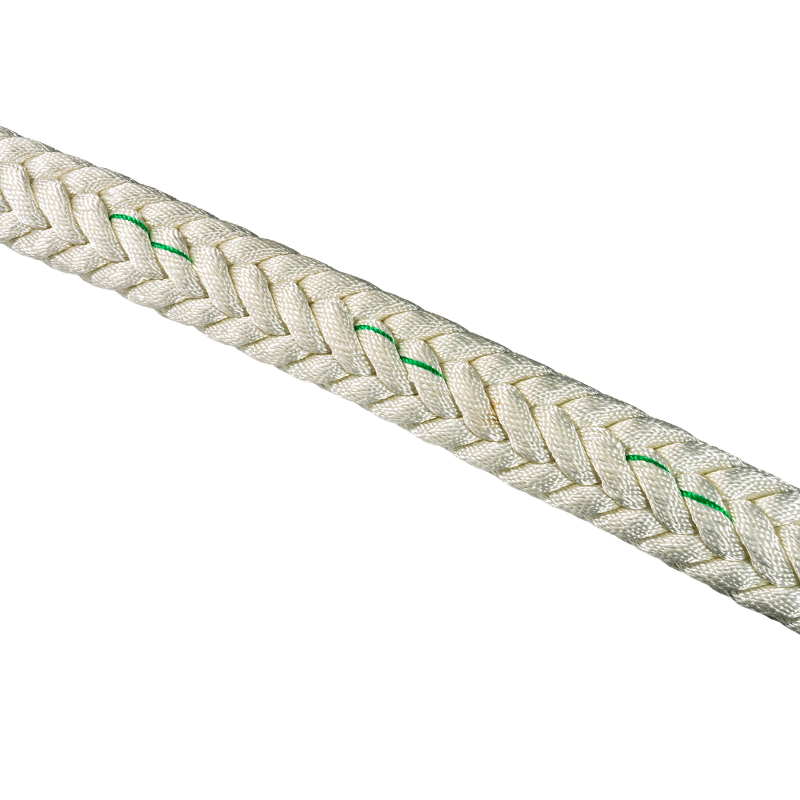
Solid braid polyester rope is constructed by interlacing strands in a tight, uniform pattern throughout the entire cross-section of the rope -- there is no separate core and cover, and no hollow center. Every strand contributes to both the structural integrity and the outer surface of the finished rope simultaneously.
The defining characteristic of solid braid polyester rope is its exceptionally smooth, consistent outer surface. Because every strand is interlaced throughout the full body of the rope, there are no prominent ridges or surface irregularities. This makes solid braid polyester rope the preferred choice for applications involving pulleys, blocks, and guides where surface smoothness minimizes friction and wear on both the rope and the hardware.
Solid braid polyester rope is also highly resistant to kinking and maintains its round cross-section reliably under repeated use. However, it is generally not spliced in the field -- the construction makes traditional hand splicing impractical -- and it is typically terminated with knots, mechanical fittings, or factory-installed splice eyes.
Its strength-to-diameter ratio is slightly lower than double braid polyester rope of equivalent diameter, making it less suitable for the most demanding load-bearing applications. It is best positioned as a precision handling rope rather than a maximum-load rope.
Typical Applications: Pulley systems and block-and-tackle rigs; clotheslines and utility lines; flag halyards; guide ropes and traverse lines; light-duty lifting and positioning.
| Property | Solid Braid Polyester Rope |
|---|---|
| Construction | Fully interlaced, no separate core |
| Elongation at working load | 4-5% |
| Spliceability | Poor (not field-spliceable) |
| Torque under load | Very low |
| Abrasion resistance | Good |
| Relative cost | Low-Moderate |
| Handling feel | Very smooth, flexible |
Kernmantle polyester rope takes its name from the German words kern (core) and mantel (sheath). It consists of a load-bearing core -- typically parallel or lightly twisted polyester fiber bundles -- enclosed within a tightly woven protective sheath. The sheath in a kernmantle construction serves a primarily protective function, while the core handles the majority of the tensile load. This differs from double braid construction, where both the core and cover share the load more equally.
The parallel-fiber core of kernmantle polyester rope produces extremely low elongation and very high tensile efficiency -- more of the rope's cross-sectional area is devoted to straight load-bearing fiber, with minimal helical geometry. This makes kernmantle polyester rope particularly well-suited to static applications where controlled, predictable behavior under sustained load is essential.
The woven sheath provides excellent protection against abrasion, cuts, and contamination, and it gives the rope a smooth, consistent outer surface suitable for use with mechanical descenders, ascenders, and belay devices. The sheath also serves as a visual inspection surface -- damage to the sheath signals that the protected core may need to be evaluated.
Kernmantle polyester rope is distinct from kernmantle nylon rope (commonly used in dynamic climbing) in that the polyester version prioritizes low stretch over shock absorption. This makes it appropriate for rescue rigging, industrial rope access, and static safety systems, but not for applications where fall-factor energy absorption is required.
Typical Applications: Static rescue and rope access systems; industrial rope access work; rappelling and abseiling (static lines); load-bearing safety systems; speleology (caving) rigging lines.
| Property | Kernmantle Polyester Rope |
|---|---|
| Construction | Parallel core + woven sheath |
| Elongation at working load | 2-3% |
| Spliceability | Specialist only |
| Torque under load | Minimal |
| Abrasion resistance | Excellent (sheath protection) |
| Relative cost | High |
| Handling feel | Firm, smooth, precise |
| Property | Twisted 3-Strand | Double Braid | Solid Braid | Kernmantle |
|---|---|---|---|---|
| Elongation at working load | 4-6% | 3-4% | 4-5% | 2-3% |
| Tensile strength efficiency | Good | Very Good | Good | Excellent |
| Abrasion resistance | Good | Very Good | Good | Excellent |
| Torque / rotation under load | Moderate | Very Low | Very Low | Minimal |
| Spliceability | Excellent | Good | Poor | Specialist |
| Kink resistance | Moderate | Very Good | Excellent | Good |
| Suitability for winches/blocks | Moderate | Excellent | Excellent | Good |
| Visual inspection ease | Easy | Cover only | Easy | Sheath only |
| Relative cost | Lowest | Moderate-High | Low-Moderate | High |
| Best use category | General purpose | Sailing, rigging | Pulley systems | Rescue, access |
The decision between construction types should always be driven by the specific demands of the application rather than by price alone. When field splicing is important, twisted 3-strand polyester rope is the logical choice. Its open strand structure allows any competent rigger to form a strong, clean eye splice without specialist tools or training. This matters in marine environments where on-board rope repairs are a practical reality.
When running over hardware or through mechanical systems, double braid or solid braid polyester rope should be selected. Their smooth, round, torque-neutral profiles minimize wear on both the rope and the hardware, and they track consistently on winch drums and through sheaves.
When maximum load control and minimum stretch are required in a safety-critical system, kernmantle polyester rope is the appropriate choice. Its combination of very low elongation, high tensile efficiency, and robust sheath protection makes it the standard for professional rescue and rope access applications.
When cost is the primary constraint and performance demands are moderate, twisted 3-strand polyester rope delivers reliable service at the lowest price point among all polyester rope constructions, making it the most economical entry point into quality synthetic cordage.
Selecting the correct polyester rope for a given application involves more than picking the thickest or cheapest option available. Diameter, construction type, breaking strength, elongation behavior, and applicable certifications all interact to determine whether a polyester rope is genuinely fit for purpose. Making an informed choice upfront prevents equipment failure, extends rope service life, and -- in safety-critical applications -- can be the difference between a controlled outcome and a dangerous one.
Rope diameter is the starting point for any selection process because it directly determines breaking strength, working load limit, and compatibility with hardware such as cleats, blocks, winches, and pulleys. The correct diameter is the smallest one that provides the required working load limit at the appropriate safety factor for the application -- going larger than necessary adds unnecessary weight, bulk, and cost without meaningful safety benefit.
As a general framework for polyester rope diameter selection:
| Diameter Range | Typical Application Category | Indicative Working Load (6:1 SF, Double Braid) |
|---|---|---|
| 4-6 mm | Light utility, lashing, flag halyards | Up to 200 kg |
| 8-10 mm | Small vessel lines, light rigging, camping | 200-600 kg |
| 12-14 mm | Mid-size sailing, general marine, agriculture | 600-1,200 kg |
| 16-20 mm | Commercial mooring, crane tag lines, rigging | 1,200-2,500 kg |
| 24-32 mm | Heavy commercial, offshore, industrial lifting | 2,500-6,000 kg |
| 32 mm and above | Large vessel mooring, heavy industrial | 6,000 kg+ |
Note: Always confirm working load limits using the specific MBS data for the exact polyester rope product being purchased, not generic diameter tables.
One of the most common errors in polyester rope selection is confusing Minimum Breaking Strength (MBS) with the load the rope should actually carry. MBS is the load at which a new, undamaged rope tested under laboratory conditions is expected to fail. The Working Load Limit (WLL) -- the load the rope should ever actually carry in service -- is always a fraction of MBS, determined by dividing MBS by the appropriate safety factor.
The safety factor must reflect the real conditions of use. A polyester rope used as a static mooring line under predictable loads requires a lower safety factor than the same rope used as part of a rescue system where human life depends on it. Dynamic loading, shock loading, knot use, aging, and environmental degradation all erode the effective safety margin over time, which is why generous safety factors are essential rather than optional.
A simple rule of thumb: never load a polyester rope in service to more than one-sixth of its stated MBS in standard applications, and reduce this further for life safety, dynamic, or high-wear situations.
Once diameter and load requirements have been established, construction type is the next decision. The following guidelines summarize when each construction of polyester rope is the optimal choice:
Twisted 3-strand polyester rope is the right choice when field splicing capability is essential, when cost is the dominant factor, or when the application involves traditional maritime use, agricultural work, or general-purpose utility tasks where smooth surface finish is not a requirement.
Double braid polyester rope is the right choice when the rope must run over winches, through blocks, or be used with mechanical handling equipment; when torque-free handling is needed; or when the application demands the highest load efficiency and longest service life in a demanding environment.
Solid braid polyester rope is the right choice for pulley systems, guide lines, and applications where an exceptionally smooth surface is needed and load demands are moderate.
Kernmantle polyester rope is the right choice for certified life safety applications, static rescue systems, and professional rope access work where both low elongation and regulatory compliance are mandatory.
Polyester rope is available in a wide range of colors, and in professional and safety environments, color coding is used to communicate rope specifications, intended use, or inspection status at a glance. Common color coding practices include:
Diameter identification: Some suppliers use consistent color families to indicate diameter ranges, making it easier to identify the correct rope quickly in a well-stocked locker or on a busy worksite.
Application coding: In rescue and industrial rope access contexts, different colors of polyester rope are often assigned to specific roles -- for example, one color for mainlines and another for belay lines -- to prevent misidentification under stress.
Inspection dating: Some organizations use rope color or end-whipping color to track the year a polyester rope was placed into service, enabling systematic retirement based on age as well as condition.
When working in a context where color coding is in use, it is essential to understand the local system before handling or deploying any polyester rope.
For polyester rope used in safety-critical applications, certification to a recognized standard is not optional -- it is the baseline requirement. The following standards are most commonly relevant to polyester rope:
| Standard | Scope | Relevant Application |
|---|---|---|
| EN ISO 9554 | General fibre rope specifications | All synthetic rope including polyester rope |
| EN 1891 Type A | Low-stretch kernmantle ropes | Rescue, rope access, static safety lines |
| NFPA 1983 | Fire service life safety rope | North American rescue and fire service |
| EN 354 / EN 355 | Lanyards and energy absorbers | Fall protection systems incorporating rope |
| ASME B30 series | Lifting and rigging equipment | Industrial rigging and crane applications |
| ISO 2307 | Fibre rope testing methods | Verification of breaking strength and elongation |
For general marine and commercial use where formal certification is not mandated, purchasing polyester rope from suppliers who provide independently tested MBS data is still strongly advisable over relying solely on stated nominal values.
What is the verified MBS of this polyester rope, and is it supported by independent test data? Reputable polyester rope should have MBS data traceable to standardized testing.
What construction is this polyester rope? Twisted, double braid, solid braid, and kernmantle constructions each perform differently, and the wrong choice for the application can undermine even a correctly sized rope.
Is this polyester rope certified to a relevant standard for my application? For any life safety use, certification is mandatory. For industrial and commercial applications, certification provides traceability and accountability.
Has this polyester rope been treated with UV stabilizers? For outdoor and marine installations, UV-stabilized polyester rope has significantly better long-term performance than untreated rope.
What is the recommended working load limit and safety factor for this specific use case? Suppliers and manufacturers should be able to provide application-specific guidance.
Polyester rope is inherently low-maintenance compared to natural fiber ropes, but it is not maintenance-free. A consistent routine of cleaning, inspection, correct storage, and timely retirement will significantly extend the working life of any polyester rope and ensure that it performs to its rated capacity throughout its service period. Neglected polyester rope does not just wear out faster -- it can develop hidden damage that causes it to fail without warning under loads well below its rated capacity.
Polyester rope used in marine, agricultural, or industrial environments accumulates salt, dirt, grit, biological growth, and chemical residues over time. These contaminants do not merely affect the rope's appearance -- they can accelerate internal abrasion as grit particles work between fibers under load cycling, and chemical residues may attack PET fiber structure over time.
The recommended cleaning procedure for polyester rope is straightforward:
Freshwater rinse: After use in saltwater or chemical environments, rinse the polyester rope thoroughly with clean fresh water. Salt crystals left in the rope's structure are abrasive and hygroscopic, drawing moisture and potentially accelerating degradation. This step alone, performed consistently, accounts for a substantial portion of the benefit from a full cleaning routine.
Mild detergent wash: For more heavily soiled polyester rope, soak the rope in a solution of warm water and a mild, non-bleaching detergent. Work the solution through the rope by hand, paying particular attention to areas with visible soiling or biological growth. Avoid harsh solvents, bleach at high concentration, or aggressive cleaning agents, which can damage polyester fiber.
Rinse thoroughly: After washing, rinse the polyester rope completely with clean water to remove all detergent residue. Detergent left in the rope can act as a lubricant that reduces friction between fibers under load, slightly altering the rope's handling characteristics.
Air drying: Dry polyester rope naturally in a well-ventilated area out of direct, prolonged sunlight where possible. While polyester rope is highly UV-resistant, unnecessary UV exposure during drying -- particularly if the rope is already aged -- contributes incrementally to long-term degradation. Never dry polyester rope over a heat source or in a clothes dryer.
How polyester rope is coiled and stored between uses has a significant effect on its long-term condition. Incorrect coiling introduces permanent twist and kinks into the rope structure that create stress concentrations under load, reduce the rope's service life, and make it difficult to run cleanly through blocks and hardware.
Coiling with the lay: Twisted (3-strand) polyester rope should always be coiled in the direction of its twist -- clockwise for right-laid rope -- to avoid introducing contra-twist that causes the rope to kink and hockle when next deployed. Each loop of the coil should be the same size and allowed to fall naturally rather than being forced into shape.
Figure-eight coiling for braided rope: Double braid polyester rope and other braided constructions are better stored using a figure-eight coiling pattern than a simple circular coil. The figure-eight pattern alternates the direction of each loop, canceling out any residual twist and allowing the rope to deploy smoothly without kinking.
Hanging storage: Where possible, polyester rope should be stored hanging in loose coils rather than sitting in a compressed pile. Hanging storage allows air circulation around the rope, prevents moisture from being trapped in the coil, and avoids the deformation that occurs when rope is left under its own weight in a tight coil for extended periods.
Labeling: In environments where multiple polyester ropes of different diameters, constructions, or service histories are stored together, labeling each coil with its diameter, MBS, construction type, and date of first use prevents misidentification and ensures that retirement criteria can be applied correctly.
The ability to accurately assess the condition of a polyester rope through inspection is one of the most important skills for anyone responsible for rope safety. The following inspection criteria should be applied systematically:
Cover abrasion on braided polyester rope: Examine the surface of the cover for worn, thin, or abraded patches. On double braid polyester rope, the cover is the first line of defense for the load-bearing core -- significant cover damage means the core is now exposed to direct abrasion and UV attack.
Broken or cut fibers: Run the rope through your hands and feel for any areas where surface fibers have been cut or broken. Individual fiber breaks in an isolated area represent a localized reduction in the rope's effective cross-section and load capacity.
Core inspection: On double braid and kernmantle polyester rope, push the cover back along sections of the rope to inspect the core directly. The core should be uniform in color, texture, and diameter. Any area of the core that appears discolored, lumpy, soft, or crushed indicates internal damage that may not be visible from the outside.
Heat damage indicators: Glazed, shiny, or slightly melted-looking surface areas on polyester rope indicate that the rope has been exposed to heat -- either from friction or from contact with a hot surface. Even mild heat damage significantly reduces the strength of polyester fiber in the affected area.
Chemical contamination: Stiff, brittle, or unusually discolored sections may indicate chemical exposure. If a polyester rope has been contaminated with an unknown substance, it should be treated as compromised and retired from safety-critical service until its condition can be assessed.
Kinks and permanent deformation: A section of polyester rope that has developed a permanent kink -- one that does not relax when the rope is slack -- has suffered structural damage at that point. Kinked areas concentrate stress under load and are significantly weaker than undamaged rope.
Polyester rope does not have an absolute expiry date -- its service life depends heavily on the frequency and severity of use, environmental conditions, and how well it has been maintained. However, the following general retirement criteria provide a practical framework for deciding when a polyester rope should be taken out of service:
| Condition | Recommended Action |
|---|---|
| Cover worn through to core on braided polyester rope | Retire immediately from load-bearing use |
| Visible heat damage or glazing | Retire immediately from safety-critical use |
| Core damage identified on inspection | Retire immediately |
| Chemical contamination (unknown substance) | Retire from safety-critical use pending assessment |
| Permanent kinks or deformation | Retire the affected section; assess full rope |
| More than 5 years in regular outdoor service | Inspect thoroughly; consider retirement for safety use |
| More than 10 years in any outdoor service | Retire from all load-bearing applications |
| Following any significant shock load event | Remove from service and inspect before reuse |
For life safety applications -- rescue, rope access, confined space entry -- retirement criteria should be more conservative than for general use. Many professional organizations mandate retirement of safety-grade polyester rope after a defined number of uses, a maximum age from manufacture date, or after any event that subjects the rope to loads above its rated working load limit, regardless of visible condition.
UV exposure: Although polyester rope has excellent UV resistance compared to other synthetic ropes, long-term storage in direct sunlight unnecessarily accelerates degradation. Polyester rope in storage should be kept in a cool, dry location away from direct sunlight where practical.
Chemical proximity: Polyester rope should never be stored near concentrated acids, solvents, or oxidizing agents. Even vapor exposure over time can cause surface degradation that compromises the rope's integrity without being immediately visible.
Temperature: Store polyester rope away from heat sources. Prolonged storage above 60°C will cause gradual softening and strength loss. Standard ambient storage conditions (5-35°C) are ideal for polyester rope.
Compression: Avoid storing heavy items on top of coiled polyester rope for extended periods. Sustained compression deforms the rope's cross-section and can introduce permanent kinks, particularly in braided constructions.
Rodent and pest protection: While polyester rope does not attract pests in the same way as natural fiber ropes, rodents will chew through synthetic rope if given the opportunity. Rope stored in sheds, barns, or outdoor lockers should be protected from rodent access.
Polyester rope is not technically waterproof in the strict sense -- no rope material is completely impermeable -- but it is highly water-resistant. Polyester rope absorbs less than 0.4% of its weight in water when fully submerged, which is negligible for all practical purposes. This near-zero water absorption means that polyester rope does not swell, does not lose significant strength when wet, and does not stiffen or become difficult to handle after prolonged water exposure. For marine, outdoor, and wet-environment applications, polyester rope behaves essentially the same whether dry or soaked, which is one of the primary reasons it dominates these sectors.
The load capacity of polyester rope depends on its diameter, construction type, and the safety factor applied for the specific application. Minimum Breaking Strength (MBS) -- the load at which a new rope is expected to fail under laboratory conditions -- ranges from approximately 900 kg for 6mm twisted polyester rope to over 30,000 kg for 32mm double braid polyester rope. However, MBS is not the load the rope should carry in service. The Working Load Limit (WLL) -- the safe operational load -- is determined by dividing MBS by the appropriate safety factor, which ranges from 4:1 for non-critical utility use to 15:1 or higher for life safety applications. As a practical example, a 12mm double braid polyester rope with an MBS of approximately 5,200 kg has a WLL of approximately 867 kg at a standard 6:1 marine safety factor.
Polyester rope can be used for towing, but it requires careful consideration of its low elongation characteristics. Because polyester rope stretches only 3-4% under load, it does not absorb the shock energy that occurs when a tow line comes tight during vehicle recovery or marine towing -- this shock is instead transmitted directly to both the towing vehicle and the attachment points. For gentle, controlled towing at low speeds where shock loading is minimal, polyester rope is acceptable. For vehicle recovery towing or situations where sudden jerking loads are likely, a higher-stretch nylon rope is the safer choice because its 15-25% elongation allows it to absorb shock energy before it reaches the vehicle and attachment points. If polyester rope is used for towing, a generous safety factor (15:1 or higher) should be applied, and the rope should be inspected carefully after each use.
No. Polyester rope sinks. With a specific gravity of approximately 1.38 -- significantly higher than water's specific gravity of 1.00 -- polyester rope sinks immediately when placed in water. This is an important operational consideration in marine and rescue applications. For throw lines, water rescue lines, and any other application where the rope must remain on or near the surface of the water, polypropylene rope (specific gravity approximately 0.91) should be used instead, as it floats reliably. The sinking behavior of polyester rope is not a disadvantage in most of its applications -- it simply means that designers of water-based systems must account for it when selecting their polyester rope configuration.
Under normal outdoor conditions, quality polyester rope can be expected to retain serviceable strength for 5-10 years or more, depending on UV intensity, frequency of use, load levels, and maintenance. Strength retention data shows that polyester rope retains approximately 88-95% of its original MBS after one year of continuous outdoor UV exposure, and approximately 60-75% after five years. These figures assume constant UV exposure without any protective measures -- polyester rope that is covered, stored indoors when not in use, or treated with UV-protective coatings will last considerably longer. For safety-critical applications, most professional organizations recommend a more conservative approach, with polyester rope being retired after 5-7 years in regular outdoor service regardless of apparent condition.
The term "polyester rope" refers to any rope made from polyethylene terephthalate fiber, regardless of how it is constructed. "Braided polyester rope" is a specific construction type within the broader category of polyester rope, referring to ropes in which the yarns are interlaced in a diagonal braid pattern rather than twisted together. The most common braided constructions are double braid (braid-on-braid) and solid braid. Braided polyester rope generally has lower elongation, higher abrasion resistance, a smoother surface, and better compatibility with mechanical hardware than twisted polyester rope of the same diameter -- at a higher cost. The term "polyester rope" when used generically most often refers to twisted 3-strand polyester rope, while "braided polyester rope" specifically denotes the braided constructions.
Polyester rope is technically recyclable because PET fiber is one of the most widely recycled plastics in the world. However, recycling polyester rope in practice is more complex than recycling standard PET bottles or packaging. Rope fibers are typically blended with other materials during construction, coated or treated during finishing, and heavily worn or contaminated by the end of their service life, all of which complicate the recycling process. Standard municipal recycling programs do not accept rope. Some specialized textile recycling programs can process polyester rope if it is clean and free of metal hardware, but these facilities are not universally available. For end-of-life polyester rope, the most practical approaches are: contacting the rope supplier or manufacturer about take-back programs, using the rope for lower-stakes secondary applications (garden ties, non-load-bearing lashing) until it is fully exhausted, or disposing of it as general waste if no recycling option is available locally.
Cordage Institute. Fiber Rope -- Inspection and Retirement Criteria for Synthetic Fiber Rope. Cordage Institute Technical Bulletin CI 1503-01.
Cordage Institute. Polyester (PET) Fiber Rope -- Standard Specification. Cordage Institute Standard CI 1303.
International Organization for Standardization. ISO 9554: Fibre Ropes -- General Specifications. ISO, Geneva.
International Organization for Standardization. ISO 2307: Fibre Ropes -- Determination of Certain Physical and Mechanical Properties. ISO, Geneva.
European Committee for Standardization. EN 1891: Personal Protective Equipment for the Prevention of Falls from a Height -- Low Stretch Kernmantle Ropes. CEN, Brussels.
National Fire Protection Association. NFPA 1983: Standard on Life Safety Rope and Equipment for Emergency Services. NFPA, Quincy, MA.
American Society of Mechanical Engineers. ASME B30.9: Slings -- Safety Standard for Cableways, Cranes, Derricks, Hoists, Hooks, Jacks, and Slings. ASME, New York.
International Organization for Standardization. ISO 10325: Fibre Ropes -- Determination of Mass Per Unit Length and Linear Density. ISO, Geneva.
McKenna, H.A., Hearle, J.W.S., and O'Hear, N. Handbook of Fibre Rope Technology. Woodhead Publishing, Cambridge, 2004.
Hearle, J.W.S., Grosberg, P., and Backer, S. Structural Mechanics of Fibres, Yarns, and Fabrics. Wiley-Interscience, New York, 1969.
International Marine Purchasing Association (IMPA). IMPA Marine Stores Guide -- Rope and Cordage Section. IMPA, London.
European Committee for Standardization. EN 354: Personal Protective Equipment Against Falls from a Height -- Lanyards. CEN, Brussels.
Verhoeven, J. D. Fundamentals of Physical Metallurgy. Referenced in context of polymer fiber tenacity and draw ratio relationships. Wiley, New York, 1975.
International Organization for Standardization. ISO 1140: Fibre Ropes -- Polyamide -- 3-, 4-, 8- and 12-Strand Ropes. ISO, Geneva. (Referenced for comparative nylon rope data.)
International Organization for Standardization. ISO 1346: Fibre Ropes -- Polypropylene Split Film, Monofilament and Multifilament (PP2) and High-Tenacity Multifilament (PP3) -- 3-, 4-, 8- and 12-Strand Ropes. ISO, Geneva. (Referenced for comparative polypropylene rope data.)
Mar 12. 2026
What Are the Most Common Practical Uses for Polypropylene Rope?Core Applications of Polypropylene Rope in Marine and Water Activities In the modern rope industry, Polypropylene Rope (often referred to as “PP rope” or “floating rope”) has become an irreplaceable tool for water-based ...
Read MoreMar 12. 2026
Polyester Rope Guide: Types, Uses, Strength & Buying TipsPolyester rope is one of the most versatile and reliable cordage options available today. It outperforms nylon in UV resistance, holds its strength when wet, and stretches far less under load — making it the preferred c...
Read MoreMar 13. 2026
What is polyester rope and why is it the best choice for most applicationsWhat Is Polyester Rope? Understanding the Basics Polyester rope is one of the most widely used synthetic ropes in the world today, valued across industries for its exceptional balance of strength, durability, and resista...
Read More


 English
  русский
  Español
  عربى
عربى