2026.03.12
 Industry News
Content
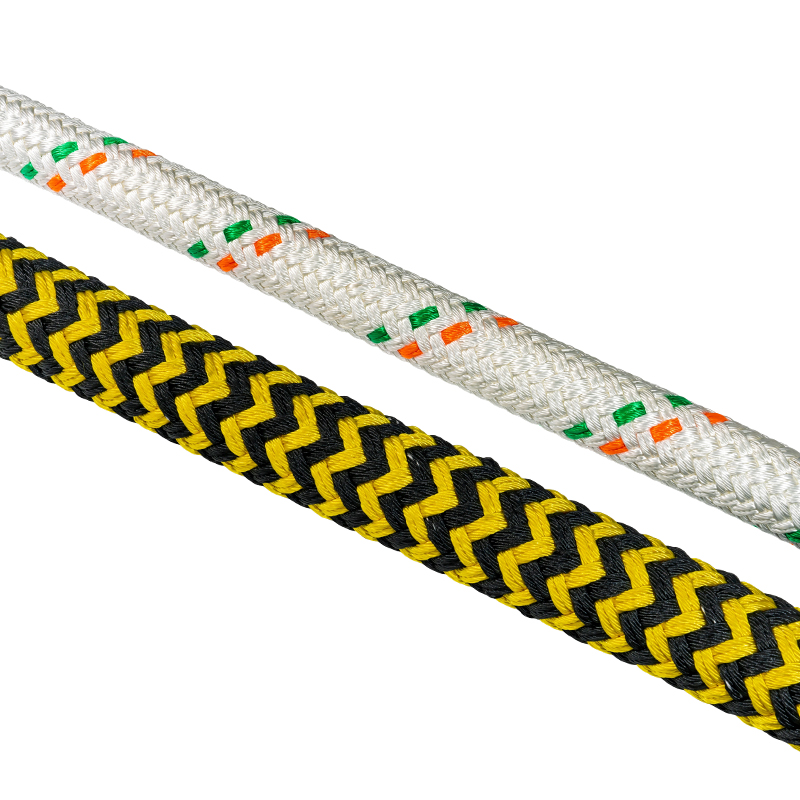
Polyester rope is one of the most versatile and reliable cordage options available today. It outperforms nylon in UV resistance, holds its strength when wet, and stretches far less under load — making it the preferred choice for marine applications, rigging, outdoor tie-downs, and arborist work. If you need a rope that performs consistently in harsh conditions without stretching unpredictably, polyester is almost always the right answer.
This guide covers everything from construction types and tensile strength data to practical buying advice and maintenance best practices. Whether you're outfitting a sailboat, setting up a zip line, or just need a dependable utility rope, understanding polyester rope will help you make a smarter, safer choice.
Polyester rope is manufactured from polyethylene terephthalate (PET) fibers — the same base polymer used in plastic bottles and clothing fabrics. In rope form, these fibers are either spun into yarns and twisted together or braided in various patterns to create cordage with specific performance characteristics.
The manufacturing process begins with extruding molten PET into continuous filaments. These filaments are then drawn (stretched under heat) to align the polymer chains, which dramatically increases tensile strength. Finished filaments are bundled into yarns, which are then laid, twisted, or braided into the final rope structure.
There are two primary fiber types used in polyester rope manufacturing:
The distinction matters when shopping: multifilament ropes generally offer better performance for load-bearing tasks, while spun polyester works well for general-purpose applications where grip and aesthetics are priorities.
The polyester polymer chain is inherently resistant to hydrolysis — the chemical breakdown caused by water. This is why polyester rope does not absorb significant moisture (typically less than 0.4% by weight compared to nylon's 8–10%), which directly translates to maintained strength and reduced weight gain in wet conditions. The benzene ring structure within PET also provides baseline UV resistance that natural fibers and many synthetics simply cannot match without chemical treatment.
The way a rope is constructed has as much influence on its performance as the fiber itself. Polyester rope comes in several distinct constructions, each suited to different tasks.
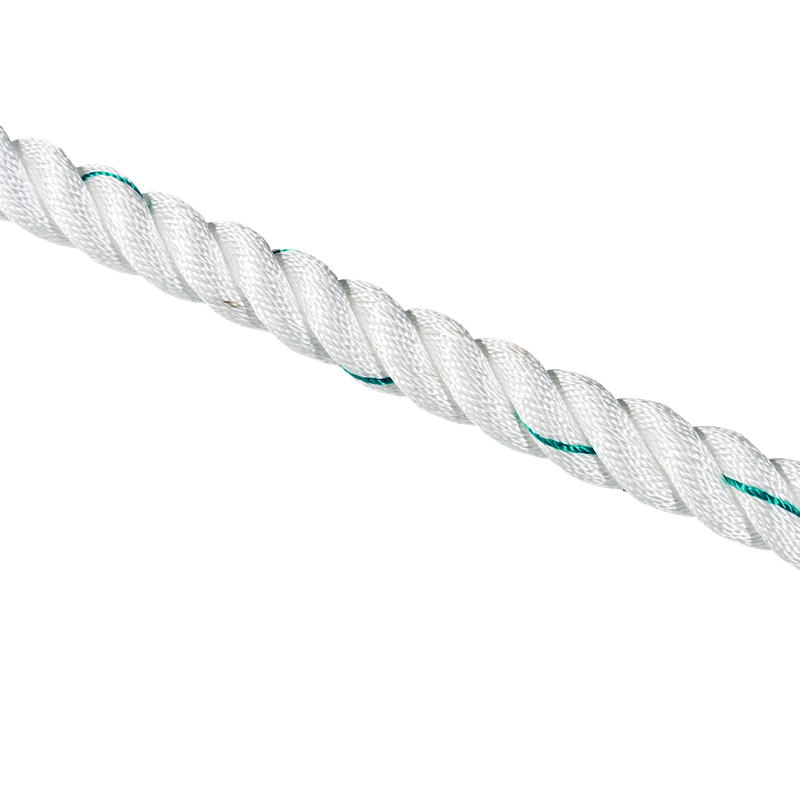
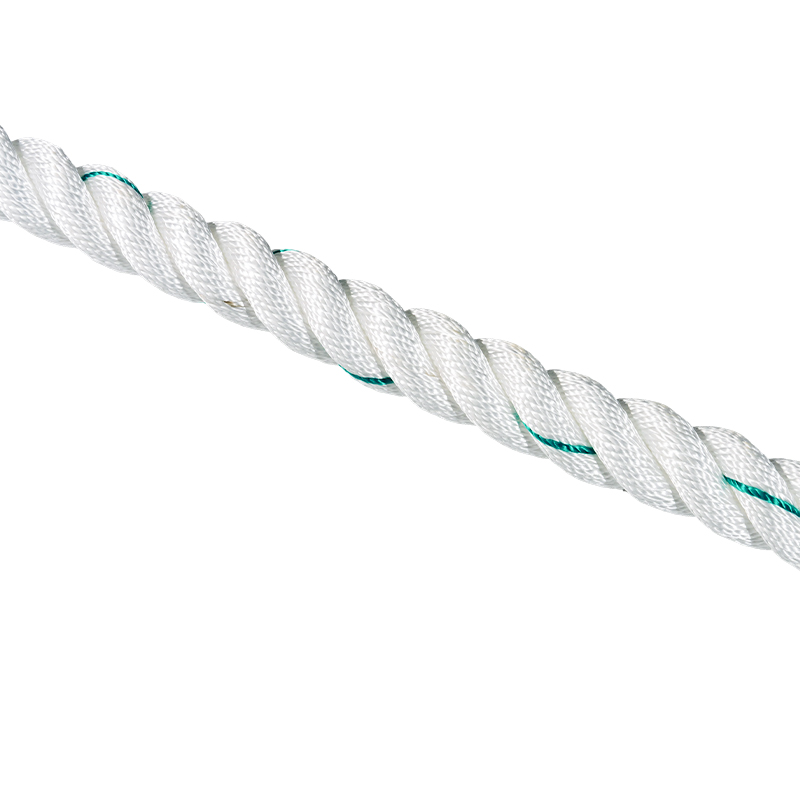
Three-strand twisted polyester is the traditional construction — three bundles of yarns are twisted together in a helical pattern. This design has been used for centuries and remains popular for good reasons:
A typical ½-inch (12mm) 3-strand polyester rope has a breaking strength of approximately 5,400–6,000 lbs, depending on the manufacturer and quality grade.
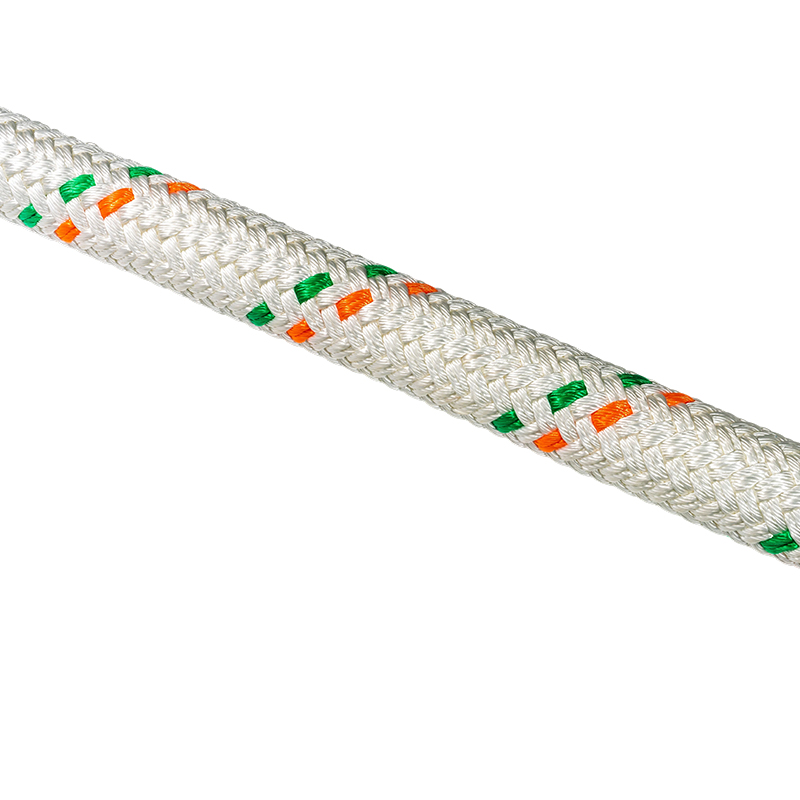
Double braid consists of a braided core surrounded by a braided outer sheath. Both the core and cover bear load, which gives this construction an excellent strength-to-diameter ratio and a smooth, easy-to-handle surface. It's the dominant choice in marine applications, particularly for halyards, sheets, and dock lines.
Key characteristics:
In kernmantle construction, a parallel or braided core (kern) is protected by a woven outer sheath (mantle). The core carries the primary tensile load while the sheath provides abrasion resistance and protects the load-bearing fibers. This construction is common in climbing ropes and safety lines.
Static polyester kernmantle ropes are popular in industrial rescue, rappelling, and rigging because they offer very low elongation (typically under 2% at 10% of breaking strength) while still protecting the core from UV damage and abrasion.
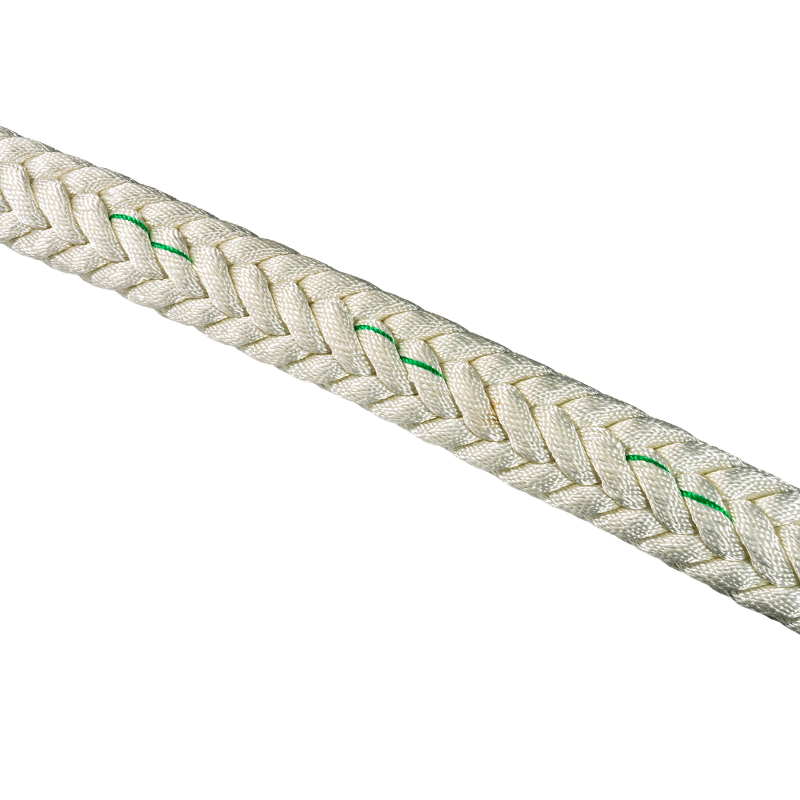
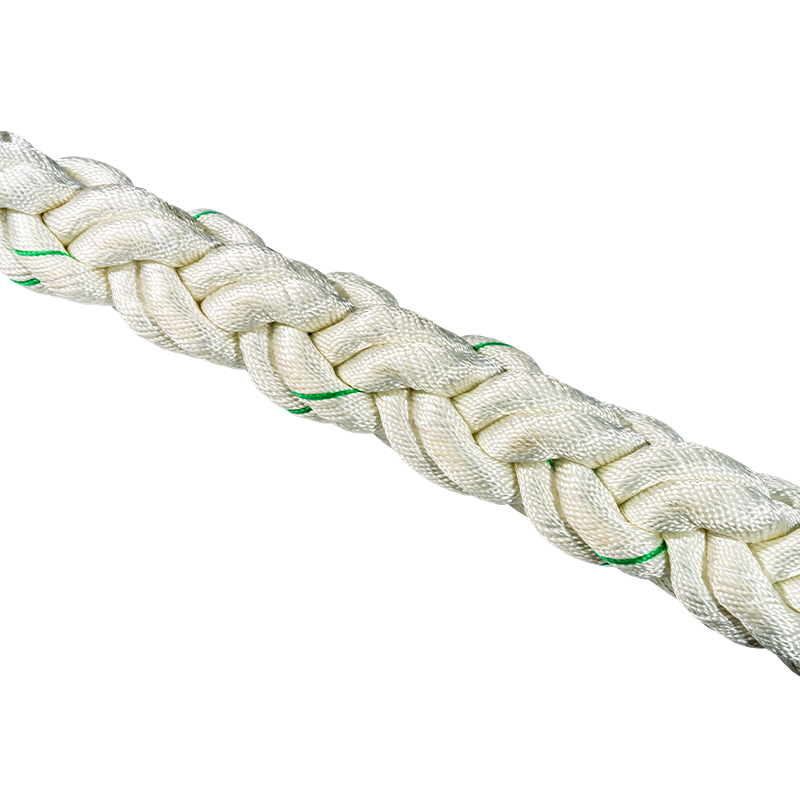
Eight-strand plaited rope uses four pairs of strands, with each pair twisted in opposite directions and then interwoven. This construction is torque-balanced (it won't spin under load), highly flexible, and easy on the hands. It's frequently used for dock lines and anchor rodes where both stretch and handling comfort matter.
| Construction | Stretch Level | Spliceable | Best Use Cases | Relative Cost |
|---|---|---|---|---|
| 3-Strand Twisted | Medium (5–8%) | Yes (easy) | General use, anchor lines, utility | Low |
| Double Braid | Low (3–5%) | Yes (complex) | Marine, halyards, sheets, dock lines | Medium–High |
| Kernmantle | Very Low (<2%) | Limited | Rescue, climbing, rigging | High |
| 8-Strand Plaited | Medium (5–7%) | Yes | Dock lines, mooring, towing | Medium |
Understanding the difference between breaking strength and working load limit (WLL) is critical for safe rope use. Breaking strength is the load at which a new rope will fail under a single slow pull in controlled laboratory conditions. The working load limit — also called the safe working load (SWL) — is the maximum load that should be applied to a rope during actual use.
Industry standard safety factors typically range from 5:1 to 10:1 for life-safety applications, meaning the WLL is set at 10–20% of breaking strength. For non-life-safety industrial applications, a 4:1 or 5:1 safety factor is commonly used.
Below are approximate breaking strength values for standard multifilament double-braid polyester rope at common diameters:
| Diameter (mm) | Diameter (inches) | Approx. Breaking Strength (lbs) | Approx. Breaking Strength (kN) | Approx. WLL at 5:1 (lbs) |
|---|---|---|---|---|
| 6 mm | ¼" | 1,300–1,600 | 5.8–7.1 | 260–320 |
| 8 mm | 5/16" | 2,300–2,800 | 10.2–12.5 | 460–560 |
| 10 mm | 3/8" | 3,600–4,200 | 16.0–18.7 | 720–840 |
| 12 mm | ½" | 5,400–6,400 | 24.0–28.5 | 1,080–1,280 |
| 16 mm | 5/8" | 9,000–10,800 | 40.0–48.0 | 1,800–2,160 |
| 20 mm | ¾" | 13,500–16,000 | 60.0–71.2 | 2,700–3,200 |
Published breaking strength values assume a straight-line pull on a new rope under laboratory conditions. In real-world use, several factors reduce the effective load capacity:
Polyester is not always the best choice for every situation. Understanding how it compares to other common synthetic rope materials helps you select the right tool for the job.
Nylon (polyamide) rope has higher breaking strength per unit diameter than polyester and significantly more elasticity — typically 15–25% elongation at break compared to polyester's 12–15%. This elasticity makes nylon excellent for applications where shock absorption is beneficial, such as anchor rodes and tow lines, where sudden jerks need to be dampened.
However, nylon has serious drawbacks:
Choose polyester when: you need dimensional stability, UV resistance, and consistent strength in wet conditions. Choose nylon when: shock absorption is the primary requirement and wet exposure is limited.
Polypropylene (PP) rope is lighter than water (specific gravity 0.91 vs. polyester's 1.38), which is why it floats. This makes it popular for water rescue lines and ski rope. However, polypropylene has substantially lower UV resistance than polyester and degrades noticeably within one to two seasons of continuous sun exposure.
Polypropylene is also significantly weaker: a ½-inch polypropylene rope typically has a breaking strength of around 3,500–4,000 lbs compared to 5,400–6,000 lbs for polyester of the same diameter. For any long-term outdoor application, polyester is the clear winner over polypropylene.
High-modulus polyethylene (HMPE) ropes like Dyneema and Spectra represent the performance extreme. They are 8–15 times stronger than steel by weight, have virtually zero elongation (0.5–1% at break), and float on water. For high-performance sailing, heavy rigging, and winching, HMPE is technically superior to polyester.
The trade-offs are significant, though:
For most everyday applications — marine work, camping, landscaping, rescue, and general rigging — polyester offers the best combination of strength, durability, UV resistance, and affordability. HMPE is reserved for specialized high-performance use cases where weight savings and ultimate strength justify the premium cost.
| Property | Polyester | Nylon | Polypropylene | HMPE (Dyneema) |
|---|---|---|---|---|
| Tensile Strength | High | High | Medium | Very High |
| Stretch | Low–Medium | High | Medium | Very Low |
| UV Resistance | Excellent | Fair | Poor–Fair | Fair (sheathed) |
| Water Absorption | Very Low (<0.4%) | High (8–10%) | None (floats) | None (floats) |
| Abrasion Resistance | Excellent | Good | Fair | Poor (bare) |
| Cost (relative) | Low–Medium | Low–Medium | Low | Very High |
Polyester rope's combination of low stretch, UV resistance, strength retention in water, and abrasion resistance makes it the standard choice across a remarkable range of industries and activities.
Polyester is the backbone of sailboat running rigging worldwide. Halyards, sheets, control lines, and dock lines on the vast majority of production sailboats are made from polyester double braid or 3-strand. The reasons are straightforward: sailing involves continuous UV exposure, saltwater immersion, repeated loading cycles, and the need for precise sail trim — all conditions where polyester's properties are ideal.
For dock lines specifically, the modest stretch in polyester rope (compared to HMPE) helps absorb the energy from wakes and tidal fluctuations without transmitting jarring loads to cleats and deck fittings. Typical dock line diameter recommendations:
Arborists rely heavily on polyester rope for climbing, rigging, and lowering cut sections. Polyester kernmantle climbing ropes in the 11–13mm range are standard for work positioning and ascent. The low-stretch characteristic is critical in arborist work because it provides predictable, controlled positioning — the climber knows exactly where they will be after weighting the rope.
For rigging (lowering heavy wood sections to the ground), larger diameter polyester rope in the 16–20mm range is common. The combination of strength, abrasion resistance against bark, and UV durability makes polyester the industry standard.
In construction and industrial settings, polyester rope is used for load rigging, tag lines (controlling swinging loads during crane lifts), lashing, and as part of fall protection systems. The ASME B30.9 standard governs the use of fiber rope slings in lifting operations and specifies that polyester rope slings are suitable for loads where a low elongation, non-conductive, and corrosion-resistant sling is required.
Polyester's non-conductive nature makes it valuable in electrical and utility work — wire rope could create dangerous grounding paths that fiber rope avoids entirely.
For outdoor enthusiasts, polyester rope performs well in applications including tent guylines, bear bag hangs, tarp rigging, and equipment lashing. A 550-paracord equivalent in polyester offers better UV resistance than nylon paracord for permanent outdoor installations like bear canisters and camp gear suspensions.
Overlanders and off-road enthusiasts use polyester snatch straps and tow ropes for vehicle recovery. Here, however, it's worth noting that nylon recovery straps (with their higher elasticity) are preferred for dynamic, kinetic recovery pulls, while polyester straps are better suited for static towing where you don't want stretch.
Technical rescue teams — fire departments, mountain rescue teams, and swift-water rescue units — frequently deploy polyester static ropes. NFPA 1983 (Standard on Life Safety Rope and Equipment for Emergency Services) recognizes polyester as an approved material for life safety rope when it meets specific elongation, strength, and dimensional standards.
Static polyester rope's low elongation under load gives rescuers predictable behavior during lowering and haul systems. NFPA 1983 requires a minimum breaking strength of 8,000 lbs (35.6 kN) for general use life safety rope and 4,500 lbs (20.0 kN) for light use rope — specifications that properly sized polyester rope meets readily.
In agricultural settings, polyester rope is used for animal tie-outs, trellising, baling supplementation, and general farm utility. Its resistance to rot, mold, and UV degradation means it outlasts natural fiber ropes like sisal or manila by many years. A sisal rope left outdoors will typically lose structural integrity within 1–2 years; polyester in the same conditions can last 5–10 years or more with basic care.
Selecting the right polyester rope involves more than just picking a diameter. Working through the following decision process will help you arrive at the correct specification every time.
Start by clearly defining what the rope needs to do and what maximum load it will face. Be specific:
Apply the correct safety factor to determine required breaking strength:
Formula: Required Breaking Strength = Maximum Expected Load × Safety Factor
Example: For a 500-lb industrial rigging application with a 5:1 safety factor, you need rope with a minimum breaking strength of 2,500 lbs. Reference the strength table to find the appropriate diameter.
Match the construction to the application based on the key considerations covered earlier. Quick reference:
Always size for the required strength, but keep handleability in mind. A rope that is technically strong enough but too thin to grip safely in wet or cold conditions creates its own hazard. In marine and arborist applications, most professionals prefer working with ropes no thinner than 10–12mm for comfortable, safe handling under load — even when a smaller diameter would be technically sufficient.
For safety-critical applications, verify that the rope meets relevant standards:
Budget rope sold on general-purpose retail platforms often has no third-party testing or certification. For recreational utility this may be acceptable; for any safety-critical use, always require documentation.
Knowing the right knots significantly affects both safety and efficiency. With polyester rope, the slightly stiff surface of braid constructions and the torque tendencies of twisted rope influence which knots are easiest to tie and most reliable.
The bowline creates a fixed loop that doesn't tighten under load and is easy to untie even after heavy loading. It retains approximately 65–75% of rope strength. Used universally in sailing, rescue, and general rigging for attaching a rope to a fixed point or creating a harness loop.
Important note: A standard bowline can work loose on slippery braided polyester rope without a backup half-hitch. Always finish a bowline with a stopper or backup when using braided polyester.
The figure-eight family of knots is the standard in technical rescue and climbing. The figure-eight on a bight creates a fixed loop and retains about 75–80% of rope strength. The figure-eight follow-through is used to tie a rope directly through a harness or anchor ring. These knots are favored in rescue and arborist work for their ease of inspection — their symmetrical form makes it visually obvious if the knot is tied incorrectly.
The cleat hitch is the standard method for securing dock lines in marine applications. When properly tied, it doesn't jam and can be released quickly — critical when a boat needs to be moved quickly in an emergency. The full cleat hitch (with a locking half-hitch finishing turn) is appropriate for moderate loads; without the locking turn, a two-turn wrap around the cleat's base followed by figure-eight turns provides a secure hold.
For lashing loads to trailers, truck beds, or cargo carriers, the truckers hitch creates a mechanical advantage (typically 3:1) that allows a single person to generate substantial tensile force to tighten a lashing. It's one of the most practical knots for everyday utility rope work and polyester's low stretch makes the resulting lashing stay tight longer than with more elastic rope materials.
Friction hitches like the Prusik, Klemheist, and Bachmann allow a smaller rope to grip a larger rope under load but slide freely when unweighted. These are fundamental to arborist work and technical rescue. Polyester-on-polyester friction hitches require careful attention to the diameter ratio — the hitch cord should be 60–80% of the host rope's diameter for reliable engagement. Cord that is too similar in size to the host rope won't grip adequately.
| Knot | Strength Retention | Best Use | Ease of Untying |
|---|---|---|---|
| Bowline | 65–75% | Fixed loop, attachment | Easy |
| Figure-Eight on Bight | 75–80% | Rescue, arborist, anchor | Moderate (can jam under heavy load) |
| Square Knot | 45–55% | Joining rope of equal diameter | Easy (but can capsize) |
| Sheet Bend | 50–60% | Joining ropes of unequal diameter | Easy |
| Clove Hitch | 60–65% | Securing to posts/rails | Easy |
Splicing is the technique of mechanically interlocking rope strands to create a permanent connection or termination. Splices retain 90–95% of rope breaking strength compared to 45–80% for most knots. For any permanent installation — dock lines, mooring pendants, anchor rodes, or permanent rigging — a properly executed splice is almost always the right choice over a knot.
The eye splice in 3-strand twisted rope is one of the most practical and learnable skills in rope work. The basic technique involves unlaying (untwisting) the end of the rope, forming a loop of the desired size, and then tucking each strand through the standing part in sequence — working against the rope's lay direction.
A minimum of 3 full tucks is required for a serviceable splice; 5 tucks are recommended for permanent installations. A proper eye splice on 3-strand polyester is smooth enough to run through a block (pulley) without snagging — an advantage over knots, which are bulkier and tend to jam.
Double braid eye splices use a different technique: a fid (hollow tubular tool) or sewing needle is used to pass the core through the cover at specific intervals, locking the two braided layers together. The Brummel lock — where the cover and core are interlocked before completing the splice — creates a particularly secure termination that won't pull back through itself under load.
Double braid splicing requires practice and the right tools (a Samson or Yale fid set is the industry standard), but the resulting splice is stronger, neater, and more professional than any knot alternative.
When creating eye splices that will attach to metal hardware (shackles, hooks, rings), always insert a thimble into the eye. A thimble is a grooved metal or plastic insert that protects the rope fibers from the sharp edges of the hardware and prevents the eye from collapsing under load, which would reduce the effective bend radius. Stainless steel thimbles are standard for marine use; galvanized thimbles work in most other applications.
Even though polyester rope is one of the most durable cordage materials available, it is not indestructible. A systematic maintenance and inspection routine extends service life and — more importantly — prevents unexpected failures.
Before each use (for safety-critical applications) or at minimum monthly for installed ropes, run the entire length through your hands while visually inspecting for:
Dirt and grit embedded in rope fibers act as an internal abrasive, cutting fibers from within during every flex cycle. Regular washing significantly extends rope life.
Recommended cleaning method:
For heavily soiled rope, soak in a bucket of warm soapy water for 30 minutes before washing to loosen embedded dirt. A soft-bristle brush (not a wire brush) can help work out ground-in contamination from the outer braid.
Improper storage is one of the most common causes of premature rope failure. Follow these guidelines:
For life-safety applications, retirement criteria must be clear and non-negotiable. The Cordage Institute and NFPA 1983 provide general guidance, but these factors always indicate immediate retirement:
For non-safety applications, visual and tactile inspection remains the guide. A marine dock line that still looks and feels sound at 8 years may be perfectly serviceable; one that is brittle, cracking, or showing core damage at 3 years should be replaced immediately.
Polyester rope is manufactured in a wide range of diameters to suit applications from fine craft work to heavy industrial rigging. Understanding which diameters are standard and what they're suited for helps narrow the selection quickly.
At the small end, polyester cord from 1–6mm serves light utility purposes: tent guylines, tarp rigging, curtain ties, friction hitch cords for arborists (3–5mm is the standard Prusik loop diameter for 11–13mm host ropes), and decorative applications. A 2mm polyester cord has a typical breaking strength of 150–250 lbs, while 4mm cord breaks at around 400–600 lbs depending on construction.
The 6–12mm range covers the majority of everyday rope uses: sailing sheets and small halyards (6–10mm), anchor lines on small craft, arborist throw lines (1.5–3mm high-vis braided for distance), and moderate rigging work. This range is comfortable to handle for most adults with average grip strength and offers sufficient strength for loads from several hundred to several thousand pounds.
Rope in the 12–20mm range handles the heavier end of typical consumer and professional applications: dock lines for mid-to-large vessels, arborist rigging lines, halyard replacement on larger sailboats, winch ropes, and light industrial lifting slings. The 16mm (5/8") size is one of the most popular all-around marine rope sizes.
Above 20mm, polyester rope moves into commercial marine, offshore mooring, and industrial lifting categories. Ship mooring lines can run to 80–100mm or larger. These products are typically made to order or sold in industrial quantities, and their specifications are governed by ISO 9554 (fiber ropes for general service) and related standards.
Polyester's UV resistance is one of its most important practical advantages, but it's frequently misunderstood. Understanding what polyester's UV resistance actually means — and what it doesn't — helps set realistic expectations for service life in outdoor applications.
The baseline PET polymer has inherent UV resistance due to its benzene ring structure, which absorbs UV radiation at wavelengths around 315–385nm. However, prolonged UV exposure still causes photo-oxidation, which progressively degrades the fiber surface. UV stabilizers (typically hindered amine light stabilizers, or HALS) are added during fiber manufacture to slow this process.
Published accelerated UV testing data (per ASTM G154 xenon arc or QUV fluorescent testing) for commercial polyester rope typically shows:
In real-world terms, 500 hours of UV exposure roughly equates to one summer season in a southern US location. This means a rope used outdoors year-round will see significant cumulative UV loading over its service life, and replacement cycles should account for this.
Comparison: Under the same testing conditions, nylon rope typically retains only 65–70% strength after 1,000 hours, and polypropylene may retain only 50–60% — making polyester the clear leader in UV resistance among mainstream synthetic rope materials.
To maximize UV service life:
Beyond standard commercial polyester rope, several specialized variants offer enhanced performance for specific applications.
High-tenacity polyester (HT polyester) uses fibers that have been drawn to a higher degree during manufacturing, aligning polymer chains more fully and increasing tensile strength by 15–25% compared to standard fiber. HT polyester is the material used in performance sailing rope, professional arborist climbing lines, and high-end rescue rope. For a given diameter, HT rope provides meaningfully higher breaking strength without sacrificing other performance characteristics.
Standard polyester rope retains some residual stretch — approximately 3–5% on initial loading as the rope's construction settles. Heat-set rope is post-treated under controlled tension and temperature to eliminate this initial stretch, resulting in a rope that behaves predictably from first use without a break-in period.
Heat-set polyester is preferred for:
Various coatings and treatments are applied to polyester rope to enhance specific properties:
Many high-performance rope products combine a Dyneema or Spectra HMPE core (for strength and low stretch) with a polyester outer braid (for UV protection and abrasion resistance). These hybrid designs deliver near-zero-stretch performance at a lower cost than all-HMPE constructions, while the polyester sheath provides the outdoor durability that bare HMPE lacks.
Typical applications include performance sailing halyards, control lines, and winching ropes where minimal stretch and durability must coexist. These are often the most cost-effective path to low-stretch performance for serious sailors and riggers who can't justify the full cost of all-HMPE solutions.
Even experienced users make preventable errors with polyester rope. Being aware of these common mistakes helps you avoid them.
The most dangerous mistake is treating the breaking strength figure as a usable load limit. Breaking strength is not the safe working load. A rope loaded to its breaking strength will almost certainly fail — breaking strength is the point of catastrophic failure. Always apply the appropriate safety factor for your application, as described in the buying guide section.
Using a high-stretch 3-strand rope for an application requiring dimensional stability (like a halyard or control line) will result in frustrating performance — the boat won't sail as well, and the stretch can mask developing problems. Conversely, using very low-stretch kernmantle rope for a dock line removes the shock-absorbing function that protects cleats and deck hardware from wave-induced load spikes.
A kinked or hockled section of 3-strand polyester should never be loaded. The kink concentrates load on a tiny section of the rope, and the resulting stress concentration can reduce local strength to a fraction of the overall rope's capacity. Always uncoil twisted rope under light tension to remove coil set before loading, and unlay any kinks before use.
Visual inspection takes two minutes. Failing to inspect before use in rescue, tree climbing, industrial lifting, or other safety-critical applications is a serious oversight. Develop a habit of inspecting end-to-end before every use, particularly for rope stored outside or subjected to variable conditions between uses.
Polyester melts at approximately 490–500°F (255–260°C), but significant softening and strength degradation begins well below this temperature. Running rope quickly through a belay device, over a sheave, or across another rope under load generates frictional heat. At heavy loads and high speeds, this can damage the outer fibers and even fuse strands together. Always use appropriate friction management devices (belay devices, rappel devices, snatch blocks) rated for the loads being handled, and never let a rope run freely at speed over a sharp edge.
When adding a new rope section to a system that includes older rope, the entire system's capacity is limited by the weakest component. An old, UV-degraded rope with 60% of original strength becomes the failure point even if connected to brand-new rope. Replace entire runs when upgrading safety-critical rope systems rather than splicing new sections into aged lines.
As a petroleum-derived plastic product, polyester rope raises legitimate environmental questions. Understanding the full picture helps make informed choices.
The environmental trade-offs of polyester rope are complex:
Compared to natural alternatives like manila or sisal, polyester rope produces significantly less chemical pollution during use (natural fibers require pesticides and processing chemicals) and avoids the rapid strength degradation that often leads to natural rope failure and replacement. The practical case for polyester rope — when used responsibly, maintained properly, and disposed of conscientiously — remains strong on both performance and overall environmental footprint.
Yes. Polyester's very low water absorption and excellent resistance to salt, biological growth, and UV make it well-suited for permanent saltwater installation. Mooring pendants, dock lines, and anchor rodes made from polyester are standard in marine use. Rinse with fresh water periodically to remove salt crystal buildup, which can act as an internal abrasive over time.
Polyester performs well across a broad temperature range. At low temperatures (down to -40°F/-40°C), polyester remains flexible and retains close to its full strength, unlike some materials that become brittle when frozen. At elevated temperatures above 150°F (65°C), some softening begins; at 250°F (121°C), significant strength loss occurs; and at 490°F (255°C), polyester melts. For most outdoor applications, temperature is not a meaningful concern.
Dry polyester fiber is an excellent electrical insulator, making polyester rope safe for use near electrical hazards. However, wet rope — particularly heavily contaminated or salt-saturated rope — can conduct electricity. For work near live electrical equipment, always verify that your specific rope is rated for electrical insulation in the relevant standards, and treat wet polyester rope as potentially conductive.
Dacron is DuPont's trademarked brand name for polyethylene terephthalate (PET) fiber — the same base polymer as generic polyester. Dacron rope and polyester rope are the same material; "Dacron" is simply a brand designation that became widely used in the sailing industry. You'll often see "Dacron halyards" or "Dacron sheets" in marine catalogs — these are standard polyester double-braid ropes.
Polyester rope ends can be sealed using heat (melt the cut end with a lighter or heat gun — polyester fuses cleanly when melted), whipping (wrapping the end with waxed twine), or end caps (plastic or adhesive tape). For braided rope, heat sealing is the fastest and most practical method: cut with a sharp knife while holding a lighter flame just below the cut point to fuse the outer braid simultaneously. Avoid creating large globs of melted fiber, which are sharp and uncomfortable to handle — a smooth, even seal is the goal.
Minor surface abrasion on braided rope (surface fuzzing without core exposure) does not require repair — it's normal service wear. Damaged sections of twisted 3-strand rope can be cut out and the ends spliced back together using a short splice, though this reduces the rope's length and the splice area will have slightly different stiffness. For kernmantle and double braid ropes, repair splicing of internal core damage is generally not recommended for life-safety applications — retire and replace the rope instead.
Mar 12. 2026
What Are the Most Common Practical Uses for Polypropylene Rope?Core Applications of Polypropylene Rope in Marine and Water Activities In the modern rope industry, Polypropylene Rope (often referred to as “PP rope” or “floating rope”) has become an irreplaceable tool for water-based ...
Read MoreMar 12. 2026
Polyester Rope Guide: Types, Uses, Strength & Buying TipsPolyester rope is one of the most versatile and reliable cordage options available today. It outperforms nylon in UV resistance, holds its strength when wet, and stretches far less under load — making it the preferred c...
Read MoreMar 13. 2026
What is polyester rope and why is it the best choice for most applicationsWhat Is Polyester Rope? Understanding the Basics Polyester rope is one of the most widely used synthetic ropes in the world today, valued across industries for its exceptional balance of strength, durability, and resista...
Read More


 English
  русский
  Español
  عربى
عربى