2026.08.19
 Industry News
Content
When a 12-metre workboat sits alongside a quay with a spring tide running, its mooring lines take the full load of the hull. That is the moment when the difference between braided and twisted rope stops being a technical detail and becomes a safety decision. Twisted nylon stretches and softens the snatch. Braided polyester holds the boat steady but passes the shock load straight to the bitts. Both are correct choices, but for different jobs.
Braided and twisted are the two fundamental rope constructions used across marine, port, and industrial work. There is no single winner in the braided vs twisted rope comparison. The right answer depends on stretch, strength, handling, cost, and the way the rope is loaded on your vessel or worksite.
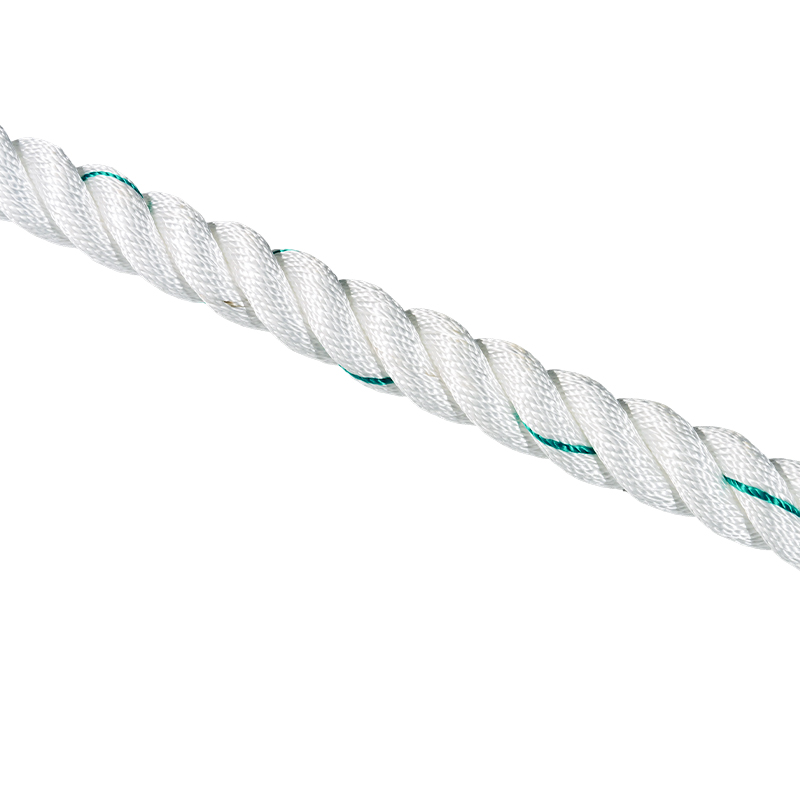
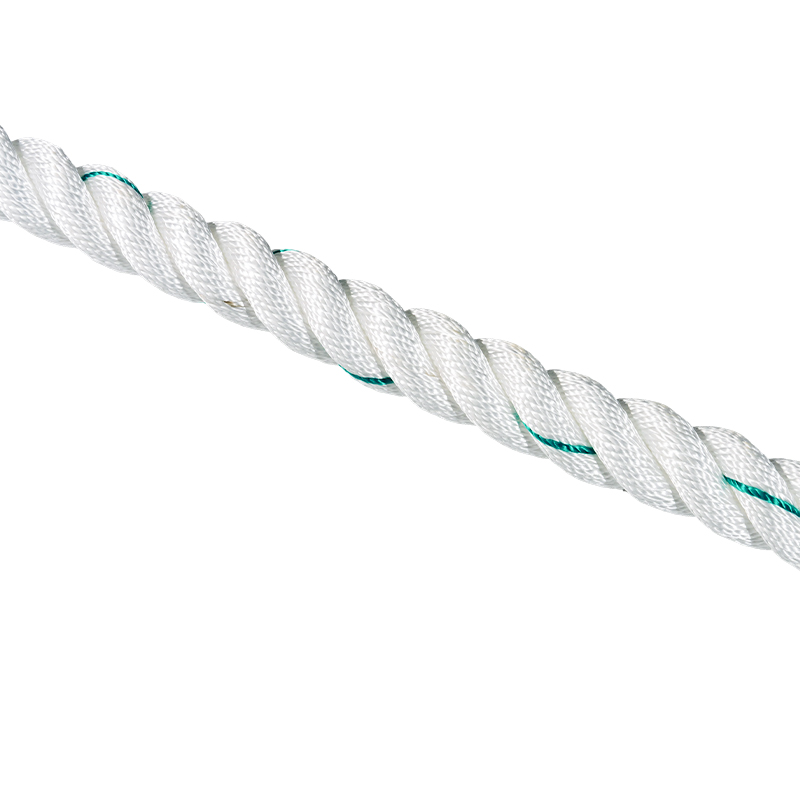
Twisted rope, also called laid rope, is made by twisting yarns into strands and then twisting three or four strands together in the opposite direction. The classic 3-strand construction has served for generations in hawsers, anchor lines, and general dock work because it is simple to manufacture, easy to inspect, and inexpensive.
Because the strands follow a helical path, a twisted rope elongates under load. As the strands tighten, the rope stretches and absorbs energy. That behaviour makes twisted rope forgiving in shock-loading situations such as anchor rodes, mooring springs, and towing lines.
Material choice changes the picture. A twisted polypropylene rope is light, floats, and costs little, but its strength is limited and its UV resistance fades quickly. Twisted nylon is the strongest common twisted option and offers the best stretch and recovery. That is why many operators keep a 3-strand nylon line ready for snubbing duties. If you are replacing a tired anchor line, our 3-strand nylon rope is built for shock absorption and long service in saltwater.
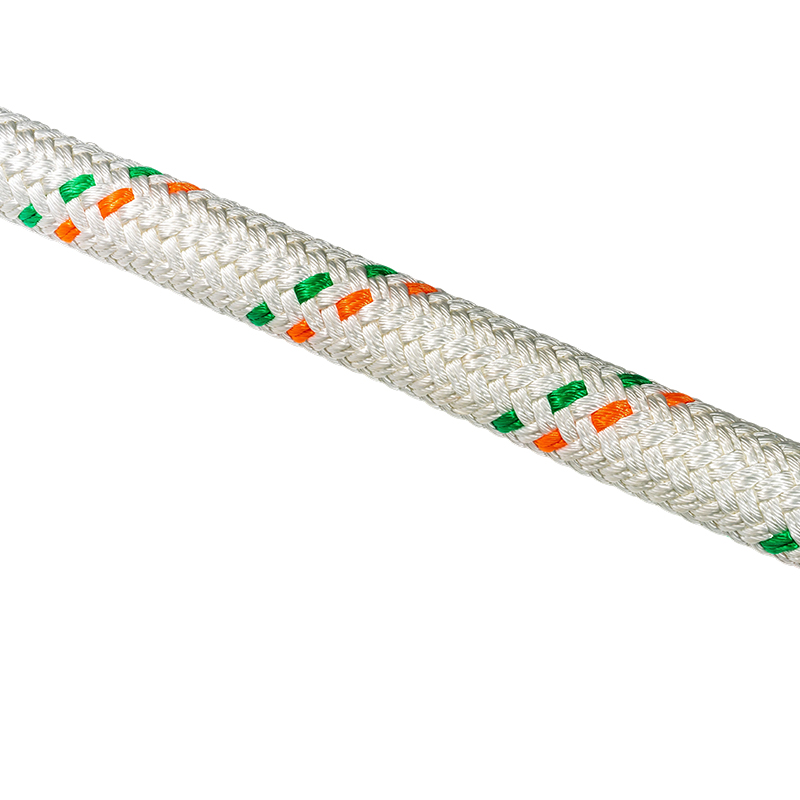 Wholesale 3-Strand Nylon/Polyamide Rope Manufacturers, Suppliers - Jiangsu HaifeJiangsu Haifeng Rope Technology Co.,Ltd. is China Wholesale 3-Strand Nylon/Polyamide Rope Suppliers and 3-Strand Nylon/Polyamide Rope Man...View Product →
Braided rope is made by interlocking strands in a crisscross pattern to produce a tubular cover, usually around a core. The dense structure packs more fibre into each millimetre of diameter than a twisted rope, so braided lines generally feel firmer, run through blocks more smoothly, and carry a higher break load for the same diameter.
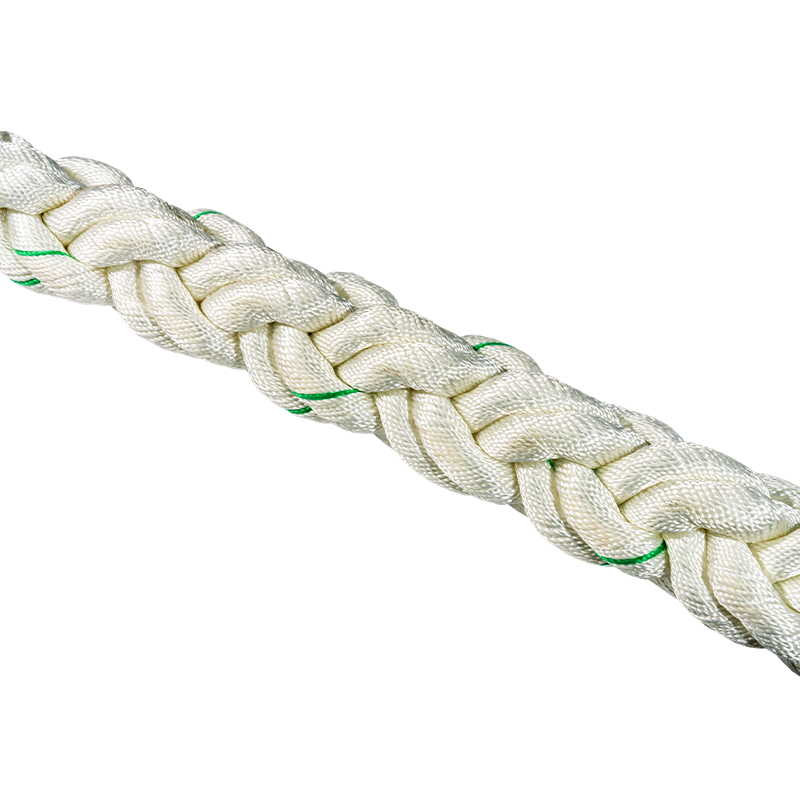
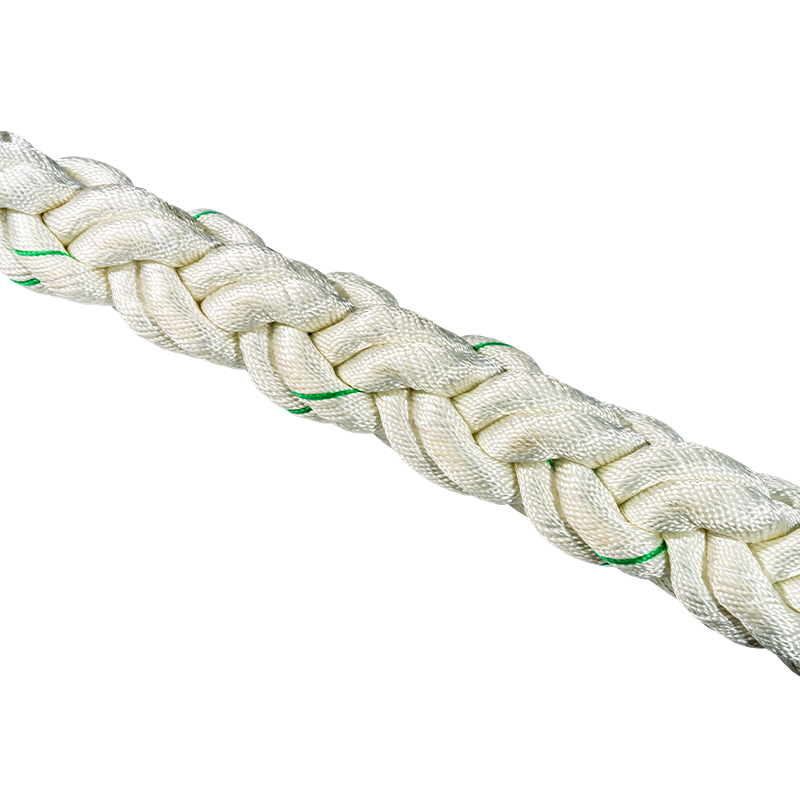
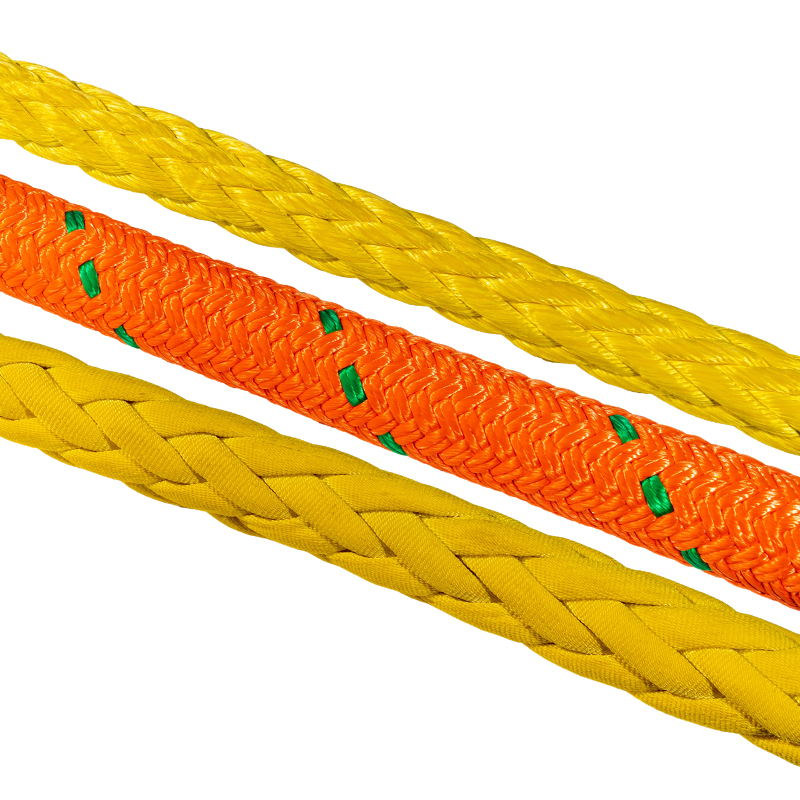
Braided constructions fall into three main families. Single braid, also called hollow braid, is a flexible tube of interwoven strands with no core. In large marine sizes, 8-strand and 12-strand plaited ropes behave like single braids and are common for mooring because they are torque-free and easy to join with a bury splice. Double braid has a braided core protected by a braided cover, giving high strength in a soft, round cross-section. Kernmantle braid pairs a braided cover with parallel core strands to produce minimal stretch.
For deck lines where low stretch and smooth winch handling matter more than splice simplicity, a 12-strand polyester rope is a sensible upgrade over a conventional 3-strand line.
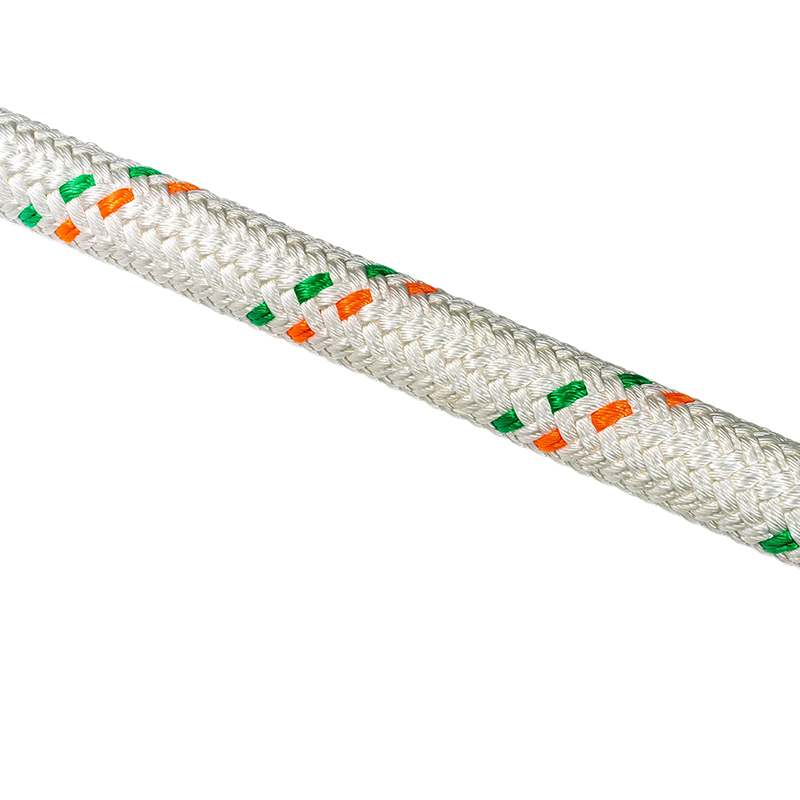 Wholesale 12-Strand Polyester Rope Manufacturers, Suppliers - Jiangsu Haifeng RoJiangsu Haifeng Rope Technology Co.,Ltd. is China Wholesale 12-Strand Polyester Rope Suppliers and 12-Strand Polyester Rope Manufacturers...View Product →
Before choosing, it helps to see the two constructions side by side.
| Property | Twisted Rope | Braided Rope |
|---|---|---|
| Construction | Strands twisted together in a helix | Strands interwoven in a crisscross pattern |
| Relative strength | Lower for the same diameter | Higher due to denser fibre packing |
| Stretch | Higher, with good shock absorption | Lower, with better load stability |
| Handling feel | Stiffer and harsher on the hands | Smoother, softer, and more flexible |
| Abrasion resistance | Moderate; outer strands wear first | Better; the surface wears more evenly |
| Splicing and knotting | Simple 3-strand splices; knots hold well | Bury splices easy on single braid; double braid needs more skill |
| Inspection | Strands open easily for checking | Core damage can stay hidden |
| Relative cost | Lower | Higher |
| Typical uses | Anchor lines, snubbers, general utility | Mooring lines, towlines, winch lines, lifting |
The short answer is that for the same diameter and material, braided rope is stronger than twisted rope. A braided line packs more fibre into its cross-section because the interwoven structure leaves fewer voids than a twisted one. It also shares the load more evenly across all fibres.
That does not make braided the right structural choice for every job. In anchoring and mooring, the working load matters as much as the break strength. A twisted nylon rope of the same diameter as a braided polyester rope is weaker on paper, but it may survive snatch loading better because it stretches. Strength figures printed on a label describe new rope; abrasion, UV exposure, knots, and splices all reduce the real capacity of the line. Before you specify a rope from a load chart, review how rope strength is measured so you are comparing break strength and safe working load on the same basis.
Twisted rope, especially 3-strand nylon, stretches noticeably under load. That elongation converts a sudden surge from a boat or wave into a longer, gentler pull. For anchor lines and exposed dock lines, this is a real advantage. A rope that cannot stretch will either snap or drag the bitts out of the deck.
Braided rope stretches far less. A braided polyester line typically elongates only about half as much as a twisted nylon line of the same diameter, so it holds a vessel in position with very little give. That quality is essential alongside berths where position control matters, and in winching, lifting, and rigging work where load movement is unacceptable. UHMWPE braided rope takes this further, with stretch close to steel wire at a fraction of the weight.
Handling differences are not cosmetic. They control how fast your crew can work and how often the rope must be replaced. Twisted rope is easy to splice. A 3-strand tuck splice can be learned quickly and completed on deck with a fid. The strands open naturally, so internal wear, broken yarns, and chafe are visible during routine checks.
Braided rope is smoother, and the cover resists abrasion better than the exposed outer strands of a twisted line. It is also easier on hands, winch drums, and fairleads. But in a double braid, damage hides inside the cover, and splicing requires training and a fid set. A 12-strand single braid is simpler: the bury splice leaves no lump and takes minutes to complete, which is why it dominates modern mooring systems.
Knots follow the same pattern. Twisted rope holds knots and working splices well. Sliding knots creep on smooth braided covers, and high-modulus braids such as UHMWPE demand purpose-built terminations and lock stitching.
Once you have defined the loading, the construction choice becomes clearer.
For project-specific selection, our marine and offshore application cases show how mooring and rigging ropes are specified for harbour and offshore work.
Construction decides how the load is shared; the fibre decides how the rope survives outdoors. Nylon is the first choice for shock absorption and high strength, but its UV resistance is weaker than polyester. Polyester offers low stretch, better UV stability, and good handling, making it the default for permanent mooring systems. Polypropylene floats and resists water, but it is weaker and degrades in sunlight, so it fits lightweight utility roles. UHMWPE delivers wire-like strength and almost no stretch, but it is expensive and needs a braided cover in chafe-prone service.
Between these extremes, a double-braided nylon rope combines the elongation of nylon with the handling of a braided cover, which makes it a common choice for towing and winch work where some give under shock load is acceptable.
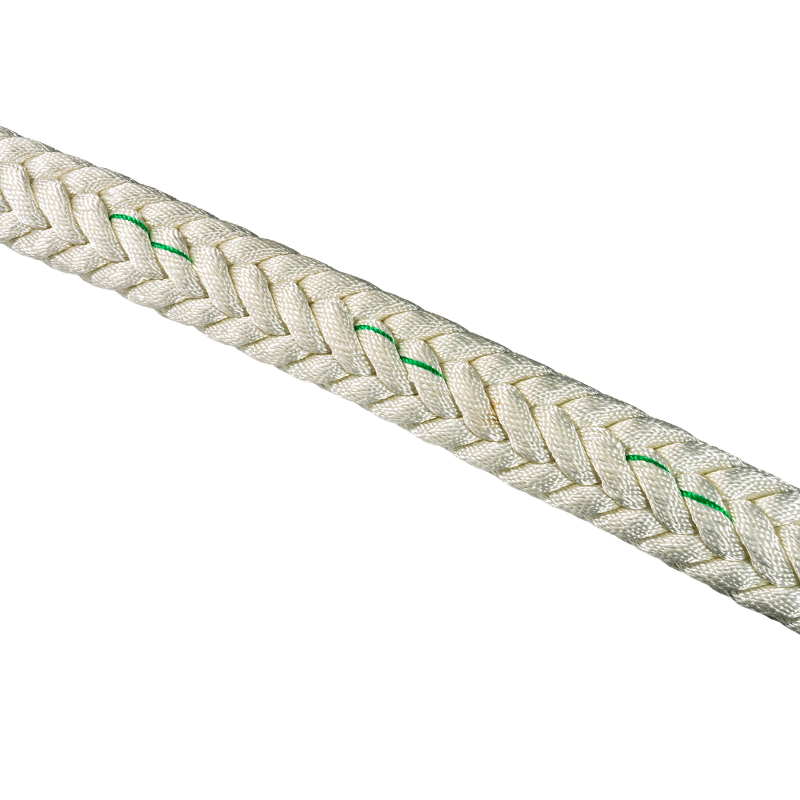 Wholesale Nylon/Polyamide Double Braided Rope Manufacturers, Suppliers - JiangsuJiangsu Haifeng Rope Technology Co.,Ltd. is China Wholesale Nylon/Polyamide Double Braided Rope Suppliers and Nylon/Polyamide Double Brai...View Product →
Choose twisted rope when you need economy, shock absorption, and simple splicing. Choose braided rope when you need strength, low stretch, smooth handling, and better abrasion resistance. For most marine operators, the practical fleet is a mix: twisted nylon for anchors, braided polyester for mooring lines, and a braided low-stretch line for winching.
Verify the break strength, safe working load, and elongation of the exact construction before you buy. Diameter alone tells you little about rating; construction and fibre set the real limits.
Mar 12. 2026
What Are the Most Common Practical Uses for Polypropylene Rope?Core Applications of Polypropylene Rope in Marine and Water Activities In the modern rope industry, Polypropylene Rope (often referred to as “PP rope” or “floating rope”) has become an irreplaceable tool for water-based ...
Read MoreMar 12. 2026
Polyester Rope Guide: Types, Uses, Strength & Buying TipsPolyester rope is one of the most versatile and reliable cordage options available today. It outperforms nylon in UV resistance, holds its strength when wet, and stretches far less under load — making it the preferred c...
Read MoreMar 13. 2026
What is polyester rope and why is it the best choice for most applicationsWhat Is Polyester Rope? Understanding the Basics Polyester rope is one of the most widely used synthetic ropes in the world today, valued across industries for its exceptional balance of strength, durability, and resista...
Read More


 English
  русский
  Español
  عربى
عربى