2026.09.02
 Industry News
Content
A polypropylene mooring line tied off in April and inspected in September usually tells its own history: the colour has bleached out where the sun hit it, the surface has gone fuzzy, and the once-supple fibres feel stiff. No single event damaged that rope. The harm came from hundreds of ordinary days of sunlight, moisture and temperature swings.
The conclusions come first. For rope that lives outdoors year-round, polyester is the most dependable all-round fibre; UV-stabilized polypropylene is the economical choice when flotation and low cost matter more than maximum strength; nylon trades some wet-weather performance for the best shock absorption available; and UHMWPE delivers premium weather resistance and strength-to-weight at a premium price. The sections below explain where those conclusions come from and how to turn them into a purchase.
Weather resistance is not one property but the sum of how a fibre and its construction respond to four separate stressors. A rope can handle three of them well and still fail on the fourth.
Natural-fibre ropes such as manila fail the weather test outright, since they rot and support mildew once damp, which is why the rest of this article covers the four synthetic fibres that dominate outdoor and marine rope today.
The table below condenses the practical differences. Treat it as a screening tool: it identifies which fibres belong on a shortlist before diameter, construction and price narrow the field.
| Fibre | UV resistance | Water absorption | Strength when wet | Best weather role |
|---|---|---|---|---|
| Polyester | Excellent | Around 0.4% | Retains nearly all dry strength | Year-round mooring, anchoring and rigging |
| Polypropylene | Fair untreated, good when UV-stabilized | None; the rope floats | Unchanged by water, but UV slowly weakens the fibre | Budget lines, tow ropes, seasonal outdoor use |
| Nylon (polyamide) | Good | Roughly 3-7% | Drops about 10-15% when saturated, recovers on drying | Shock-loaded anchoring and mooring lines |
| UHMWPE | Excellent | Near zero; floats | Essentially unchanged | High-load mooring and towing where weight matters |
Polyester absorbs so little water, on the order of 0.4%, that a soaked line behaves almost like a dry one. It resists mildew and rot, keeps nearly all its strength in saturation and withstands sunlight better than any commodity fibre except UHMWPE. Add strong abrasion resistance and moderate, controlled stretch, and you have the fibre to specify when the weather cannot be controlled. The costs are modest: it is heavier than polypropylene and somewhat pricier, though far short of UHMWPE.
Construction amplifies the advantage. In a double-braided polyester rope, a tough cover shields the load-bearing core, so sunlight degrades the sacrificial jacket long before it reaches the strength members.
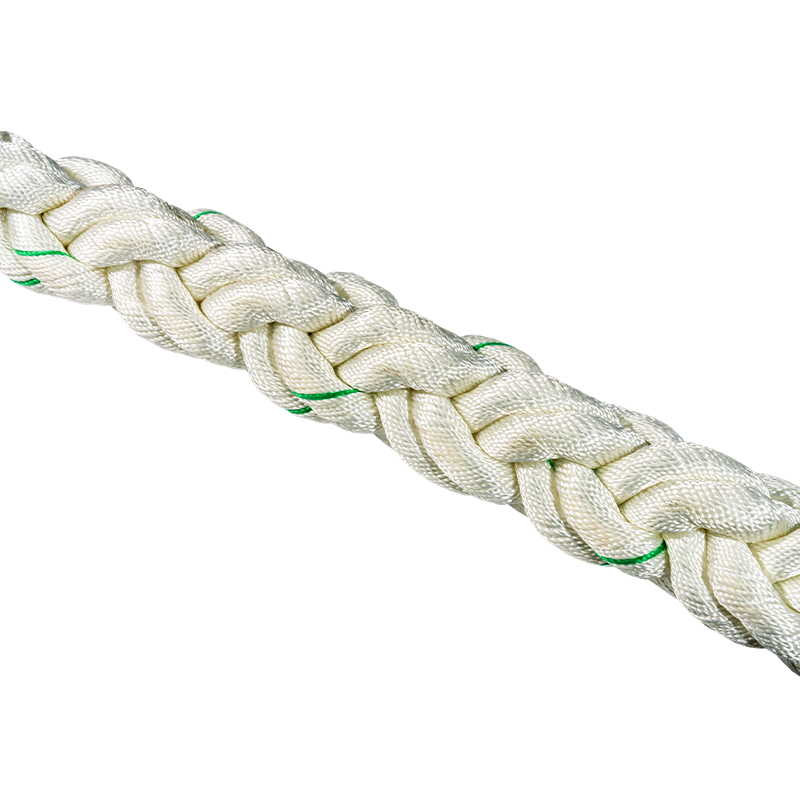
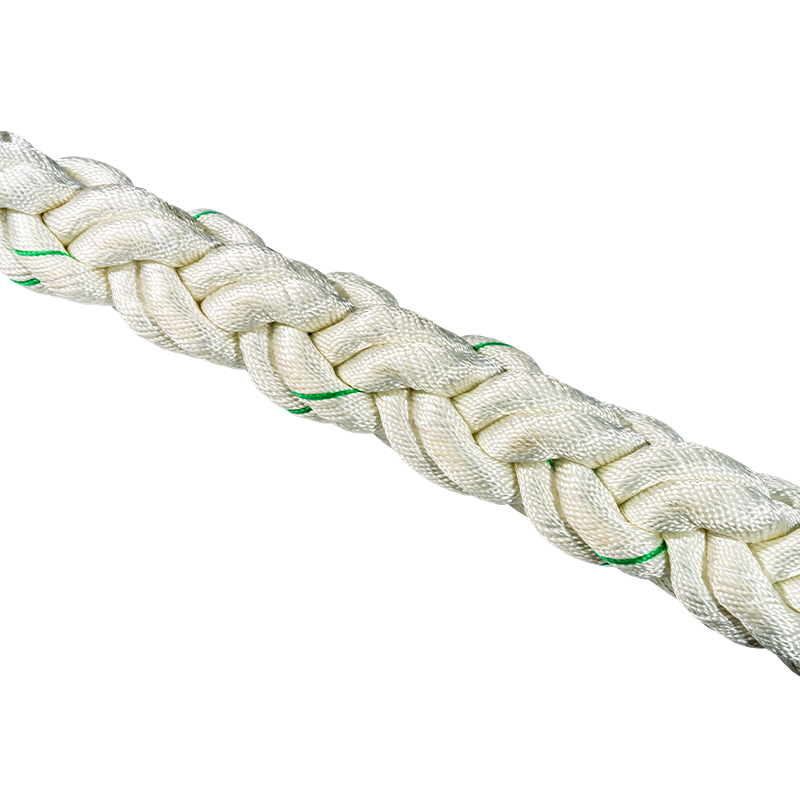
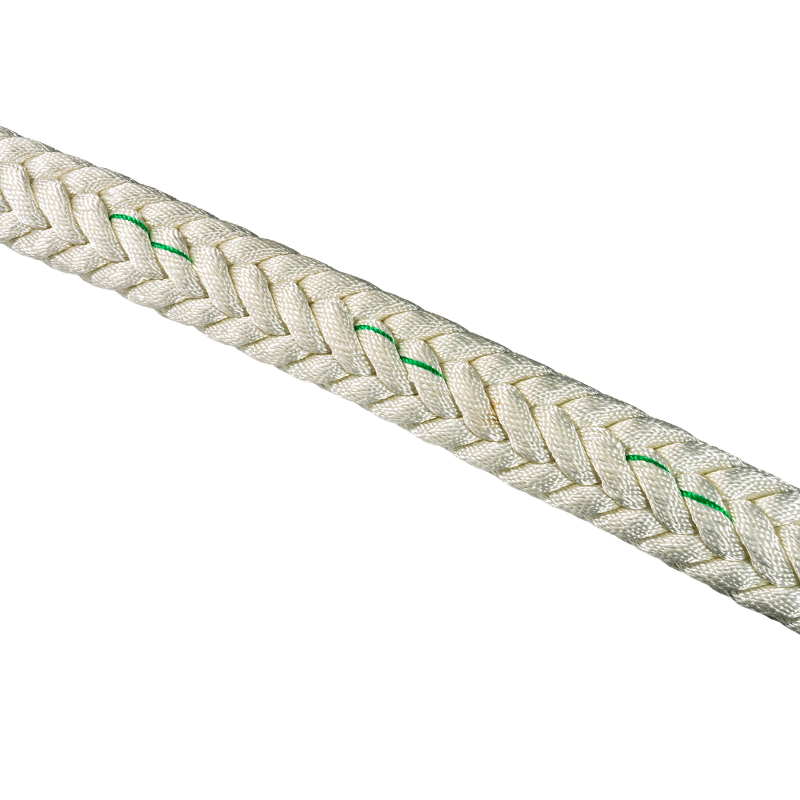 Polyester Double Braided RopeWith a protective cover over load-bearing core, this rope offers high strength, low elongation, and strong UV, abrasion, and chemical resistance—exactly why it endures harsh marine service where sunlight degrades other constructions first.View Product →
Polypropylene is the only fibre here that floats naturally, and it absorbs essentially no water at the lowest price of the four. That combination explains its hold on tow lines, marker ropes and any job where a submerged rope is a problem or a lost one an acceptable cost. Sunlight is its weakness: untreated polypropylene fades and weakens within a single season of full exposure, and even stabilized grades age faster than polyester. Its melting point is also the lowest of the group, so friction heat deserves respect.
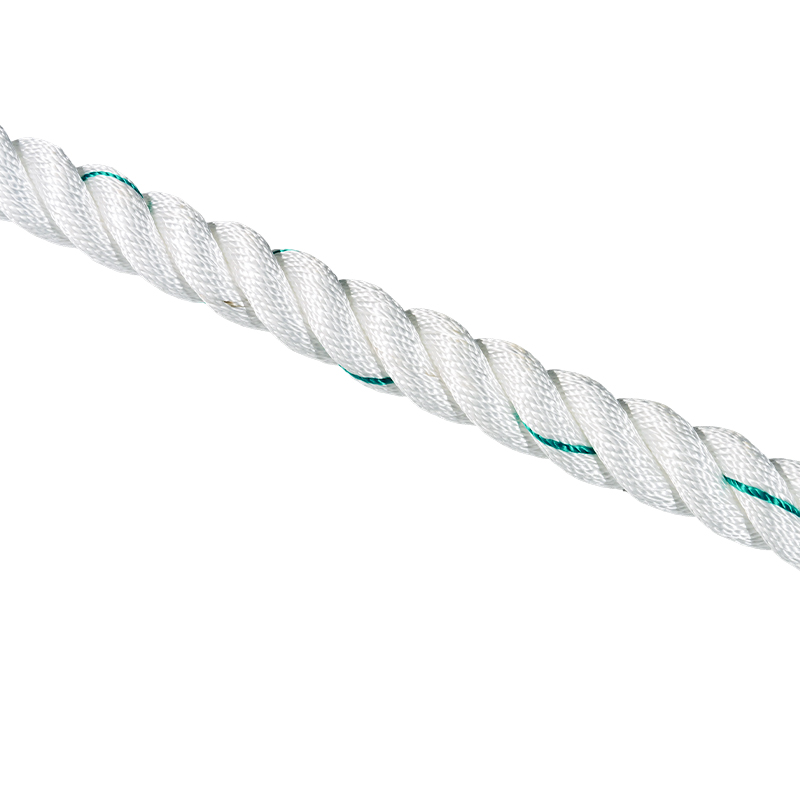
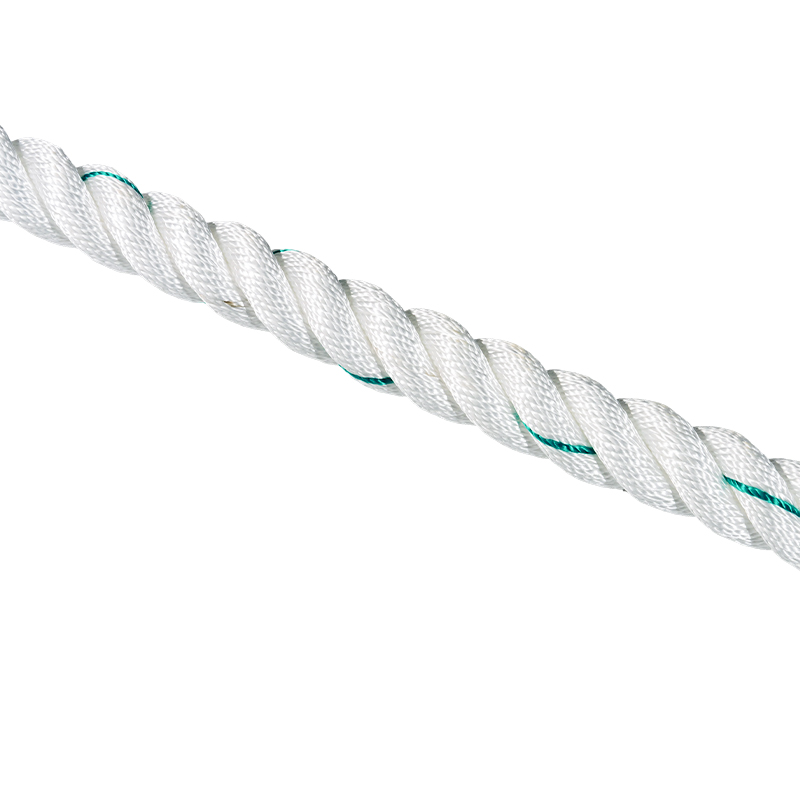
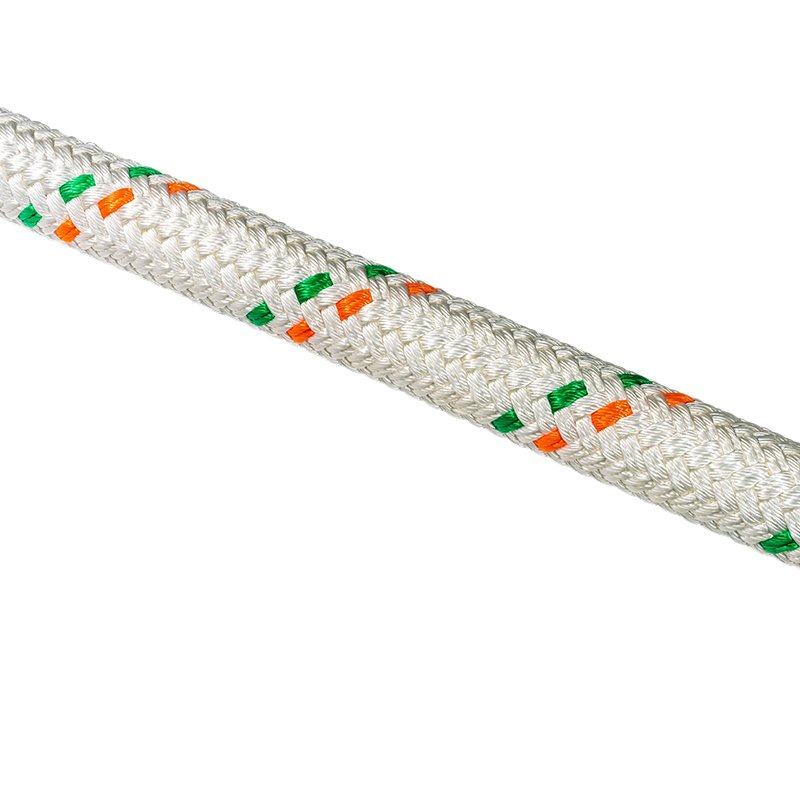 3-Strand Polypropylene RopeThis floating, low-water-absorption rope suits tow and marker lines where a submerged rope is a problem. Available from 6-60mm, it combines high strength, abrasion resistance, and easy handling at low cost.View Product →
Nylon takes up roughly 3-7% of its weight in water and gives up about 10-15% of its strength while saturated, strength that returns once the rope dries. Its UV performance is good, comfortably ahead of polypropylene though usually a step behind polyester. What the moisture penalty buys is elasticity: nylon is the best shock absorber among common fibres, which keeps it the default for anchoring and for mooring lines working in surge. Store it dry, since a damp coil is miserable to handle even though the fibre itself resists mildew.
Ultra-high-molecular-weight polyethylene pushes the weather logic to its limit: near-zero water absorption, excellent UV stability, buoyancy and the highest strength-to-weight ratio of any rope fibre in common use, with barely any stretch. A 12-strand UHMWPE line can match the strength of steel wire at a fraction of the weight, which is why offshore moorings, tow gear and weight-critical installations specify it. The price is the trade-off, along with a melting point near 145-150°C that makes friction management part of the design.
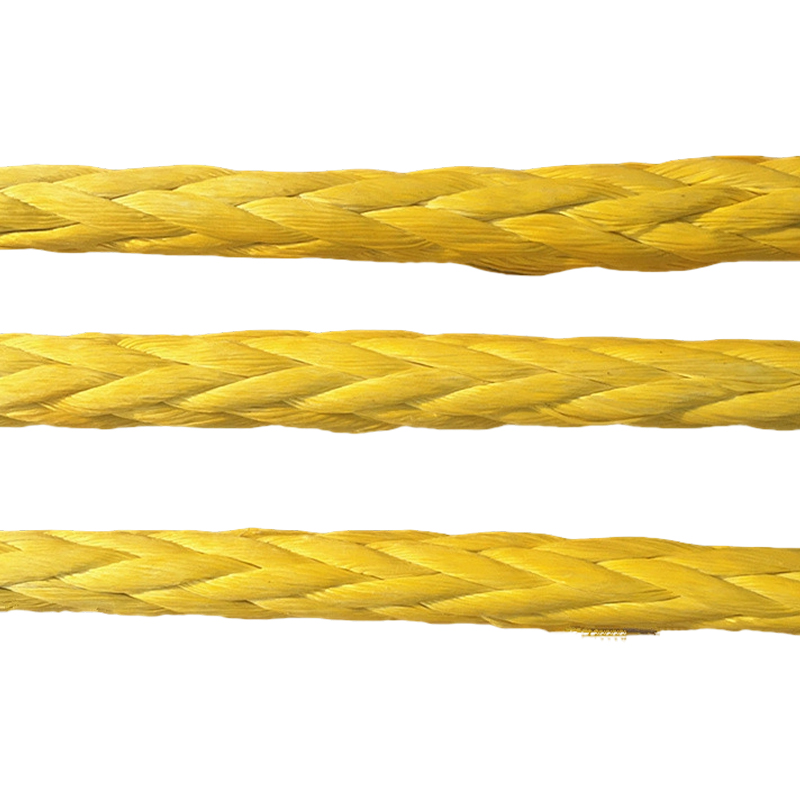 12-Strand UHMWPE RopeUHMWPE rope floats, absorbs virtually no water, and resists UV while matching wire rope strength at a fraction of the weight—making it the choice for offshore moorings, towing, and weight-critical installations.View Product →
Material sets the ceiling; construction decides how gracefully a rope approaches it. Three-strand rope is economical, easy to splice and easy to inspect, but every fibre sits in the sun. Double-braid construction hides the core inside a cover, so the jacket absorbs sunlight and chafe first, and braided structures also distribute repeated flexing more evenly than twisted ones, a real difference on lines that work against wind and swell every day.
How differently two similar-looking ropes can age is easiest to see with polypropylene and polyester, which our full comparison of polypropylene vs. polyester UV resistance examines fibre by fibre.
Specification deserves the same scrutiny. Reputable marine rope makers publish wet as well as dry breaking loads, and the gap between grades of the same polymer can exceed the gap between two different polymers. Confirming that a polypropylene rope actually carries a UV stabilizer package, for instance, is a thirty-second question that protects a full season of service.
Work through the list in order; each step narrows the field and prevents the most expensive mistakes.
Seeing how these choices play out also helps. Our application cases collect examples from shipbuilding, offshore engineering and port operations where fibre, construction and diameter had to be settled against real weather and load conditions.
Even the best fibre ages faster than it should with careless handling. Rinse salt out of lines that have worked in seawater, dry them fully before coiling, and store them shaded rather than on an open rack. Fit chafe gear wherever a line crosses a fairlead or rail, because abrasion and sunlight concentrate their damage at the same points. Inspect seasonally: fuzzing, stiffness, flat spots and discoloured patches are the visible edge of strength loss, and a rope retired a season early always costs less than the failure it prevents.
Weather is the one load case no rope ever escapes. Choosing a fibre that matches the exposure, and a construction that protects it, turns a consumable into dependable gear, and it remains the cheapest reliability decision available to anyone who works around water.
Mar 12. 2026
What Are the Most Common Practical Uses for Polypropylene Rope?Core Applications of Polypropylene Rope in Marine and Water Activities In the modern rope industry, Polypropylene Rope (often referred to as “PP rope” or “floating rope”) has become an irreplaceable tool for water-based ...
Read MoreMar 12. 2026
Polyester Rope Guide: Types, Uses, Strength & Buying TipsPolyester rope is one of the most versatile and reliable cordage options available today. It outperforms nylon in UV resistance, holds its strength when wet, and stretches far less under load — making it the preferred c...
Read MoreMar 13. 2026
What is polyester rope and why is it the best choice for most applicationsWhat Is Polyester Rope? Understanding the Basics Polyester rope is one of the most widely used synthetic ropes in the world today, valued across industries for its exceptional balance of strength, durability, and resista...
Read More


 English
  русский
  Español
  عربى
عربى