2026.09.25
 Industry News
Content
When a job calls for pulling heavy cables through buried conduits, across open water, or between tower structures, the rope on your drum is not just a consumable; it is the critical link between your crew and a safe outcome. A high strength cable hauling rope with 150m loops ends and a clearly defined breaking strength is built for exactly these demanding pulls, and understanding its specifications is the first step to using it with confidence.
A cable hauling rope is a purpose-built line used to pull electrical cables, fibre optic lines, or heavy hoses through ducts, trays, and trenches. The specification "150m loops ends" refers to a rope supplied in a continuous 150-metre length with a spliced loop, or eye, at each end. These loops let riggers attach the rope directly to a winch hook, shackle, or cable grip without tying knots, which is important because knots can reduce rope strength by up to 40 percent.
Breaking strength is the maximum force the rope can withstand before it fails. For industrial hauling, this number is not optional; it guides every decision about how much load is safe to pull and which safety factor should be applied. Ropes specified for cable hauling are typically built from high tenacity synthetic fibres and finished with eye splices that preserve as much of the original fibre strength as possible.
Too often, operators confuse breaking strength with what a rope can safely handle in daily service. Breaking strength, also called minimum breaking strength (MBS), is determined under laboratory conditions using a new, unknotted sample of rope. The working load limit (WLL) is the maximum load you should apply during normal use, and it is always a fraction of the breaking strength. As a rule of thumb, an industrial hauling rope should be used with a safety factor of at least 5:1, and often 8:1 for applications involving people or high-value equipment.
For example, if a rope has a certified breaking strength of 20,000 kg, a 5:1 safety factor means you should not exceed a working load of 4,000 kg. Spliced terminations, sharp edges, and dynamic shock loads all reduce real-world capacity, so a conservative approach is always wiser. Our guide to how rope strength is measured walks through the laboratory procedures behind these numbers.
| Material | Diameter | Breaking Strength | WLL at 5:1 |
|---|---|---|---|
| Polyester | 12 mm | 18,500 kg | 3,700 kg |
| UHMWPE | 12 mm | 32,000 kg | 6,400 kg |
| Nylon (Polyamide) | 14 mm | 22,500 kg | 4,500 kg |
The 150-metre length is not arbitrary. It matches common cable drum lengths and trench runs in utility, marine, and construction projects, reducing the number of joints or re-splices required on site. A continuous length also means more consistent tension across the entire pull, which is especially valuable when installing fibre optic cables that cannot tolerate overstretching.
Looped ends are equally practical. A properly spliced eye can maintain 90 percent or more of the rope's original breaking strength, while a knot such as a bowline can reduce strength by 40 to 50 percent. With loops at both ends, the hauling rope can be shackled directly to the cable swivel at one end and to a winch or pulling grip at the other. Changeovers are faster, and the risk of a knot slipping under heavy load is eliminated. When ordering a 150m rope with looped ends, ask the manufacturer for the spliced breaking strength rather than the rope's nominal strength, since the splice quality directly affects the real-world limit.
The best material for a cable hauling rope depends on the pulling environment, the weight of the cable, and whether the rope will be used wet or dry. These are the three materials we see most often specified for high strength hauling work, and each has a clear role.
Polyester is the default choice for cable pulling because it combines low stretch with excellent resistance to UV light, abrasion, and chemicals. A 12-strand polyester rope holds its shape well, runs smoothly through conduits, and provides a firm, predictable pull. If your project needs a balance of strength and handling, a 12-strand polyester rope is a reliable workhorse.
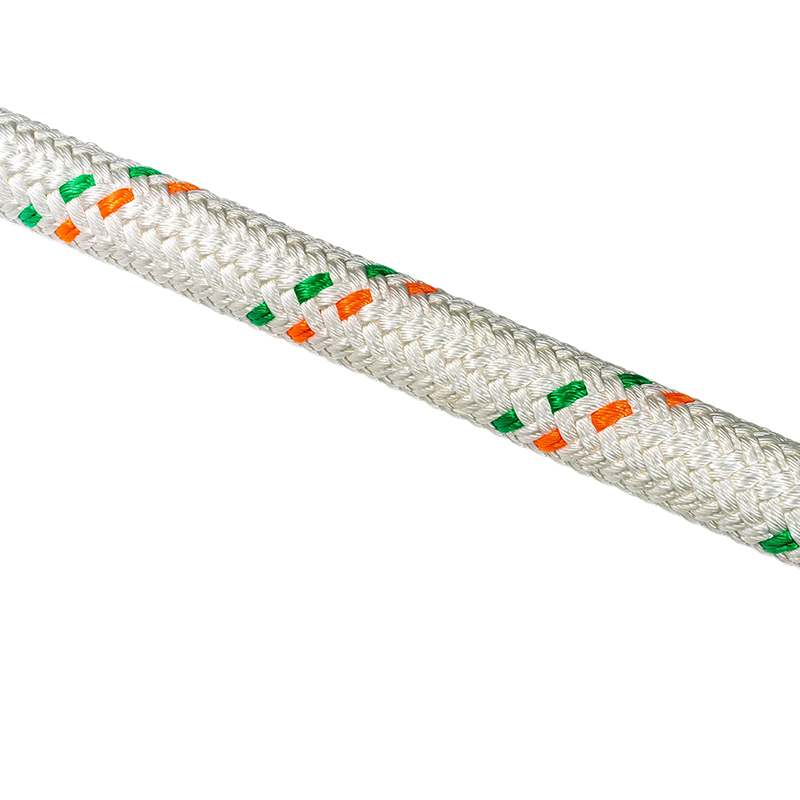 12-Strand Polyester Rope for High-Load Precise Cable PullingThis 12-strand polyester rope offers low stretch, UV and abrasion resistance, and stable performance in wet conditions, making it a dependable choice for conduit runs that require firm, predictable pulling force.View Product →
When pulling distances are long or the cable is exceptionally heavy, ultra-high molecular weight polyethylene (UHMWPE) offers the highest strength-to-weight ratio of any fibre rope. It floats, resists water absorption, and can deliver multi-tonne breaking strength in a diameter that is easy to handle. For crews that need to carry the rope over rough terrain or deploy it by hand, this material is difficult to beat.
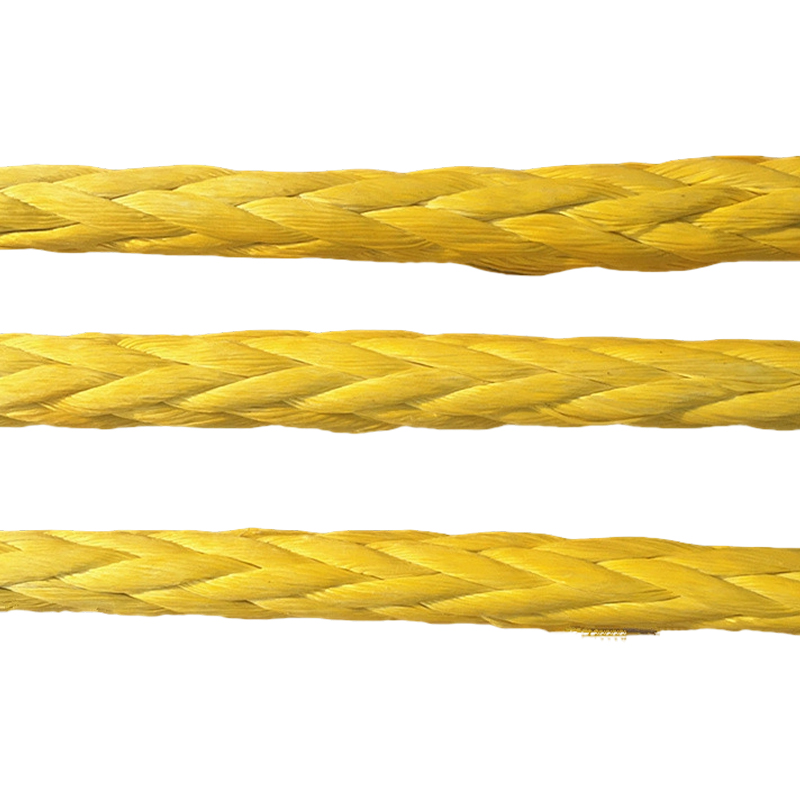 12-Strand UHMWPE Rope with Exceptional Strength-to-Weight RatioUltra-high molecular weight polyethylene delivers multi-tonne breaking strength in a lightweight, floating rope with low elongation and excellent durability, ideal for long or heavy pulls where handling and portability matter.View Product →
Nylon, also known as polyamide, is the most elastic of the three. It is the right choice when the pulling line may be subjected to sudden snatch loads, such as freeing a stuck cable or working in choppy water. Nylon stretches under load and absorbs shock energy rather than passing it suddenly to the cable or winch. Our application and case studies show how these material differences play out in real projects.
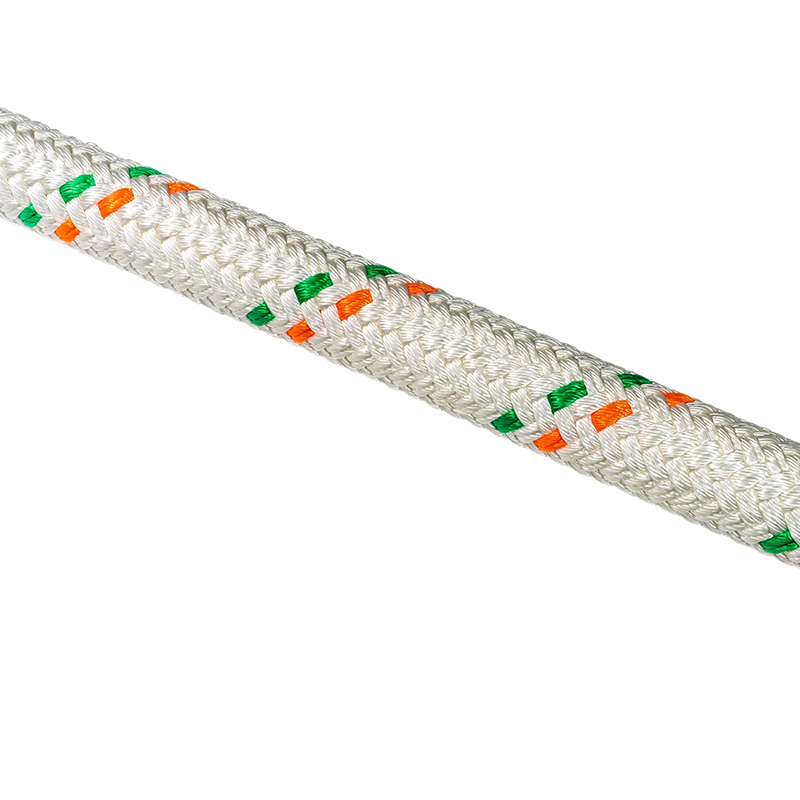 12-Strand Nylon Polyamide Rope with Shock-Absorbing ElasticityThis nylon rope stretches under sudden loads to absorb impact energy, reducing shock transfer to cable or winch, while maintaining strength and abrasion resistance for demanding mooring, towing, or stuck-cable recovery tasks.View Product →
The breaking strength printed on a rope's certificate is measured on a straight, unknotted sample. In real working conditions, several factors reduce that number significantly:
Because of these losses, reputable rigging procedures never operate a hauling rope at more than 20 percent of its rated breaking strength, and often less. The 5:1 safety factor is a floor, not a recommendation, for high-risk work. When a rope is subjected to repeated pulls, also inspect the loop splices at both ends, since these experience the highest concentration of stress.
These ropes are used wherever cables need to be pulled over long distances or through difficult paths. Common examples include:
A high strength hauling rope is an investment, and proper care extends its life considerably. After every pull, inspect the rope along its full length, paying special attention to the loops and any section that passed over sharp edges. Look for broken filaments, surface fuzz, stiff or melted spots, and discolouration.
Store the rope coiled, dry, and away from direct sunlight and chemicals. If you notice a reduction in diameter, exposed core fibres, or a hard, glazed feel, replace the rope before the next job. When in doubt, a break test on a sample length sent to a laboratory is the most reliable way to confirm that the rope still meets its rated breaking strength. Replacing a worn hauling rope is far more cost-effective than dealing with a broken line during a critical pull.
Choosing the right high strength cable hauling rope with 150m loops ends and a certified breaking strength comes down to matching material properties to your pulling conditions, respecting safety factors, and treating the rope as the critical tool it is. Whether you specify polyester for low stretch, UHMWPE for extreme strength, or nylon for shock absorption, a spliced-loop rope in a continuous 150-metre length will make your next cable pull faster, safer, and more predictable.
Mar 12. 2026
What Are the Most Common Practical Uses for Polypropylene Rope?Core Applications of Polypropylene Rope in Marine and Water Activities In the modern rope industry, Polypropylene Rope (often referred to as “PP rope” or “floating rope”) has become an irreplaceable tool for water-based ...
Read MoreMar 12. 2026
Polyester Rope Guide: Types, Uses, Strength & Buying TipsPolyester rope is one of the most versatile and reliable cordage options available today. It outperforms nylon in UV resistance, holds its strength when wet, and stretches far less under load — making it the preferred c...
Read MoreMar 13. 2026
What is polyester rope and why is it the best choice for most applicationsWhat Is Polyester Rope? Understanding the Basics Polyester rope is one of the most widely used synthetic ropes in the world today, valued across industries for its exceptional balance of strength, durability, and resista...
Read More


 English
  русский
  Español
  عربى
عربى