2026.08.26
 Industry News
Content
Pick up a mooring line on a bulk carrier, a towline on a harbour tug, and a lifting sling in a shipyard, and you are holding three products that all belong to the same family. They are braided ropes, but their strand count, fibre type, and braiding pattern give each one a different response to load, stretch, abrasion, and sunlight. The practical conclusion is simple: the right type of braided rope comes down to two questions — how many strands it has, and what fibre those strands are made from. Choose both correctly, and the rope will perform predictably for years. Get the combination wrong, and a supposedly strong line can fail from UV degradation, repeated shock loading, or poor grip on a winch drum.
A braided rope is produced by interlacing strands or yarns in a diagonal pattern rather than twisting them into a laid construction. The braided structure distributes load more evenly over the cross-section, reduces rotation under load, and gives a smoother exterior that is easier on hands, fairleads, and winch drums.
Compared with twisted ropes, braided ropes generally have better flex fatigue resistance and hold their shape longer in continuous service. The cost is usually higher because braiding uses more fibre per metre and requires more production time. When the mechanical differences matter for a particular job, our comparison of braided versus twisted rope constructions explains which geometry wins and when.
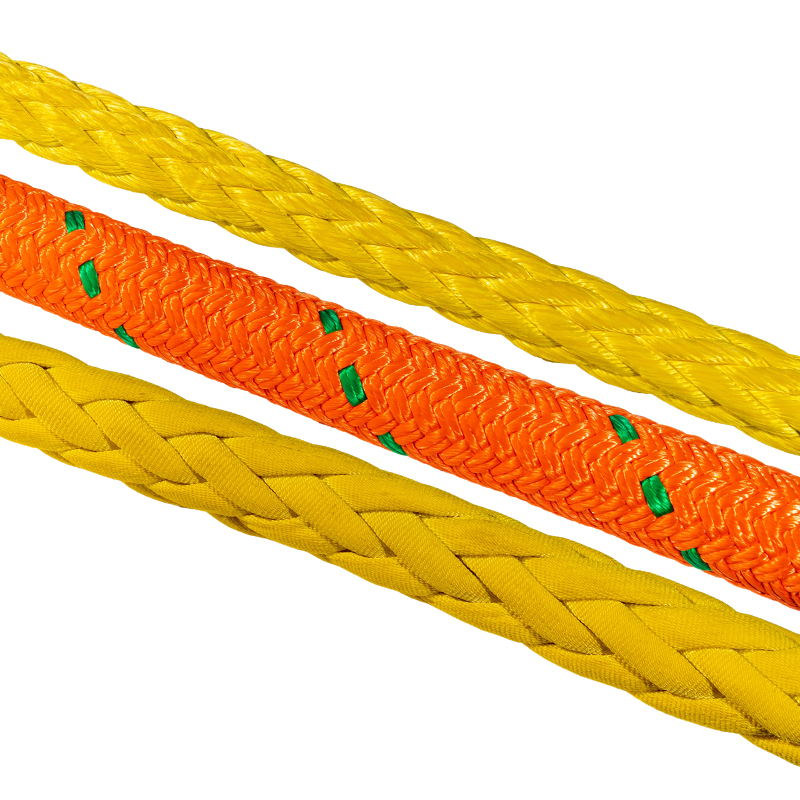
Most industrial braided ropes used in marine, offshore, and lifting work fall into four construction families. Each one changes how the rope handles, splices, and behaves under load.
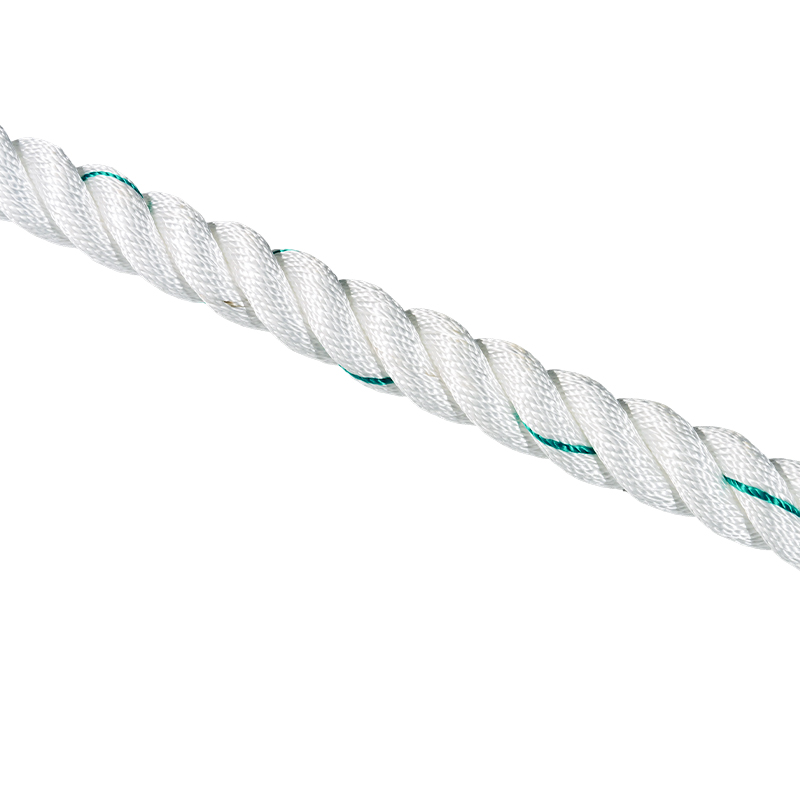
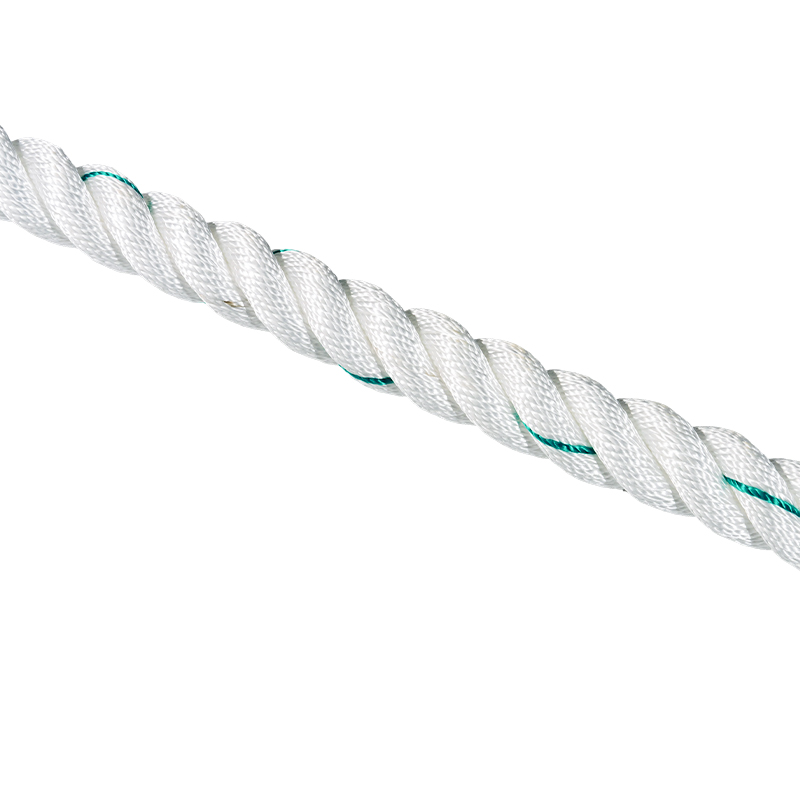
Strictly speaking, 3-strand is a laid or twisted construction rather than a true braid, but it is the most common entry-level structure and the natural baseline for comparing braided ropes. Three strands are twisted together in a tight diagonal pattern. The rope is round, economical, and easy to splice, which makes it popular for utility lashings, light mooring, and general yard work. Its drawbacks are rotation under load, a comparatively rough surface, and lower resistance to abrasion and flex fatigue.
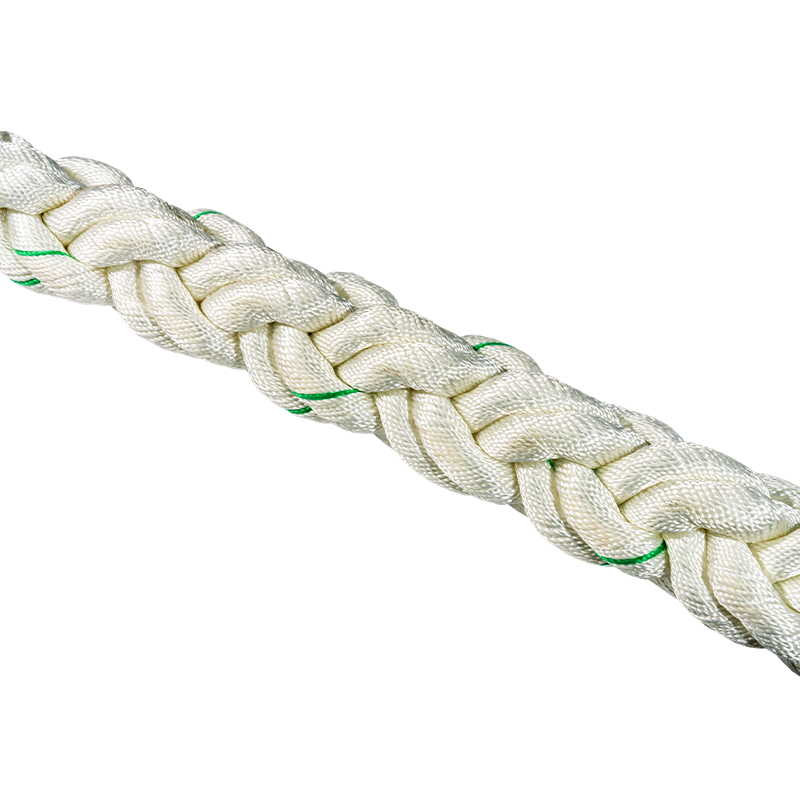
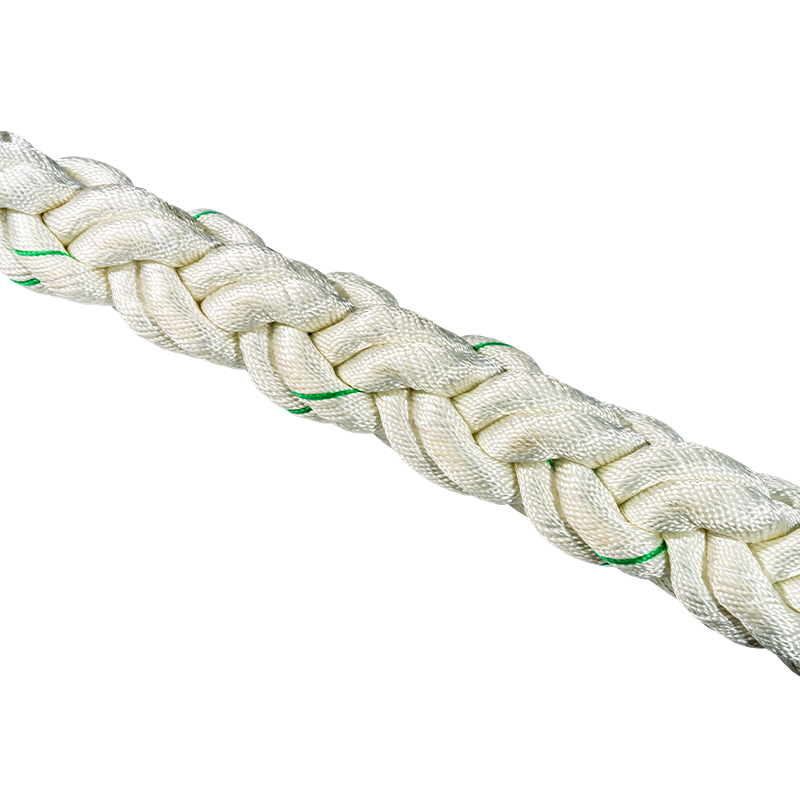
An 8-strand braided rope, often called plaited rope, interlaces strands in pairs to create a flexible, kink-resistant line with a square or round cross-section. It is noticeably softer than 3-strand and runs smoothly over rollers and through fairleads. This construction is widely used for mooring and towing lines on smaller vessels and for applications where the rope must lie flat on a drum without generating torque.
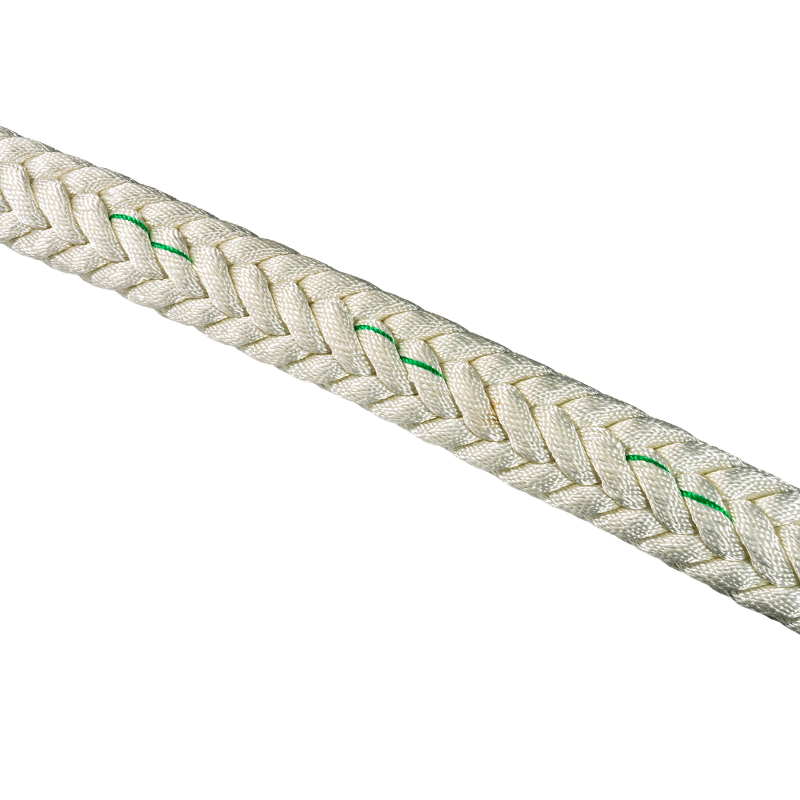
A 12-strand single braid is the most versatile braided construction in modern marine service. The finer strands produce a smooth, round, torque-free rope that moves easily through blocks and chocks, and it can be spliced with a long bury that retains a high percentage of the rope's rated strength. Because 12-strand is manufactured in nearly every fibre family, it appears in mooring lines, anchor warps, towlines, and safety lines across the industry.
A double-braided rope has a braided core protected by a braided outer cover. The two layers share the load, giving the rope a soft hand, controlled stretch, and good energy absorption. Double braid is the standard choice for anchor warps, yacht dock lines, and any safety-critical application where sudden shock loads are expected.
| Construction | Load behaviour | Typical uses | Relative cost |
|---|---|---|---|
| 3-strand laid | Tends to rotate; stiff feel | Lashing, light mooring, utility | Lowest |
| 8-strand braid | Flexible, kink-resistant | Mooring, towing, drum storage | Low |
| 12-strand braid | Torque-free, high splice efficiency | Mooring, anchor, tow, safety lines | Moderate |
| Double braid | Soft, shock-absorbing | Anchor warps, dock lines, safety | Higher |
Construction controls geometry, but the fibre controls strength, stretch, UV resistance, and service life. Five material families dominate braided rope production, and each solves a different set of problems.
Nylon has the highest elasticity of any common rope fibre. It stretches significantly under load and absorbs shock, which makes it the default for mooring lines, anchor lines, and towing springs where sudden forces are common. The trade-offs are a loss of roughly 10 to 15 percent of breaking strength when wet and steady creep under constant load. For demanding mooring jobs, a 12-strand nylon mooring rope combines the shock absorption of the fibre with a splice-friendly, torque-free construction.
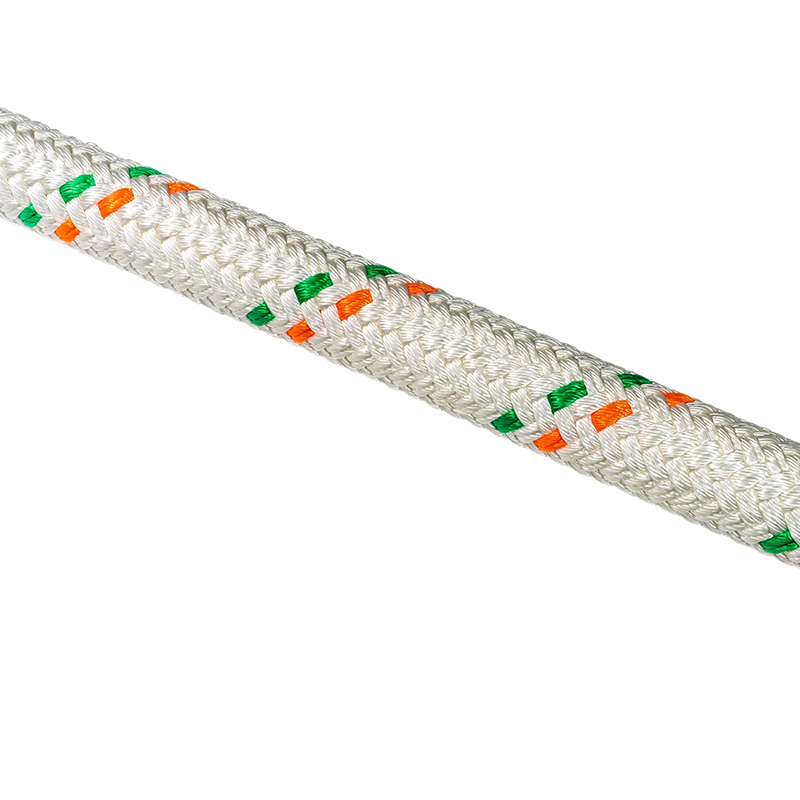 Wholesale 12-Strand Nylon/Polyamide Rope Manufacturers, Suppliers - Jiangsu HaifJiangsu Haifeng Rope Technology Co.,Ltd. is China Wholesale 12-Strand Nylon/Polyamide Rope Suppliers and 12-Strand Nylon/Polyamide Rope M...View Product →
Polyester is the balanced performer of the rope world. It has low stretch, retains its strength when wet, and resists UV degradation far better than nylon or polypropylene. Fixed mooring lines, running rigging, and lifting slings are typically built from polyester because dimensional stability under load matters more than elasticity. It is also the most predictable fibre for splicing and regular inspection.
Polypropylene is prized for one property above all: it floats. It is also the lightest and cheapest common rope fibre, which makes it useful for heaving lines, messenger lines, and temporary buoy systems. Its weakness is durability. Polypropylene degrades quickly under sunlight and abrasion, so it should never be used for permanent mooring or safety-critical lifting without a clear replacement schedule.
Ultra-high-molecular-weight polyethylene offers the highest strength-to-weight ratio of any fibre used in braided rope. A 12-strand UHMWPE rope is significantly lighter than an equally strong polyester line and has very low stretch, which explains its growing use in deepwater mooring, heavy lifting, and rescue systems. The material requires careful splicing and carries a higher price, so it is specified when diameter and weight savings justify the investment. For performance-critical applications, a 12-strand UHMWPE rope is the practical choice.
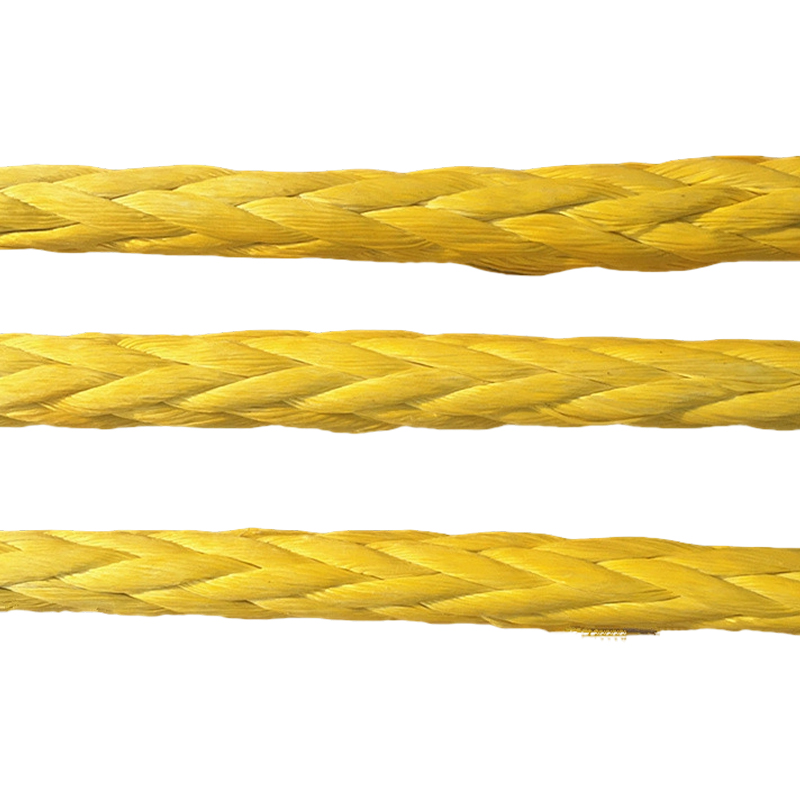 Wholesale HMPE Rope Suppliers, 12-Strand UHMWPE Rope ManufacturersJiangsu Haifeng Rope Technology Co.,Ltd. is China HMPE rope suppliers and 12-Strand UHMWPE Rope Manufacturers, we offer Wholesale 12-Stra...View Product →
Blended ropes combine the abrasion and UV resistance of polyester with the light weight and floatation of polypropylene. The result is a durable, moderately priced line that handles well and remains visible on the water. A 12-strand polyester-polypropylene rope is a sensible specification for buoys, aquaculture, and general port service where neither pure material is ideal.
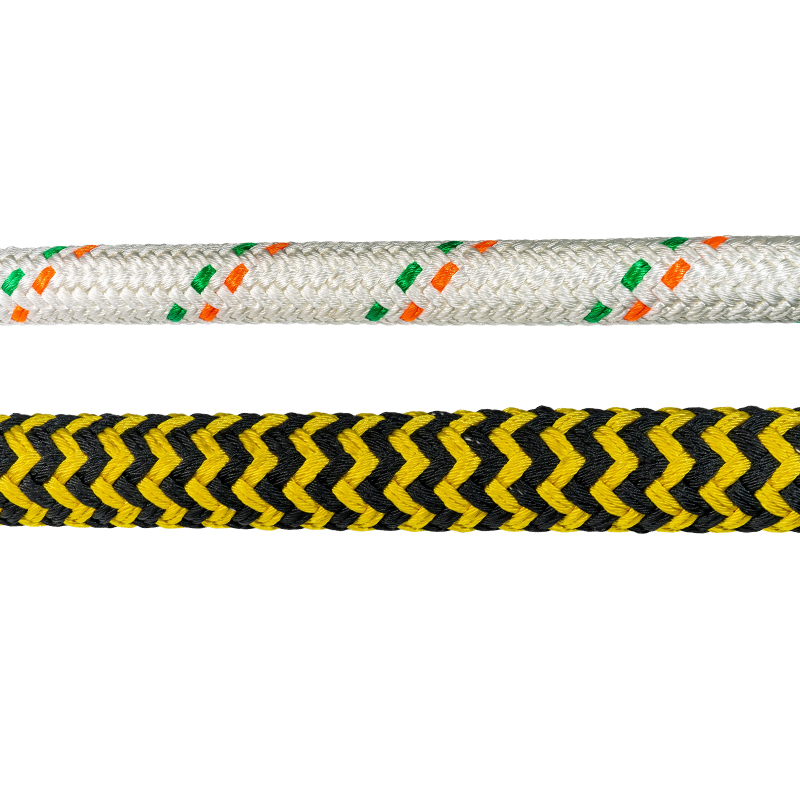 Wholesale 12-Strand Polyester/Polypropylene Mixed Rope Manufacturers, Suppliers Jiangsu Haifeng Rope Technology Co.,Ltd. is China Wholesale 12-Strand Polyester/Polypropylene Mixed Rope Suppliers and 12-Strand Polyeste...View Product →
Start with the load case, then work backwards to construction and fibre. For shock-loaded mooring and towing, nylon in a 12-strand or double-braid construction gives the best energy absorption. For fixed mooring lines and lifting, polyester offers low stretch and long UV life. Where floatation is required, use polypropylene or a polyester-polypropylene blend. Where weight and diameter are critical, UHMWPE outperforms everything else.
Check the splice and termination method before buying. A 12-strand rope can lose 20 percent or more of its rated strength with a poor splice, while a well-executed long bury can retain 90 percent or more. The same logic applies to inspection: braided ropes should be checked for surface wear, core damage, and UV discoloration on a scheduled basis, and retired when the outer cover shows significant fibre breakage.
For commercial marine use, verify that the rope manufacturer holds recognised quality and class society certifications, because these confirm consistent production and traceability. If you are still uncertain, real installation examples in marine and port applications show how each construction behaves in daily service.
Braided rope types are not a mystery once the two variables are separated. The strand count determines how the rope handles, splices, and behaves under load; the fibre determines how long it lasts and how much punishment it can take. Anchoring, towing, lifting, and mooring each demand a different combination, and buying the correct type from the start is cheaper than replacing a failed line in the field.
Mar 12. 2026
What Are the Most Common Practical Uses for Polypropylene Rope?Core Applications of Polypropylene Rope in Marine and Water Activities In the modern rope industry, Polypropylene Rope (often referred to as “PP rope” or “floating rope”) has become an irreplaceable tool for water-based ...
Read MoreMar 12. 2026
Polyester Rope Guide: Types, Uses, Strength & Buying TipsPolyester rope is one of the most versatile and reliable cordage options available today. It outperforms nylon in UV resistance, holds its strength when wet, and stretches far less under load — making it the preferred c...
Read MoreMar 13. 2026
What is polyester rope and why is it the best choice for most applicationsWhat Is Polyester Rope? Understanding the Basics Polyester rope is one of the most widely used synthetic ropes in the world today, valued across industries for its exceptional balance of strength, durability, and resista...
Read More


 English
  русский
  Español
  عربى
عربى