2026.06.24
 Industry News
Content
Low-stretch polyester rope sits at the intersection of performance engineering and everyday practicality -- a material built to hold tension precisely, resist the elements relentlessly, and outlast the alternatives in virtually every demanding application from marine rigging to industrial lifting.
Among the wide range of cordage available today, few materials offer as consistent a combination of dimensional stability, UV resistance, and load-bearing reliability as low-stretch polyester. Understanding what makes this rope category distinct -- and how to select, use, and maintain it correctly -- is essential knowledge for anyone who depends on rope performance in safety-critical or high-load situations.
Low-stretch polyester rope is a synthetic cordage manufactured from polyethylene terephthalate (PET) fibers, processed and braided or twisted in configurations specifically engineered to minimize elongation under load. While standard ropes -- including some polyester constructions -- may stretch several percent of their total length when tensioned, low-stretch variants are designed to remain dimensionally stable, typically elongating less than 3 percent at working load and often less than 1 percent in the highest-performance braided constructions.
The defining characteristic is not simply the fiber material but the combination of fiber grade, twist or braid architecture, and the tension applied during manufacturing. High-tenacity polyester yarns, tightly packed braid patterns, and pre-tensioning during production all contribute to a final rope that resists creep and elongation even under sustained or cyclic loading.
Compared to 10 to 15% for standard nylon rope under similar conditions.
Polyester retains over 80% of tensile strength after prolonged outdoor exposure.
Maintains strength and weight characteristics when wet, unlike natural fibers.
Stable across a wide thermal range without brittleness or softening.
The molecular structure of polyester fiber is the starting point for understanding its low-stretch behavior. Polyester polymer chains are relatively rigid and pack densely into crystalline structures during fiber manufacturing. When stress is applied, there is limited molecular rearrangement available, which means the fiber resists elongation at a fundamental level compared to nylon, whose more flexible polymer chains can uncoil and absorb energy -- a property that makes nylon excellent for shock absorption but poor for applications requiring positional stability.
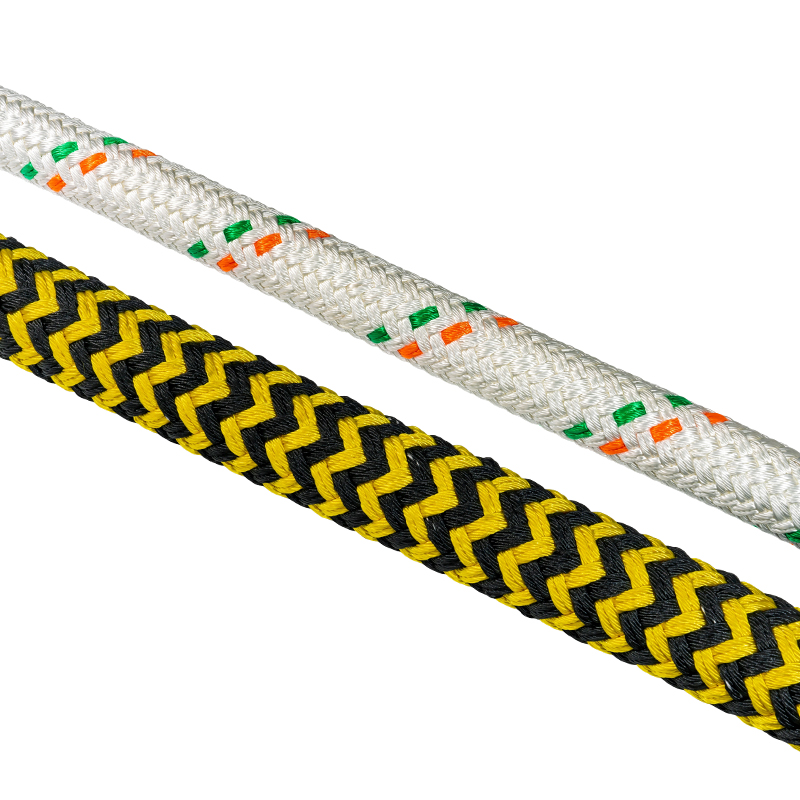
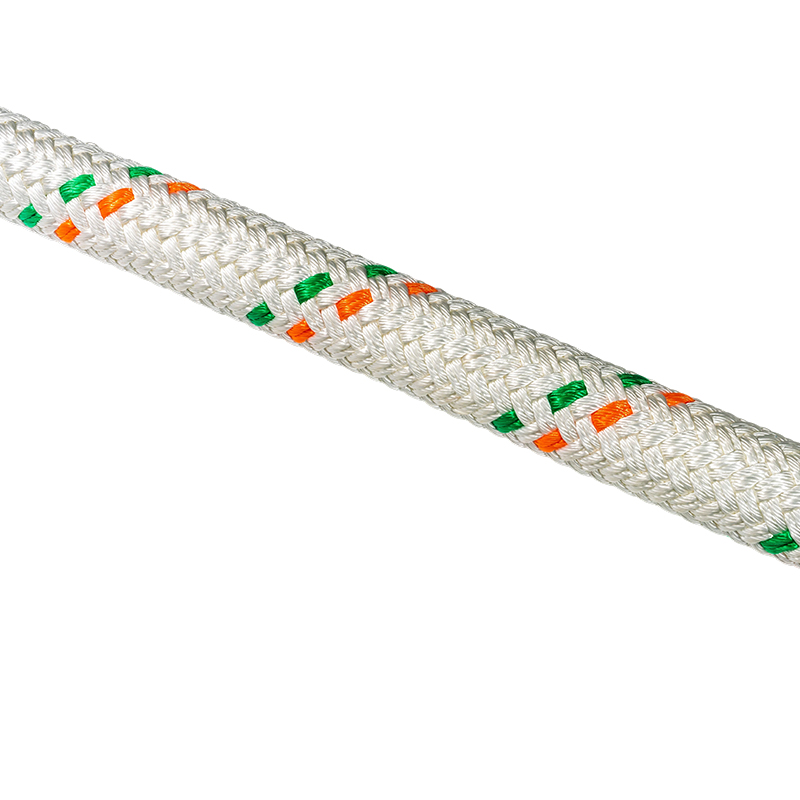
Beyond fiber chemistry, the construction method amplifies or diminishes the inherent low-stretch properties. A tightly braided 12-strand or 16-strand single braid places fibers in a near-parallel alignment along the rope axis, minimizing the geometric elongation that occurs as fibers in a loosely twisted construction straighten under load. Double-braid constructions -- a braided core inside a braided cover -- achieve the best combination of handling comfort and load stability, with the core carrying the primary tension and the cover providing abrasion protection and UV resistance.
Many premium low-stretch polyester ropes undergo a pre-stretching process during manufacturing, where the rope is placed under controlled tension at elevated temperatures, allowing the fibers to settle into their lowest-energy configuration before the rope leaves the factory. When the finished rope is placed in service, there is far less initial bedding-in stretch -- a property that is critical in applications like sailboat halyards, where even a few centimeters of unexpected elongation can change sail shape meaningfully under load.
Selecting the right rope material requires understanding the trade-offs between stretch, strength, weight, cost, and chemical resistance. The table below compares low-stretch polyester against the most common alternatives across the key performance dimensions relevant to demanding applications.
| Material | Stretch | UV Resistance | Wet Strength | Cost | Best For |
|---|---|---|---|---|---|
| Low-Stretch Polyester | Very Low | Excellent | Full | Moderate | Marine, rigging, anchor lines |
| Nylon | High | Moderate | Reduced | Low | Shock loads, towing, anchoring |
| HMPE / Dyneema | Minimal | Moderate | Full | High | Racing, technical lifting |
| Manila / Hemp | Medium | Poor | Degraded | Low | Decorative, light general use |
| Polypropylene | Medium | Poor | Full | Very Low | Floating lines, temporary use |
| Aramid / Kevlar | Near Zero | Poor | Moderate | Very High | Specialized industrial, defense |
For most marine, rigging, and industrial applications where budget, durability, and dimensional stability all matter simultaneously, low-stretch polyester represents the best overall value in the rope market. It is the practical professional's choice where HMPE performance is not strictly necessary and where nylon's elasticity would be a liability.
The combination of low elongation, UV stability, and moisture resistance makes low-stretch polyester suitable for an exceptionally wide range of applications. Understanding where it excels -- and where other materials might be preferred -- guides better purchasing and deployment decisions.
Halyards, sheets, control lines, and mooring warps all benefit from low elongation and saltwater resistance. Sail shape is directly controlled by halyard tension, making stretch a performance variable, not just a safety one.
Climbing lines, rigging ropes, and friction savers require consistent diameter and predictable behavior under dynamic loads. Low-stretch polyester provides the positional control that arborists depend on during complex rigging operations.
Load control in crane and block-and-tackle systems requires ropes that do not creep under sustained tension. Low-stretch polyester maintains load position without requiring constant retensioning during lifting operations.
Flying scenery, lighting, and performers demands repeatable, predictable positioning. Polyester's dimensional stability ensures that a cue set during rehearsal produces identical results at every performance.
While nylon is preferred for shock-absorbing anchor rodes, polyester mooring lines maintain consistent vessel positioning against tidal and current forces without the surging movement that elastic lines can allow.
Trellising, animal containment, and vineyard support systems benefit from low-stretch rope that maintains tension across long spans without sagging as temperatures and loads fluctuate seasonally.
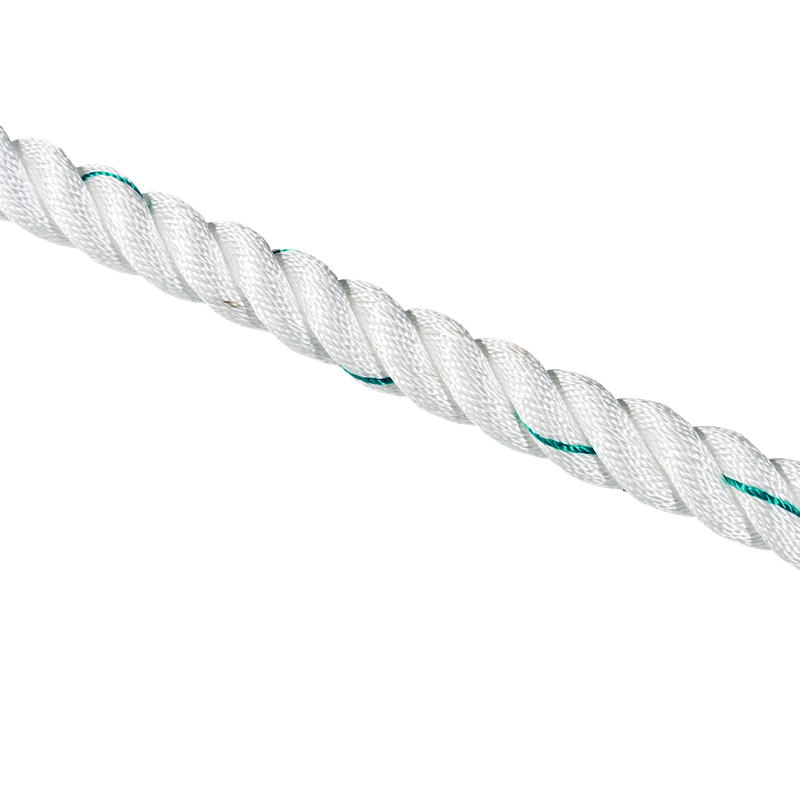
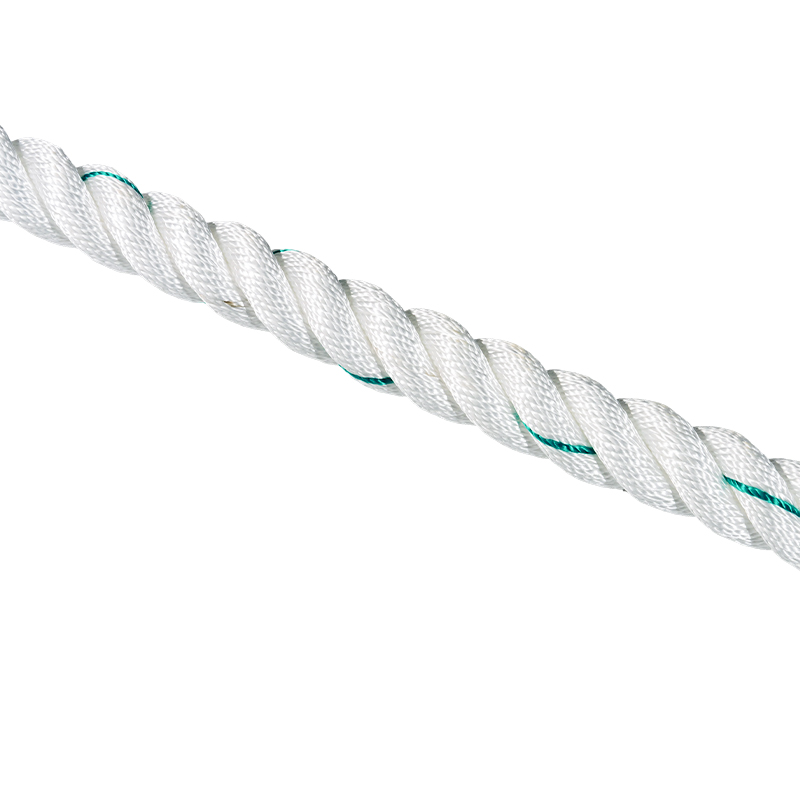
Three-strand twisted polyester is the most traditional and widely available construction. It is economical, easy to splice using conventional splicing techniques, and performs reliably in general-purpose applications. The twist geometry does introduce slightly more elongation than braided constructions of the same fiber grade, but three-strand low-stretch polyester still significantly outperforms nylon in positional stability. It is the practical choice for mooring lines, anchor lines, and agricultural applications where cost is a primary consideration.
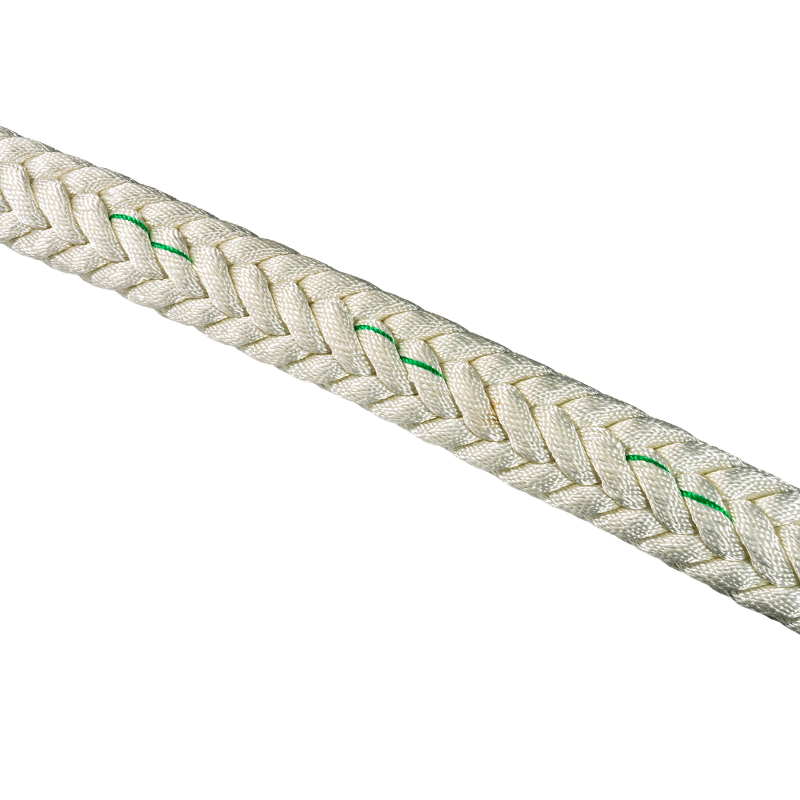
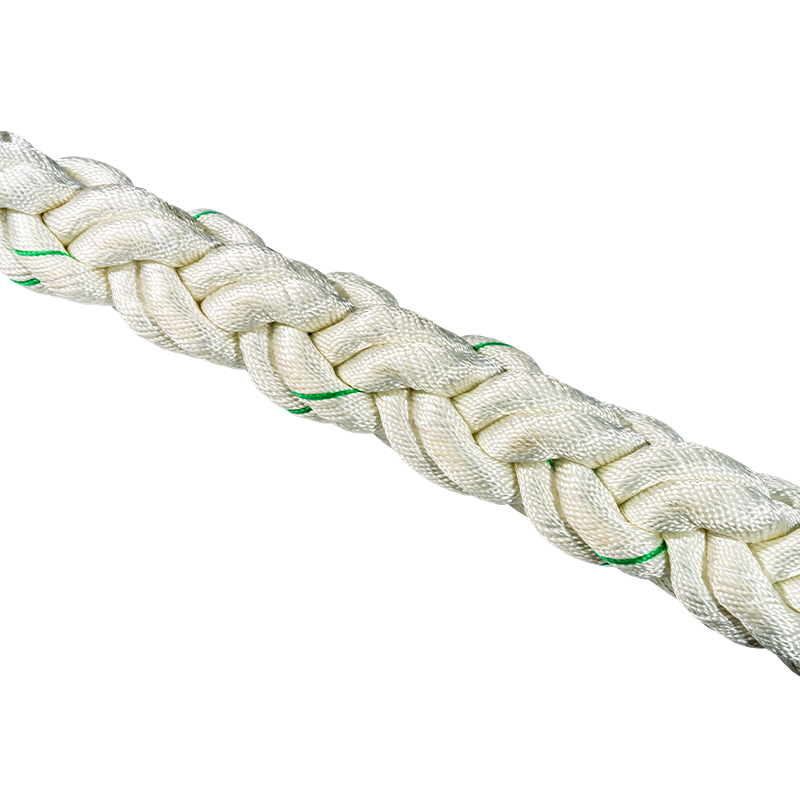
Single-braid constructions with 8 or 12 strands eliminate the twist geometry entirely, aligning fibers more parallel to the rope axis and reducing elongation further. These ropes are common in sailing applications, particularly for running rigging where the rope passes through clutches and blocks repeatedly. The round, consistent diameter of braided rope handles more smoothly over sheaves and through clutches than twisted rope, and the lack of a separate cover layer makes inspection of the structural core straightforward.
The double-braid construction pairs a braided polyester core -- which carries the primary tension -- with a braided polyester cover that provides abrasion resistance, UV protection, and handling comfort. This construction is the most versatile and widely specified in professional applications. The core and cover can be specified independently, allowing manufacturers to optimize each layer for its specific role, and the result is a rope that combines the lowest achievable stretch with excellent durability and a comfortable hand.
Kernmantle ropes feature a parallel or lightly twisted fiber core (kern) surrounded by a woven sheath (mantle). Originally developed for climbing and rescue applications, kernmantle low-stretch polyester ropes offer excellent load-bearing efficiency and very consistent elongation characteristics. They are particularly valued in rescue rigging, industrial access, and fall protection systems where performance under load must be predictable and repeatable.
Rope diameter directly governs breaking strength, with larger diameters carrying significantly higher loads due to the greater cross-sectional area of fibers. However, diameter selection in low-stretch polyester rope involves more than simply choosing the largest diameter that fits the application. Larger ropes are heavier, stiffer, more difficult to handle through pulleys and cleats, and more expensive per meter. Matching diameter to the actual load requirement -- with an appropriate safety factor -- is the correct engineering approach.
The working load limit (WLL) of a rope is typically set at one-fifth to one-tenth of the minimum breaking strength (MBS), depending on the application and applicable safety standards. For overhead lifting applications governed by industry standards, a minimum safety factor of 5:1 is commonly required, meaning a rope with a 10,000-kilogram breaking strength would be rated for a working load of 2,000 kilograms. Safety-critical applications including fall protection systems use higher safety factors still.
Never select a rope based on breaking strength alone. Working load limit, safety factor, and the type of loading -- static, dynamic, shock, or cyclic -- all determine the correct specification for any given application. When in doubt, consult the rope manufacturer's technical documentation or a qualified rigging engineer.
Despite its superior durability compared to natural fiber ropes, low-stretch polyester rope requires appropriate care to achieve its full service life. The most common causes of premature failure in polyester rope are abrasion, contamination, improper storage, and disregard for inspection intervals.
A properly executed splice in low-stretch polyester rope retains 90 to 100 percent of the rope's rated breaking strength, significantly outperforming a knotted termination, which typically reduces strength by 40 to 60 percent depending on knot type. For any application where maximum load capacity is required, spliced terminations are strongly preferred over knots.
Three-strand polyester rope accepts standard eye splices and back splices using traditional splicing techniques that experienced riggers can perform with basic tools. Braided polyester requires construction-specific splice methods -- a 12-strand braid uses a buried bury splice, while double-braid rope requires a more complex procedure involving both core and cover manipulation. High-quality pre-spliced rope ends are widely available from marine and rigging suppliers for applications where in-field splicing is not practical.
Polyester is a petroleum-derived synthetic fiber, and its production carries an environmental footprint that natural fiber alternatives do not. However, in applications where rope durability is directly tied to operational safety and where replacement frequency matters, the extended service life of high-quality low-stretch polyester often results in lower total material consumption over time than cheaper alternatives that wear out more rapidly.
Recycled-content polyester rope, manufactured from post-consumer PET such as reclaimed plastic bottles, is increasingly available and performs comparably to virgin-fiber rope in many general-purpose applications. For buyers with sustainability commitments, specifying recycled-content polyester where technical performance requirements allow is a meaningful option. At end of service life, polyester rope should be disposed of as synthetic waste rather than composted, and some manufacturers operate take-back programs for high-volume industrial users.
Selecting the correct low-stretch polyester rope for a specific application requires matching construction, diameter, and surface treatment to the demands of the task. Begin with a clear understanding of the maximum load the rope will experience -- including dynamic amplification factors for shock-loaded or impact-load scenarios -- and apply the appropriate safety factor to determine the minimum required breaking strength. From there, select the construction that best suits the handling environment: three-strand for budget-sensitive, splice-intensive applications; double-braid for professional rigging and marine use; kernmantle for personal protective equipment and rescue systems.
Coating and surface treatments also matter. Ropes intended for use on winches and capstans benefit from smooth, tight covers that resist peening and distortion under load. Ropes used by hand benefit from a slightly softer, more textured cover that provides grip and reduces handling fatigue. Specialized treatments including heat-resistant coatings and urethane impregnation are available for specific industrial environments.
Finally, purchase from reputable manufacturers who provide verifiable technical data including actual break test results, elongation curves, and safety certifications relevant to your application. In safety-critical applications, the difference between a certified rope from a quality manufacturer and an uncertified product sold primarily on price can be the difference between a system that performs reliably and one that fails without warning.
Low-stretch polyester rope is one of the most thoroughly proven materials in modern rigging and cordage. Specified correctly, installed with proper terminations, and maintained with consistent inspection, it delivers years of dependable service in some of the most demanding applications any rope will ever face.
Mar 12. 2026
What Are the Most Common Practical Uses for Polypropylene Rope?Core Applications of Polypropylene Rope in Marine and Water Activities In the modern rope industry, Polypropylene Rope (often referred to as “PP rope” or “floating rope”) has become an irreplaceable tool for water-based ...
Read MoreMar 12. 2026
Polyester Rope Guide: Types, Uses, Strength & Buying TipsPolyester rope is one of the most versatile and reliable cordage options available today. It outperforms nylon in UV resistance, holds its strength when wet, and stretches far less under load — making it the preferred c...
Read MoreMar 13. 2026
What is polyester rope and why is it the best choice for most applicationsWhat Is Polyester Rope? Understanding the Basics Polyester rope is one of the most widely used synthetic ropes in the world today, valued across industries for its exceptional balance of strength, durability, and resista...
Read More


 English
  русский
  Español
  عربى
عربى