2026.07.01
 Industry News
Content
Material Science + Marine Engineering
Ultra-high-molecular-weight polyethylene has redefined what is possible on deck, in deep-water mooring, and offshore lifting — delivering strength-to-weight ratios that steel wire simply cannot match.
Ultra-high-molecular-weight polyethylene (UHMWPE) is a thermoplastic polymer whose molecular chains reach lengths of three to six million atomic mass units — roughly 100 times longer than those in standard polyethylene. When these chains are gel-spun and drawn into fibers under precisely controlled tension, the result is a material of extraordinary tensile strength, minimal stretch, and exceptional resistance to abrasion, UV radiation, and saltwater degradation.
In the marine industry, these properties translate directly into safer, lighter, and more cost-effective rigging. A UHMWPE marine rope of equal breaking strength to a steel wire rope will weigh less than a quarter as much and will float rather than sink — a critical advantage during deployment, recovery, and man-overboard rescue operations.
A single UHMWPE fiber strand, thinner than a human hair, can bear a load that would shatter glass — and at sea, that quiet strength changes everything.
The commercial breakthrough came when Dyneema (DSM) and Spectra (Honeywell) introduced gel-spinning technology in the 1980s. Since then, continuous improvements to fiber alignment, braiding architecture, and protective coatings have produced ropes that now underpin deepwater mooring systems, naval vessels, harbor towlines, aquaculture equipment, and high-performance sailing rigs worldwide.
The superiority of high-strength UHMWPE rope in marine environments stems from a cluster of interlocking mechanical and chemical properties. Understanding each one helps operators select the right rope construction for the right application.
UHMWPE fibers achieve specific strengths of 2.4–3.5 GPa per unit density, enabling ropes with diameters 30–50% smaller than polyester equivalents at the same load rating.
Modern high-modulus UHMWPE grades exhibit creep rates well below 0.5% at working loads — critical for mooring lines and static tensioning where dimensional stability is non-negotiable.
The polymer's hardness and smooth molecular surface provide abrasion resistance 10–15 times greater than nylon, prolonging service life on chafe points, fairleads, and capstans.
With a specific gravity of 0.97, UHMWPE rope floats naturally. This eliminates the risk of snagging propellers and simplifies handling on deck and in the water.
UHMWPE is inert to seawater, diesel, hydraulic fluids, and most acids. UV-stabilized variants maintain over 85% of breaking strength after 3,000 hours of UV exposure.
Elongation at break is typically 2–4%, compared to 15–20% for nylon. This low stretch is essential for dynamic positioning tethers and precision towing operations.
The table below compares UHMWPE against steel wire rope, polyester, nylon (PA6/PA66), and polypropylene across the properties most relevant to marine applications.
| Property | UHMWPE | Steel Wire | Polyester | Nylon | Polypropylene |
|---|---|---|---|---|---|
| Specific Strength | Excellent | Good | Moderate | Moderate | Low |
| Weight (relative) | Very Light | Heavy | Moderate | Moderate | Light |
| Buoyancy | Floats | Sinks | Sinks | Sinks | Floats |
| Elongation at Break | 2–4% | 2–3% | 12–18% | 15–20% | 15–25% |
| Seawater Resistance | Excellent | Poor (corrosion) | Excellent | Good | Excellent |
| UV Resistance | Good (stabilized) | N/A | Good | Poor | Poor |
| Abrasion Resistance | Very High | High | Moderate | High | Low |
| Typical Service Life | 8–15 years | 5–10 years | 5–8 years | 4–7 years | 3–5 years |
The comparison makes clear that UHMWPE occupies a unique position: it matches or exceeds steel wire in tensile performance while matching or exceeding synthetic fibers in chemical resistance — and it does both at a fraction of the weight.
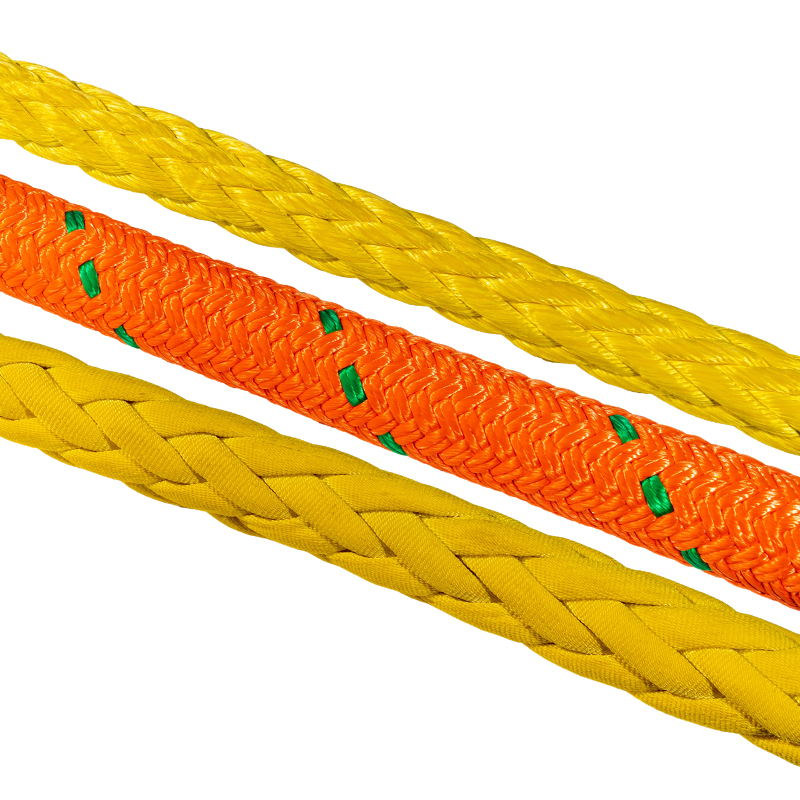
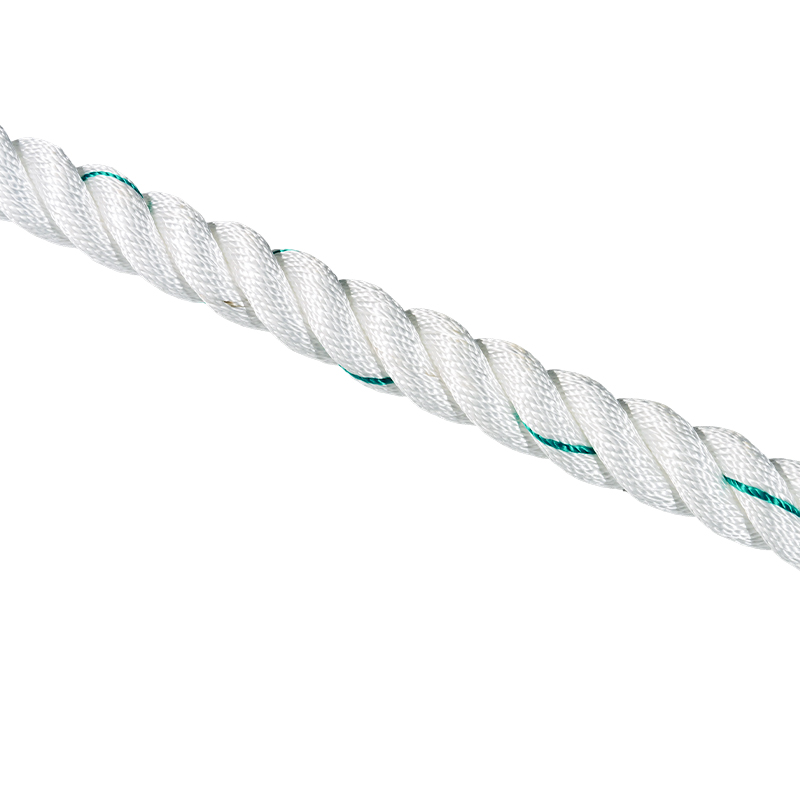
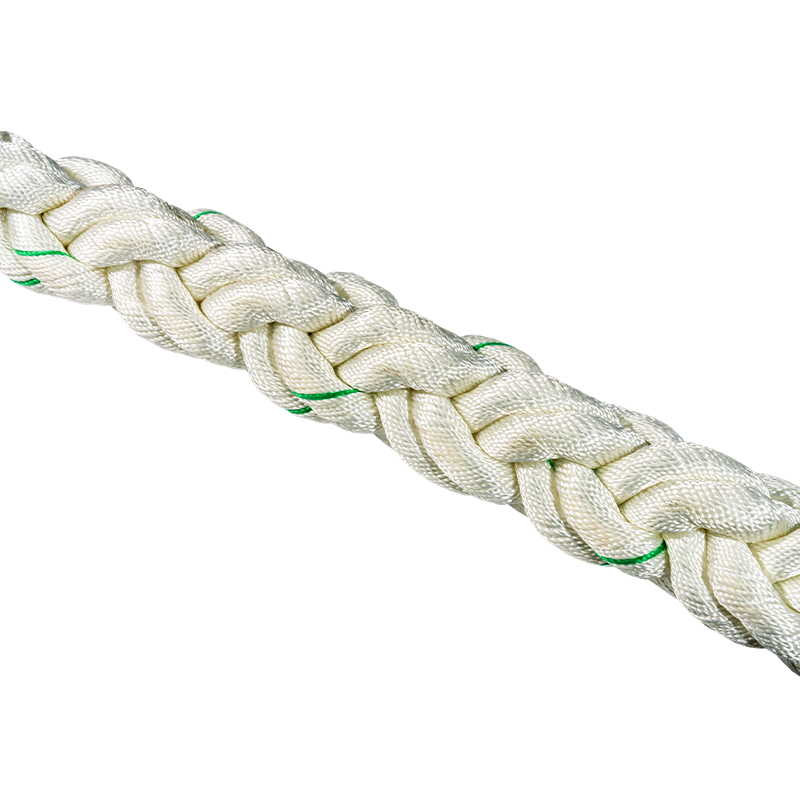
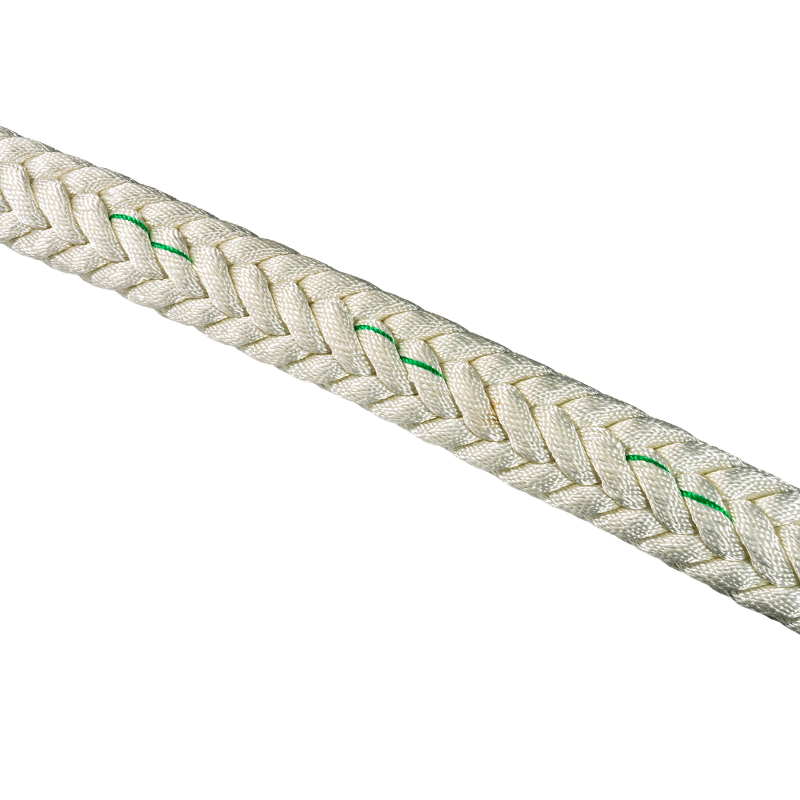
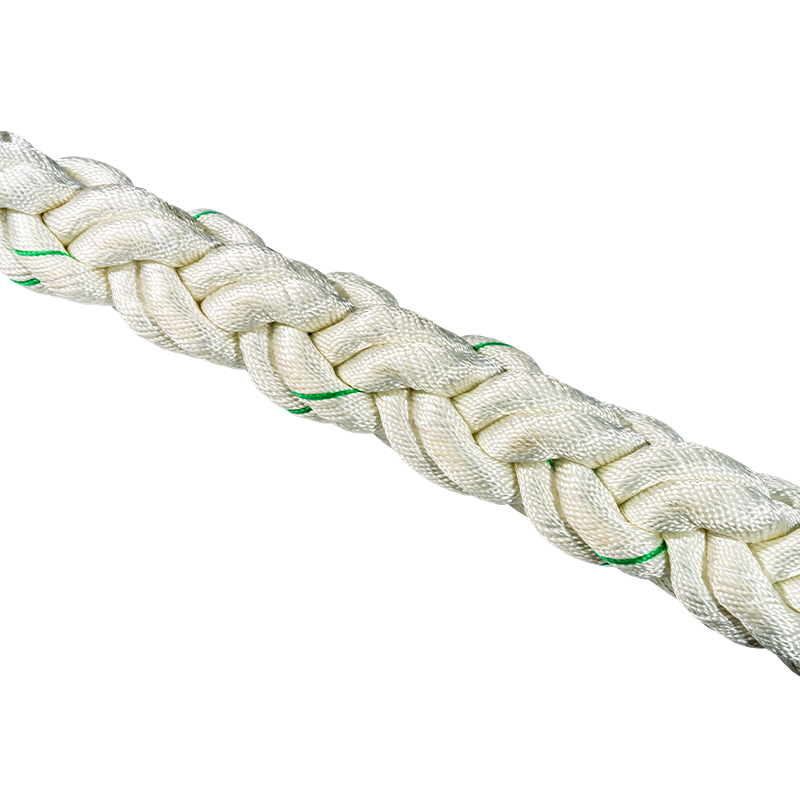
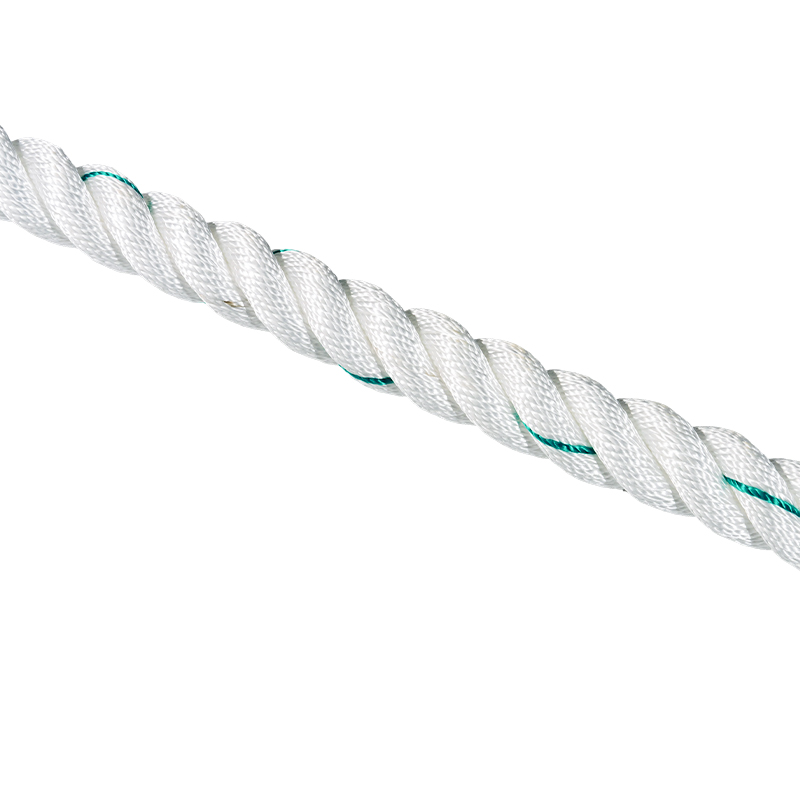
Not all UHMWPE marine rope is built the same way. The fiber itself is only the starting point; the braiding or stranding architecture determines how the rope behaves under dynamic loads, around bends, and across sheaves.
The dominant construction for deepwater mooring and towing, the 12-strand single braid offers a round cross-section that beds evenly on winch drums, excellent torque balance (zero rotation under load), and simple spliceability. Ropes in this construction typically achieve 85–95% of the fiber's theoretical breaking strength.
A UHMWPE core surrounded by a polyester or UHMWPE cover provides enhanced abrasion protection and a soft hand. Double braid is the preferred choice for yacht rigging, lines that pass through clutches, and any application where direct fiber contact with hardware is unavoidable.
Plaited constructions absorb shock energy through their geometry, making them well-suited for anchor rodes and dynamic applications where controlled elongation is a benefit rather than a liability. They are also highly resistant to kinking.
High-specification offshore lifting slings often use a parallel-fiber UHMWPE core encased in a woven jacket. This construction maximizes the efficiency factor — the ratio of rope breaking strength to fiber breaking strength — and can be designed for specific bend-radius requirements dictated by shackle and block geometry.
High-strength UHMWPE marine rope has displaced steel and conventional synthetics across a broad spectrum of maritime operations, driven by both performance and total cost of ownership.
In deepwater mooring — where line lengths can exceed 3,000 meters — UHMWPE's buoyancy allows catenary geometries impossible with steel wire, significantly reducing the vertical load on the mooring system and the vessel's hull. For the commercial fishing industry, lighter gear means lower fuel consumption and reduced crew fatigue, both meaningful factors in operational economics.
In offshore mooring, replacing a single steel wire riser with UHMWPE can reduce dead weight by several tonnes — a saving that compounds across every link in the mooring chain.
The offshore and naval sectors operate within tightly regulated frameworks. Purchasers and specifiers of UHMWPE marine rope should verify compliance with the relevant standards for their application class.
ISO 10572 governs fiber ropes for general purpose applications, while ISO 2307 specifies methods for determining properties of fiber ropes including breaking force, elongation, and mass per unit length. For lifting applications, EN 1492 (Europe) and ASME B30 (North America) apply to soft slings including those made from UHMWPE.
The American Petroleum Institute's API RP 2SK covers the design and analysis of station-keeping systems for floating structures, and increasingly references synthetic rope specifically. DNV GL (now DNV) publishes offshore standard DNV-OS-E303, which provides a comprehensive framework for the qualification, testing, and certification of fiber ropes used in permanent mooring systems.
Reputable UHMWPE rope manufacturers commission independent testing of breaking strength, cyclic fatigue performance, knot efficiency, and chemical resistance. Certificates from Lloyd's Register, Bureau Veritas, DNV, or ABS give procurement teams a robust chain of evidence for quality assurance and regulatory compliance.
UHMWPE rope's service life advantage over steel wire is only realized if operators follow a disciplined inspection and maintenance regime. Unlike steel wire — which corrodes visibly from the outside — UHMWPE can accumulate internal damage that is not immediately obvious.
Check the full length for cuts, glazing (heat damage from friction), core lumps, flat spots, or discoloration. Any local reduction in diameter exceeding 10% of the nominal value warrants retirement.
Always observe minimum bend radius recommendations from the manufacturer, typically expressed as a multiple of rope diameter. UHMWPE loses tensile strength rapidly when bent over too small a radius due to inter-fiber abrasion.
Rinse with fresh water after saltwater use to remove crystalline salt deposits that accelerate internal abrasion. Allow to dry thoroughly before storage; despite the polymer's chemical inertness, moisture promotes mildew in covers.
Store coiled on well-ventilated racks, away from direct UV exposure (if non-stabilized), heat sources, and organic solvents. Do not store under heavy compressive loads.
Maintain a log of peak loads, number of load cycles, and any shock loads. Most manufacturers supply a retirement curve correlating cumulative load cycles to retained breaking strength percentage.
UHMWPE is a polyolefin recyclable as type-2 HDPE in many jurisdictions. Working with suppliers who offer take-back programs minimizes environmental impact and supports circular economy commitments.
With dozens of brands and constructions on the market, selecting the optimal rope requires a systematic approach. The following framework helps narrow the field.
Establish the maximum working load (MWL), expected dynamic loads (shock factor), and required safety factor. Offshore mooring typically demands safety factors of 3:1 or higher; racing halyards may work at 6:1 on a weight-optimized basis. Knowing the fatigue cycle count over the rope's intended service life is equally important, as high-cycle applications can limit the safe working load significantly below the static breaking strength divided by the safety factor.
UV exposure, chemical contact (e.g., proximity to fuel or hydraulic lines), temperature extremes, and abrasion hazards all influence whether a bare UHMWPE braid suffices or a jacketed or coated construction is necessary. Tropical deployments with high UV irradiance should always specify UV-stabilized yarn or a UV-resistant polyester cover.
Knots reduce breaking strength by 40–60% in UHMWPE rope. Spliced terminations retain 85–95% efficiency and should be specified as standard for any working application. Verify that the rope's construction supports the required splice type — lock-stitched eye splices, choke splices, or thimble-fitted eyes for shackle connections.
UHMWPE rope commands a higher purchase price than polyester or polypropylene, but the total cost of ownership calculation must include reduced handling costs (lighter weight), longer service intervals, lower inspection failure rates, and avoided downtime from unexpected failure. For mooring systems, the elimination of lubrication, anti-corrosion treatment, and the specialized tools required for steel wire also contributes to long-term savings.
High-strength UHMWPE marine rope represents a genuine step-change in offshore and maritime engineering — not an incremental improvement, but a rethinking of what rope can be. As fiber technology advances and installation expertise deepens, the range of applications where UHMWPE outperforms every legacy alternative continues to expand.
Mar 12. 2026
What Are the Most Common Practical Uses for Polypropylene Rope?Core Applications of Polypropylene Rope in Marine and Water Activities In the modern rope industry, Polypropylene Rope (often referred to as “PP rope” or “floating rope”) has become an irreplaceable tool for water-based ...
Read MoreMar 12. 2026
Polyester Rope Guide: Types, Uses, Strength & Buying TipsPolyester rope is one of the most versatile and reliable cordage options available today. It outperforms nylon in UV resistance, holds its strength when wet, and stretches far less under load — making it the preferred c...
Read MoreMar 13. 2026
What is polyester rope and why is it the best choice for most applicationsWhat Is Polyester Rope? Understanding the Basics Polyester rope is one of the most widely used synthetic ropes in the world today, valued across industries for its exceptional balance of strength, durability, and resista...
Read More


 English
  русский
  Español
  عربى
عربى