2026.06.03
 Industry News
Content
As global marine infrastructure expands and industrial lifting demands grow more complex, high-performance nylon and polyamide ropes have emerged as cornerstone materials. Their unique combination of strength, elastic energy absorption, chemical resistance, and light weight is reshaping engineering practice across offshore platforms, port operations, subsea construction, and heavy lifting.
Understanding why nylon ropes perform so distinctively in demanding environments starts with their molecular architecture.
Polyamide fibers, commercially classified as Nylon 6 (PA6) and Nylon 6.6 (PA66), are formed through condensation polymerization that creates strong amide linkages along the polymer backbone. These linkages give the material its exceptional toughness by enabling controlled energy dissipation under dynamic loading — a property critically absent in high-modulus alternatives like HMPE (ultra-high-molecular-weight polyethylene) or aramid fiber ropes.
At the microstructural level, nylon's semicrystalline morphology combines ordered crystalline domains with amorphous regions. The crystalline zones contribute tensile strength, while the amorphous segments provide the viscoelastic response responsible for the rope's hallmark elasticity. In practical marine and lifting applications, this means a nylon rope can absorb shock loads — sudden vessel surges, dropped loads, mooring line snatch — that would fracture stiffer fiber systems or fatigue steel wire within far fewer cycles.
Key differentiator: Nylon's capacity to recover stored elastic energy means that under dynamic cyclical loading — characteristic of both offshore mooring and crane lifting operations — the rope self-dampens, reducing peak stress transmission to end fittings, winch drums, and structural attachment points. This fundamentally changes the fatigue calculus of the overall lifting or mooring system.
Moisture absorption, often cited as a limitation of polyamide, is increasingly managed through fiber surface treatments, tight rope constructions, and jacketed designs. Modern marine-grade nylon ropes incorporate UV stabilizers, antioxidant packages, and hydrolysis inhibitors that extend service life in salt-spray environments beyond 15 to 25 years when combined with proper inspection regimes.
The marine sector has moved well beyond traditional hawser lines in its deployment of high-performance nylon technology.
Nylon spring lines and pendant legs in semi-submersible and FPSO mooring configurations provide critical shock absorption during storm events and vessel excursion, protecting turret systems and subsea risers.
High-elongation nylon towlines eliminate the "snatch" phenomenon common in steel towing, enabling smoother load transfer and reducing hull stress on both the tug and the vessel under tow.
Monopile installation vessels use nylon pendant lines as dynamic load limiters between crane hooks and transition pieces, protecting expensive components from installation-induced impact loading.
Bend-restricted nylon fairlead ropes guide flexible risers and umbilicals at seabed touch-down zones, providing controlled lateral compliance that prevents fatigue cracking at critical transition points.
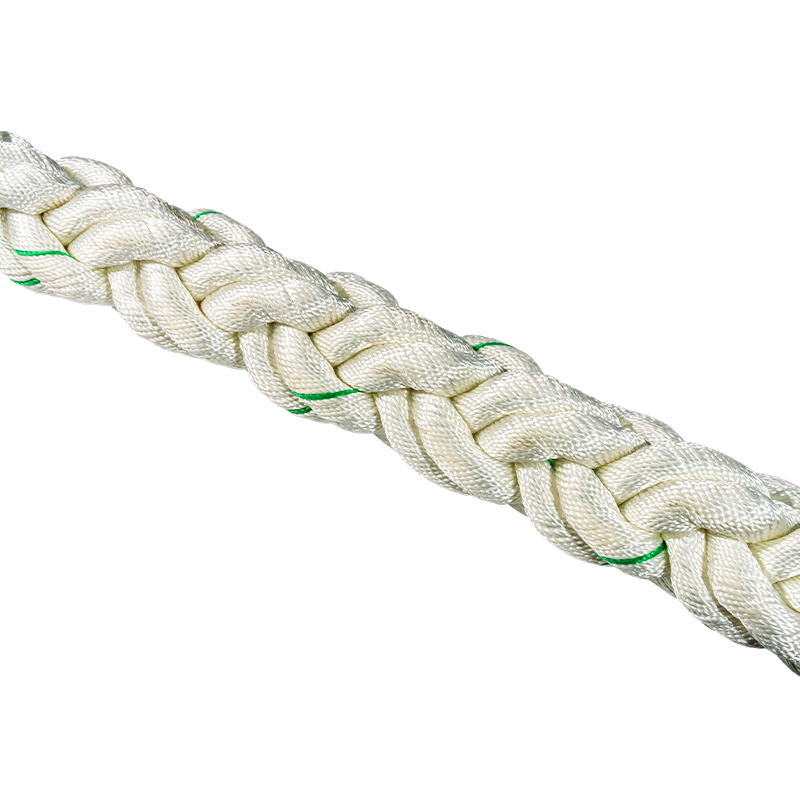
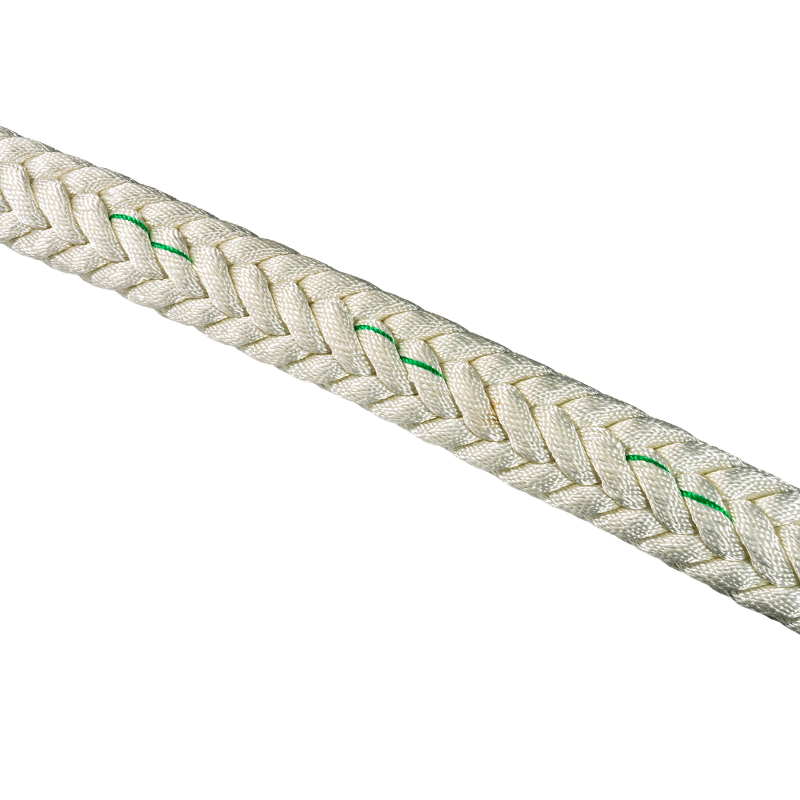
Optimized 8-strand and 12-strand nylon mooring lines in tanker terminals combine high breaking strength with the elasticity needed to manage tidal range variations without manual adjustment.
Deep-water fish farm mooring grids rely on UV-stabilized nylon ropes that maintain load geometry through current reversals while resisting biofouling chemicals used in cage maintenance.
Perhaps the most technically sophisticated marine application of nylon ropes involves their role as elastic snubbers within hybrid mooring systems. In these configurations, a high-modulus synthetic such as HMPE or polyester provides the structural backbone of the mooring line, while a short nylon pendant or tailed section acts as a dynamic compliance element.
The nylon snubber elongates under wave-induced vessel surge, decoupling peak dynamic loads from the high-modulus sections and from the anchor foundations. Engineering calculations for North Sea FPSO installations have demonstrated load reductions of 18 to 35 percent in peak mooring tension when properly sized nylon pendants are incorporated, directly translating into reduced foundation footprints and extended chain fatigue life.
"The elasticity of polyamide is not a limitation to be engineered around — it is a load management tool to be deliberately engineered into the system. The rope absorbs what the structure cannot."
In industrial lifting and rigging, high-performance nylon ropes are challenging the dominance of both steel wire and modern HMPE slings across a wider range of tasks than ever before.
Nylon rope slings and lifting legs offer a crucial advantage in precision lifting operations: their surface compliance protects finished component surfaces from marring and galvanic contamination. Aerospace component assembly, transformer handling, turbine blade installation, and nuclear reactor maintenance are all sectors where the non-conductive, non-sparking, and chemically inert properties of nylon make it the legally mandated or operationally preferred lifting medium.
Round slings constructed from continuous-loop nylon fiber bundles can achieve working load limits exceeding 50 tonnes in a vertical hitch configuration, with tested break loads providing the statutory minimum safety factors required by ISO 4878 and EN 1492-2 standards. Their flexibility allows them to conform to complex load geometries — curved pressure vessel shells, irregular structural fabrications — without creating point-contact stress concentrations.
Steel deck panel erection over rivers and gorges uses nylon tag lines for lateral control of suspended loads, where metal lines would create electrical hazard near catenary systems and mechanical hazard near workers.
Nacelle and blade installation relies on nylon tag and tail ropes to precisely orient rotating components in wind conditions where a steel equivalent would represent unacceptable injury risk to ground crews.
The growing recognition of dynamic amplification factors in lift planning has elevated nylon's role in rigging design. When a suspended load experiences an unplanned arrest — a load touching down unexpectedly, a crane brake engaging suddenly — the shock load transmitted through an inelastic rigging system can exceed static working loads by factors of three to five times.
Incorporating nylon shock-absorbing legs into synthetic or wire rope configurations limits this amplification. The rope's elongation-under-load characteristic converts kinetic energy into controlled elastic deformation, dissipating the energy over a longer time interval and dramatically reducing peak force. This principle is directly analogous to its marine mooring application and represents a unified engineering philosophy across both sectors.
Selecting the right fiber system requires understanding the performance trade-space between major synthetic options.
| Property | Nylon / Polyamide | HMPE (Dyneema) | Polyester | Aramid (Kevlar) |
|---|---|---|---|---|
| Elongation at Break | High (20-30%) | Very Low (3-4%) | Moderate (12-15%) | Low (2-4%) |
| Shock Load Absorption | Excellent | Poor | Good | Poor |
| Weight vs Steel | ~85% lighter | ~87% lighter | ~82% lighter | ~85% lighter |
| UV Resistance (bare) | Moderate | Moderate | Good | Poor |
| Chemical Resistance | Good (acids reduce) | Excellent | Very Good | Moderate |
| Creep Under Sustained Load | Moderate | Significant | Low | Very Low |
| Cost Efficiency | Low-Moderate | High | Moderate | High |
| Wet Strength Retention | 85-90% | 100% | 100% | 100% |
The comparison underscores a fundamental truth: nylon is not the highest-performing fiber in any single metric, but it occupies a unique position at the intersection of shock absorption, cost, and availability that makes it indispensable for applications where dynamic loading governs design. HMPE offers superior strength-to-weight but its near-zero elongation transmits full dynamic loads to connected hardware — a liability in shock-dominated environments.
The performance of a nylon rope in service is determined not only by fiber grade but by its constructional architecture. Modern polyamide rope engineering has produced several innovations that significantly extend the material's application range.
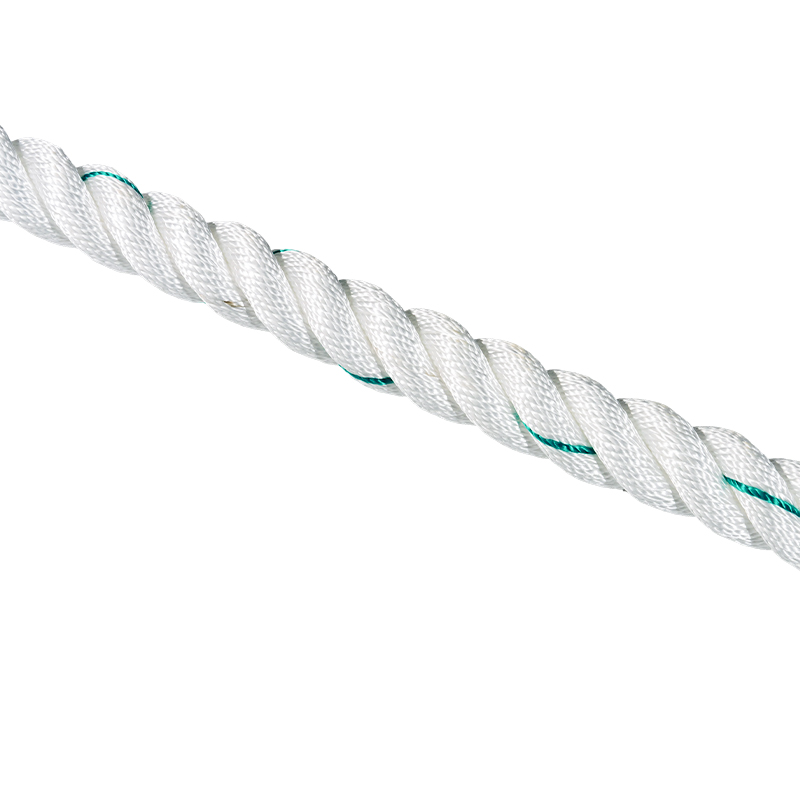
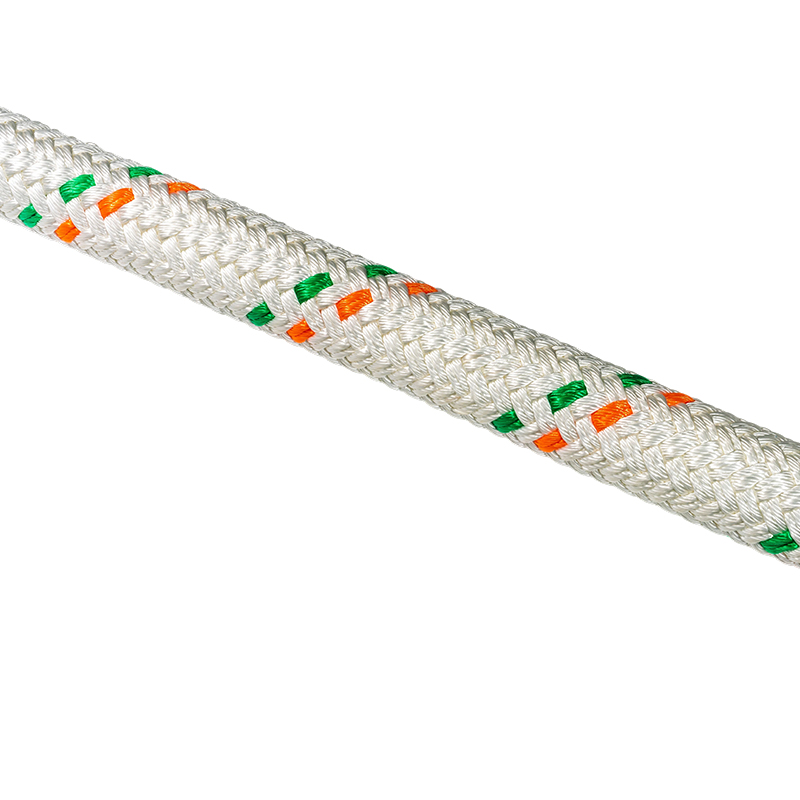
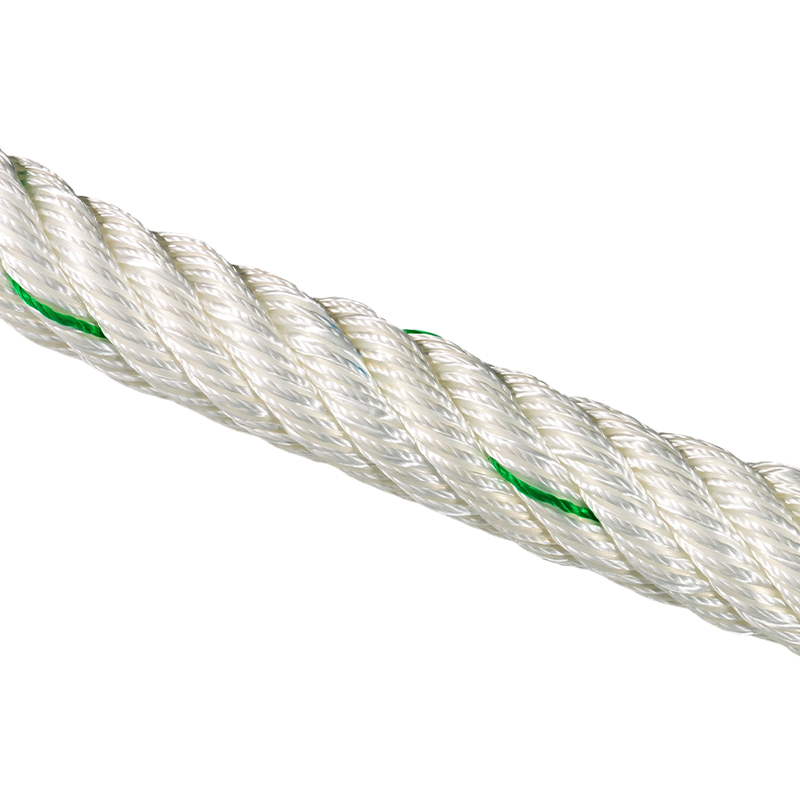
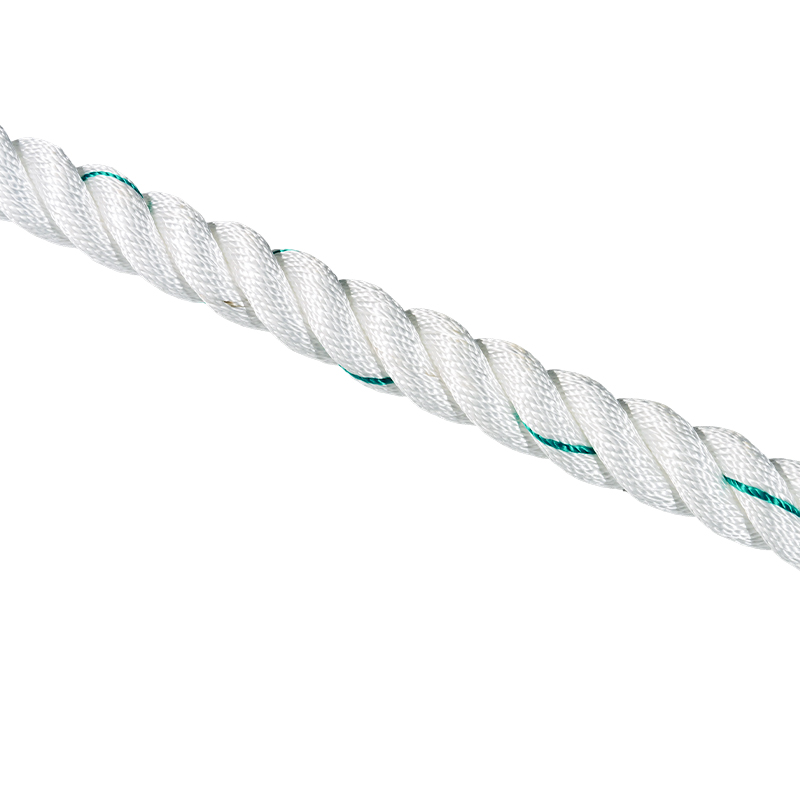
Traditional 3-strand twisted nylon rope generates torque under tension, causing rotation in suspended loads — an unacceptable characteristic in lifting. Modern 8-strand, 12-strand, and parallel core braided constructions eliminate net torque through balanced lay geometry. High-end lifting slings use a core-and-cover architecture: a parallel nylon fiber core optimized for strength and a protective polyester cover that resists abrasion and UV degradation, combining the best properties of both materials in a single product.
Composite ropes that integrate nylon sections with HMPE or polyester cores have created a new category of purpose-engineered mooring and lifting systems. The nylon component provides compliance and dynamic load management; the high-modulus component provides geometric stability and creep resistance. These hybrid systems are seeing rapid adoption in floating offshore wind foundation installation, where installation loads, operational loads, and extreme storm loads span a range that no single fiber can address optimally alone.
Emerging designs embed optical fibers or resistive sensing elements within the nylon rope's core during manufacture. These sensing elements measure distributed strain along the rope length in real time, enabling continuous structural health monitoring during offshore mooring service or heavy lift operations. Early deployments on North Sea FPSO mooring systems have demonstrated the ability to detect localized overloading events and core damage before they propagate to rope failure — a step change in risk management for life-critical lifting and mooring operations.
The broad deployment of high-performance nylon ropes in safety-critical applications has driven the development of comprehensive international standards covering design, testing, marking, and inspection.
Inspection protocols for nylon ropes must address degradation modes that differ substantially from steel wire rope failure signatures. Whereas steel wire degradation is often visually apparent through broken wires and corrosion, nylon rope degradation frequently occurs internally through UV photo-oxidation of surface fibers, core fiber fatigue from cyclical bending, and chemical hydrolysis in acidic or alkaline process environments.
The growing adoption of load-monitoring systems in lifting operations, combined with smart rope technology, is shifting inspection paradigms from time-based to condition-based management — reducing both premature retirement waste and the risk of operating compromised equipment.
The sustainability profile of synthetic fiber ropes, including polyamide, is receiving increasing scrutiny as the marine and energy industries commit to decarbonization and circular economy targets.
From a life-cycle perspective, nylon ropes offer substantial environmental advantages over steel wire rope in most offshore applications: their lighter weight reduces vessel fuel consumption during deployment and recovery, their corrosion immunity eliminates chemical treatment requirements, and their extended service life in non-abrasive applications reduces replacement frequency. A well-managed nylon mooring pendant on a production FPSO may achieve 15 or more years of service, compared to 5 to 8 years for a conventional steel wire equivalent in the same duty cycle.
End-of-life management remains the principal environmental challenge. Polyamide is technically recyclable back to monomer through chemical depolymerization, but the practical infrastructure for collecting and processing offshore rope at scale remains limited. Several major rope manufacturers and offshore operators have initiated take-back and mechanical recycling programs, repurposing retired rope fiber into nonwoven industrial materials and composite construction products. The development of bio-based polyamides from castor oil and other renewable feedstocks, with identical mechanical properties to petroleum-based PA66, also represents a credible decarbonization pathway for the fiber rope supply chain within this decade.
The trajectory of high-performance nylon rope technology is being shaped by several converging forces: the accelerating build-out of offshore wind energy, the move to deeper water in oil and gas production, the digitalization of lifting operations, and the imperative to reduce weight in all offshore operations.
Next-generation polyamide fiber development is focused on closing the elongation-strength trade-off — producing fibers with higher tenacity (approaching 8 to 10 cN/dtex) while maintaining the impact and shock absorption properties that differentiate nylon from its high-modulus competitors. Nano-reinforcement of polyamide fiber matrices using carbon nanotubes or graphene platelets is showing laboratory-scale promise in improving abrasion resistance and fatigue life without increasing rope stiffness.
The integration of nylon ropes into automated and remotely operated lifting systems — including autonomous crane operations and ROV-deployed subsea lifting tools — is driving demand for rope systems with predictable and repeatable load-extension characteristics across the full envelope of operating temperatures and sea states. This demands more rigorous characterization of nylon's viscoelastic behavior than traditional rope standards require, and is spurring investment in both material testing methodology and computational rope mechanics modeling.
High-performance nylon and polyamide ropes are entering a period of expanded technical ambition. What began as a simple, cost-effective alternative to natural fiber rope has evolved into a precision-engineered system component at the heart of the most demanding marine and industrial lifting operations on earth. Their role is growing — not because they are the strongest or the lightest fiber available, but because the combination of elastic intelligence, chemical resilience, manufacturing versatility, and proven field performance makes them uniquely suited to applications where dynamic load management determines system safety. As offshore wind capacity, deep water production, and complex industrial lifting continue to scale, so too will the engineering innovation applied to the polyamide ropes that make them possible.
Mar 12. 2026
What Are the Most Common Practical Uses for Polypropylene Rope?Core Applications of Polypropylene Rope in Marine and Water Activities In the modern rope industry, Polypropylene Rope (often referred to as “PP rope” or “floating rope”) has become an irreplaceable tool for water-based ...
Read MoreMar 12. 2026
Polyester Rope Guide: Types, Uses, Strength & Buying TipsPolyester rope is one of the most versatile and reliable cordage options available today. It outperforms nylon in UV resistance, holds its strength when wet, and stretches far less under load — making it the preferred c...
Read MoreMar 13. 2026
What is polyester rope and why is it the best choice for most applicationsWhat Is Polyester Rope? Understanding the Basics Polyester rope is one of the most widely used synthetic ropes in the world today, valued across industries for its exceptional balance of strength, durability, and resista...
Read More


 English
  русский
  Español
  عربى
عربى