2026.05.28
 Industry News
Content
Choosing between nylon and polyester rope is one of the most common questions in rigging, marine, outdoor, and industrial applications. Both are synthetic fibers that outperform natural rope in most measurable categories, yet they behave very differently under load, in water, and over time. The better rope is not the stronger one — it is the one whose properties match the demands of the specific job. This guide breaks down every meaningful difference so you can make a confident, application-specific decision.
Nylon (polyamide) and polyester are both petroleum-derived synthetic polymers, but their molecular structures give them fundamentally different mechanical and chemical characteristics. Understanding those differences at a high level makes the detailed comparisons that follow much easier to interpret.
Neither fiber is universally superior. The decision comes down to whether the application demands energy absorption or dimensional stability, and whether the operating environment is wet, sunny, or chemically aggressive.
In dry conditions, nylon is the stronger fiber. A given diameter of nylon rope will typically have a breaking strength 15–25% higher than the equivalent polyester rope. This makes nylon the preferred choice when raw tensile strength under controlled, dry conditions is the primary design criterion.
However, nylon loses approximately 10–15% of its tensile strength when saturated with water. Polyester, by contrast, retains virtually 100% of its rated strength when wet — its moisture absorption rate is less than 0.4%, compared to nylon's 3.5–8% depending on construction.
Consider a 1/2-inch (12 mm) three-strand rope of each type. A typical 1/2-inch nylon three-strand rope has a dry breaking strength of approximately 5,600–6,000 lbs. The equivalent polyester rope breaks at roughly 4,800–5,200 lbs dry — but that figure barely changes when the rope is soaked. In saltwater mooring or anchor line applications, polyester's wet-strength consistency often makes it the more reliable choice despite the lower dry-strength number.
For dry or intermittently wet applications where peak strength matters most, nylon wins. For permanently wet or marine environments, polyester's consistent wet performance frequently outweighs nylon's dry-strength advantage.
This is the most important performance difference between the two fibers, and it drives the majority of application-specific recommendations.
Nylon rope can stretch 15–25% of its length before breaking, with useful working elongation of 8–15% under normal loads. This elastic behavior makes nylon an exceptional shock absorber. When a load is suddenly applied — an anchor chain going taut in a wave, a vehicle being tow-started, a climbing fall being arrested — nylon stretches to absorb and dissipate the kinetic energy gradually, reducing peak force on both the rope and the anchor points.
This is why nylon is the standard choice for anchor lines, dock lines, tow ropes, and bungee-style shock cords. The stretch is not a weakness — it is an engineered safety mechanism.
Polyester rope stretches only 3–5% before breaking, with working elongation typically below 2–3%. This near-inelastic behavior means that polyester transmits loads almost directly to whatever it is attached to. In applications where positional accuracy matters — hoisting, sailing running rigging, flagpoles, zip lines, and fixed load-bearing lines — low stretch is a critical advantage. A halyard that stretches 15% in the wind would make a sail impossible to trim precisely; a polyester halyard holds the sail position reliably.
The tradeoff is that polyester transfers shock loads directly. If a load jerks suddenly on a polyester line, the full peak force reaches the attachment points, hardware, and structure — increasing the risk of failure at fittings, cleats, or anchor bolts.
Prolonged exposure to ultraviolet radiation degrades synthetic fibers by breaking polymer chains, reducing tensile strength and making the rope stiff, brittle, and prone to surface cracking. The two fibers respond to UV exposure very differently.
Polyester is significantly more UV-resistant than nylon. Studies on synthetic fiber degradation have shown that polyester rope retains approximately 70–80% of its tensile strength after 1,500 hours of UV exposure, while nylon rope may retain only 40–60% under the same conditions. For ropes left in continuous outdoor service — permanent anchor lines, fence lines, outdoor rigging, agricultural uses — polyester's UV resistance translates directly into longer service life and lower replacement cost.
Nylon degrades noticeably faster under direct sunlight. This does not make it unsuitable for outdoor use, but it does mean that nylon ropes in continuous UV exposure should be inspected more frequently, replaced on a shorter schedule, or covered when not in use. UV stabilizers can be added during manufacturing to improve resistance, and some premium nylon ropes include these additives — but polyester still holds the advantage for long-term UV exposure.
Water absorption affects strength, weight, handling, and the likelihood of biological fouling. This is one of the clearest performance dividing lines between the two fibers.
Nylon's amide groups are hydrophilic — they attract and hold water molecules. A saturated nylon rope can absorb 3.5% to 8% of its own weight in water depending on the braid construction and environmental conditions. This has several consequences:
Polyester absorbs less than 0.4% of its weight in water, making it essentially hydrophobic in practical terms. It dries quickly, does not swell when wet, retains its full rated strength in marine environments, and resists biological fouling better than nylon. For any application involving continuous or repeated immersion — mooring lines, anchor rodes, dock lines, lobster trap lines, or aquaculture — polyester is the more reliable and longer-lasting choice.
Both nylon and polyester offer good abrasion resistance compared to natural fiber ropes, but they differ in degree and failure mode.
Nylon has slightly better abrasion resistance than polyester in dry conditions because its higher elasticity allows individual fibers to flex and distribute friction across a larger surface area rather than concentrating stress at a single contact point. However, when nylon is wet, its surface softens somewhat, which can slightly reduce its abrasion resistance in submerged applications.
Polyester maintains consistent abrasion resistance whether wet or dry. Its harder, more dimensionally stable fibers resist cutting and surface wear reliably across changing moisture conditions. In applications involving chafe over fairleads, cleats, rocks, or rough surfaces — particularly in marine or saltwater environments — polyester tends to offer more predictable long-term abrasion performance.
In either case, abrasion protection sleeves or chafe guards should be used wherever a rope runs over a sharp edge or rough surface, regardless of fiber type.
Both fibers resist mild acids, alkalis, and many organic solvents better than natural fibers, but their resistance profiles differ in important ways.
Nylon is susceptible to degradation by strong acids and oxidizing agents. Even dilute acids can cause hydrolysis of the amide bonds in the polymer chain, leading to significant strength loss. Nylon should not be used in environments with acid exposure, bleach, or strong oxidizers. It performs well in mild alkalis and most organic solvents.
Polyester has broader chemical resistance than nylon. It is resistant to most mineral acids, bleaches, and oxidizing agents at ambient temperatures, and it resists alkalis well at moderate concentrations. For industrial applications involving occasional chemical splash or marine environments with fuel, oil, or cleaning agent exposure, polyester is the safer choice. Neither fiber is suitable for prolonged immersion in concentrated acids or strong solvents.
Both nylon and polyester have limited heat resistance compared to specialty high-performance fibers like aramid or HMPE, but they differ in melting point and behavior under frictional heat.
In practice, frictional heat from running a rope over a capstan, bollard, or through a block at speed can locally melt synthetic fibers before the ambient temperature approaches either fiber's bulk melting point. Polyester's slightly higher melting point gives it a modest advantage in high-speed or high-friction applications such as winching, rappelling, or sailing in heavy weather. Neither fiber should be used as a primary load-bearing rope in sustained high-heat environments without consulting the manufacturer's temperature ratings.
Both nylon and polyester sink in water — neither floats under normal conditions. This is an important operational consideration for applications where retrieving a submerged rope or keeping a line on the surface is necessary; in those cases, a floating rope such as polypropylene would be required instead.
Dry, nylon and polyester ropes of the same diameter and construction weigh approximately the same. When wet, nylon becomes noticeably heavier due to its water absorption, while polyester retains close to its dry weight. In large diameters — 1 inch (25 mm) or larger — a saturated nylon rope can become significantly more difficult to handle, coil, and deploy than its polyester equivalent.
For overhead rigging, block-and-tackle systems, and any application where a heavy wet rope is a handling hazard, polyester's weight consistency is a practical advantage.
Nylon rope is generally less expensive than polyester rope of equivalent diameter, construction, and strength rating. The price difference typically ranges from 10–25% lower for nylon depending on the supplier, construction type (three-strand vs. braided vs. double braid), and order volume.
However, total cost of ownership should be considered alongside purchase price. In high-UV or permanently wet environments, nylon rope may require more frequent replacement due to faster UV degradation and strength loss — potentially making polyester less expensive over the service life of the application. For short-duration, low-UV, or indoor applications, nylon's lower price point makes it the more economical choice.
The following recommendations are based on the performance characteristics described above. In each case, the recommendation assumes a standard synthetic rope is required and that specialty high-performance fibers (HMPE, aramid, LCP) are outside the scope.
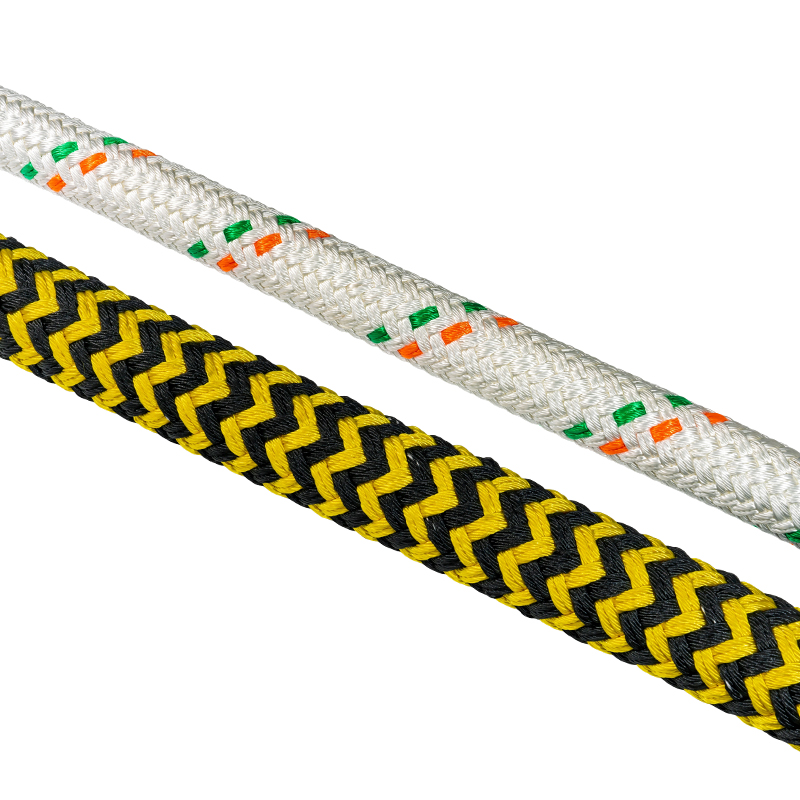
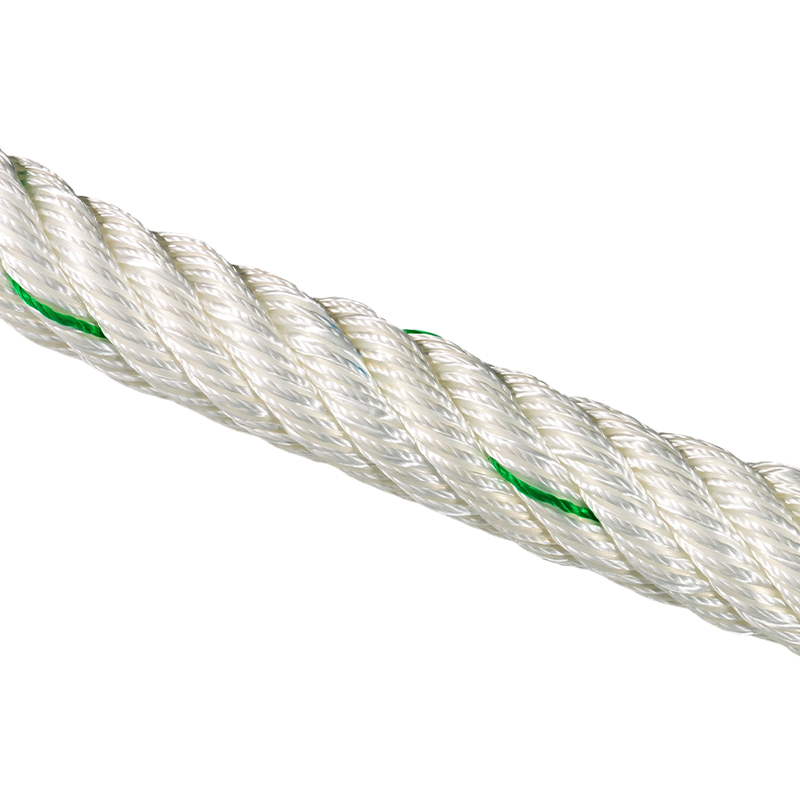
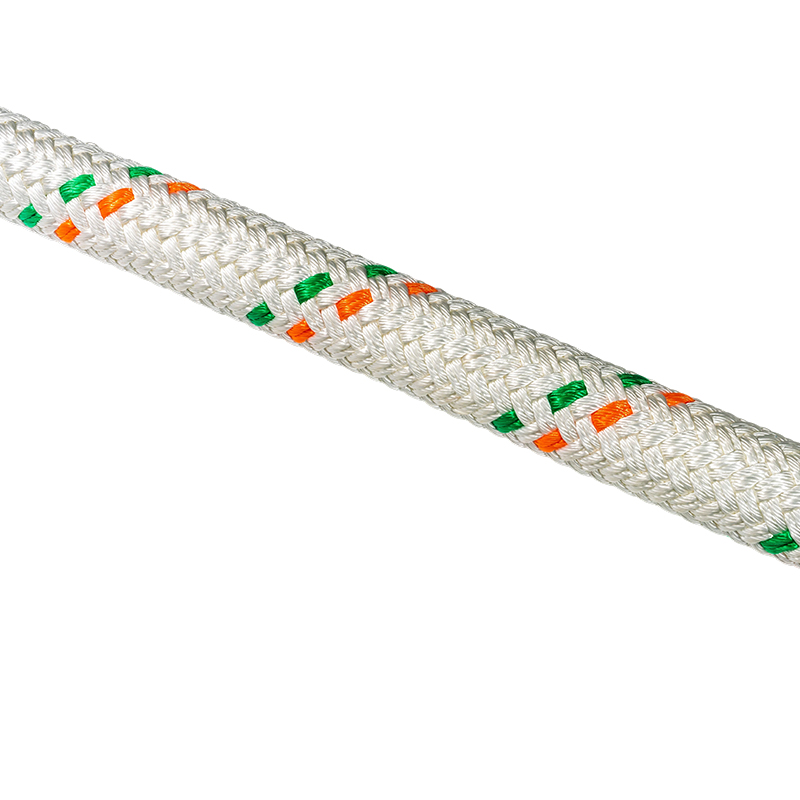
Both nylon and polyester are available in three-strand twisted, single-braid, and double-braid constructions. The construction type affects handling, stretch, abrasion resistance, and ease of splicing independently of fiber type.
When comparing ropes, always compare the same construction type across fiber types — a nylon double braid and a polyester three-strand will have significantly different characteristics that are partly attributable to construction, not just fiber.
Proper care extends the service life of both fiber types and maintains safety margins. The inspection and care practices are similar, with a few fiber-specific notes.
The answer depends entirely on the application. There is no universal winner between these two excellent synthetic fibers. The table below summarizes the key decision factors:
Both fibers are safe, strong, and reliable when used within their design parameters and maintained properly. The best rope is always the one specified for the job — and now you have the information to make that specification with confidence.
Mar 12. 2026
What Are the Most Common Practical Uses for Polypropylene Rope?Core Applications of Polypropylene Rope in Marine and Water Activities In the modern rope industry, Polypropylene Rope (often referred to as “PP rope” or “floating rope”) has become an irreplaceable tool for water-based ...
Read MoreMar 12. 2026
Polyester Rope Guide: Types, Uses, Strength & Buying TipsPolyester rope is one of the most versatile and reliable cordage options available today. It outperforms nylon in UV resistance, holds its strength when wet, and stretches far less under load — making it the preferred c...
Read MoreMar 13. 2026
What is polyester rope and why is it the best choice for most applicationsWhat Is Polyester Rope? Understanding the Basics Polyester rope is one of the most widely used synthetic ropes in the world today, valued across industries for its exceptional balance of strength, durability, and resista...
Read More


 English
  русский
  Español
  عربى
عربى