2026.10.09
 Industry News
Content
Few questions come up as often in our conversations with shipyards, ports and industrial buyers as nylon versus polypropylene. Both are chemical fibre ropes, both are affordable, and both come off the same braiding and twisting machines. Yet they behave very differently once they are wet, loaded and left out in the sun. What follows is the practical version of the answer we give on the phone, drawn from two decades of making rope in Baoying.
Two sentences cover most cases:
If the line has to stretch and recover — mooring, towing, anchor warps — nylon usually wins. If the line has to float, stay light and stay affordable, polypropylene is hard to beat.
Nylon is a polyamide, which is why the same material often appears in our catalogue as nylon/polyamide rope. The polymer chains are linked by amide bonds, giving a fibre with high tensile strength and excellent elastic recovery. It does absorb a little water — roughly 4% of its own weight when fully soaked — and wet nylon loses around 10 to 15% of its dry strength. In return you get a rope that stretches under a snatch load and then returns to length instead of delivering the whole shock to a bollard or a cleat.
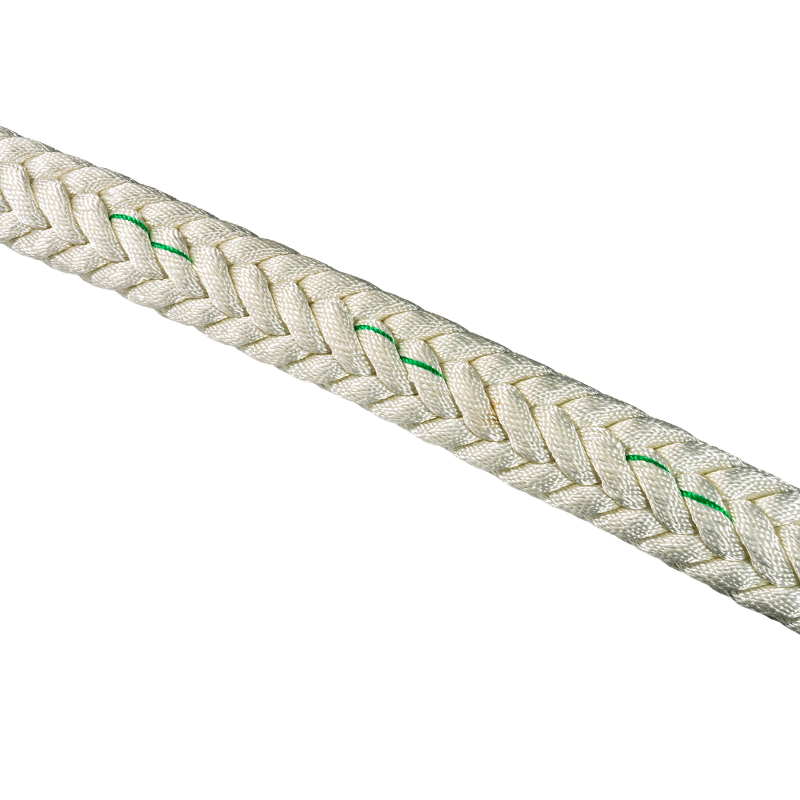
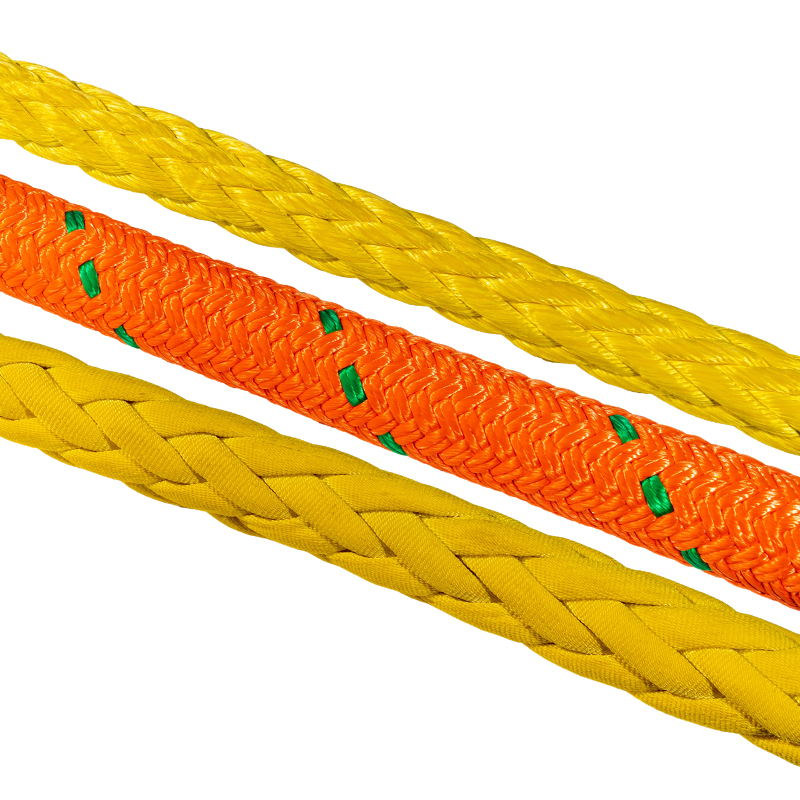 Wholesale 12-Strand Nylon/Polyamide Rope for High-Load Marine UseA 12-strand nylon/polyamide rope with high tensile strength, elasticity, and wet strength retention for ship mooring, port handling, and offshore operations.View Product →
Polypropylene is a polyolefin with a specific gravity of about 0.91, so it is lighter than water and floats naturally. Moisture absorption is effectively nil, which means the rope stays light on deck and does not stiffen after a wet night. PP is softer and less abrasion-resistant than nylon, and its melting point is low enough that friction over a sharp edge or a fast winch can glaze the surface.
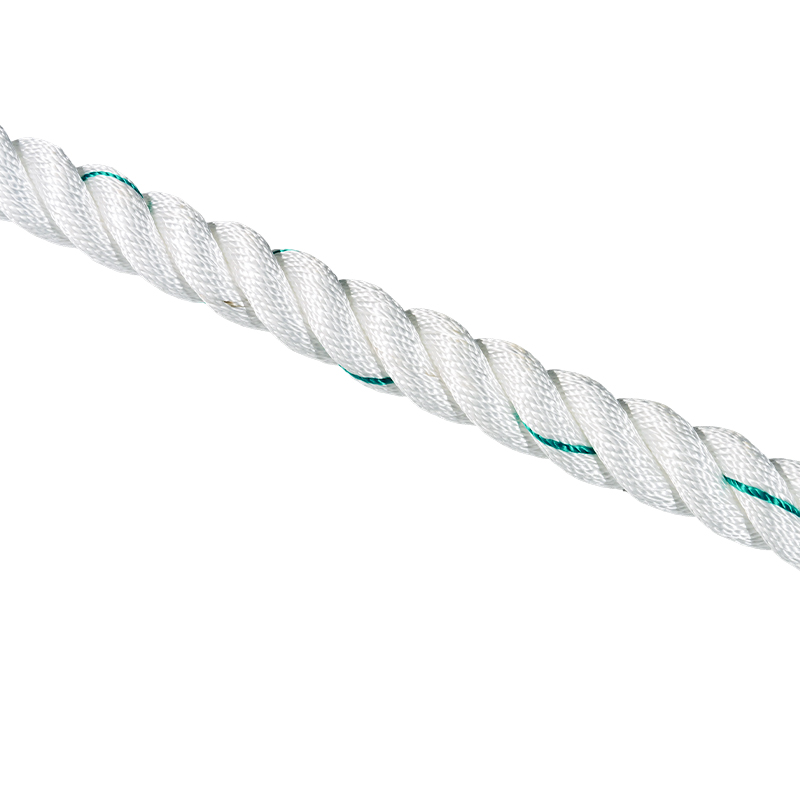
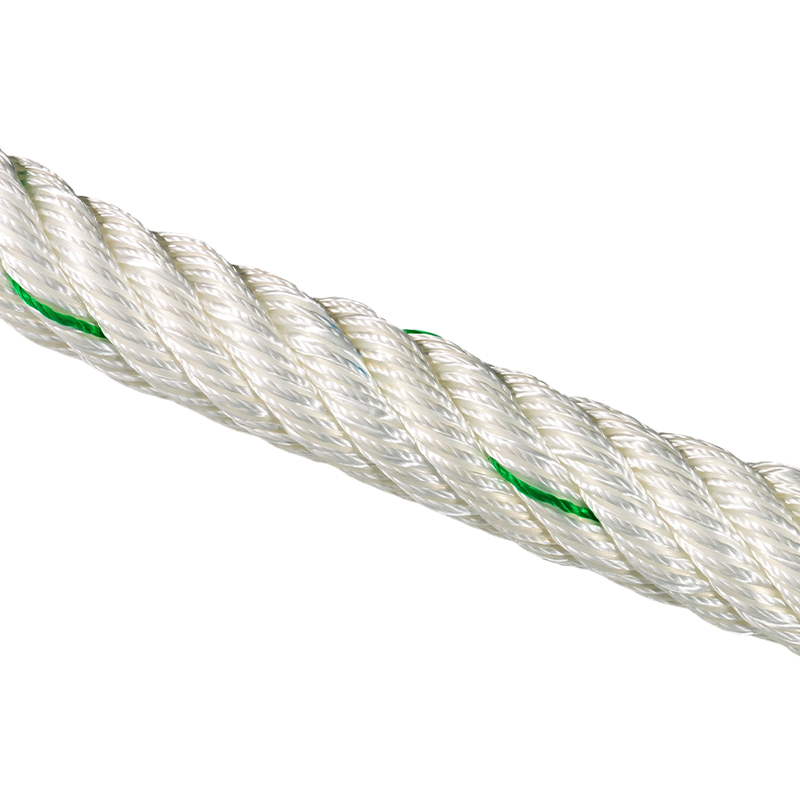
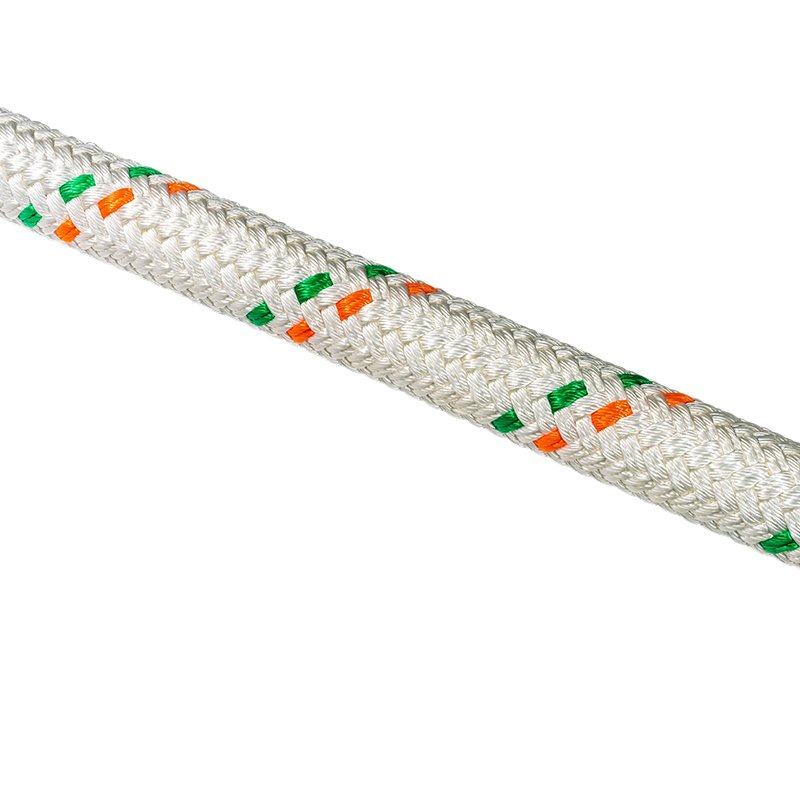 Wholesale 3-Strand Polypropylene Rope for Marine and Utility UseA floating 3-strand polypropylene rope that stays light on deck and suits marine, fishing, harbor, and utility applications.View Product →
The table below summarises the differences that matter most when you are choosing between the two materials.
| Property | Nylon (Polyamide) | Polypropylene (PP) |
|---|---|---|
| Specific gravity | About 1.14, sinks | About 0.91, floats |
| Tensile strength | High | Moderate |
| Strength when wet | Falls roughly 10-15% | Essentially unchanged |
| Elongation at break | High, with strong recovery | Lower and stiffer in feel |
| Shock load absorption | Excellent | Limited |
| Water absorption | Up to about 4% by weight | Below 0.1% |
| UV resistance | Good | Fair, needs stabilisers |
| Abrasion resistance | Excellent | Moderate |
| Melting point | Roughly 215-250 C | Roughly 160-170 C |
| Relative cost | Higher | Lower |
Nylon's reputation comes mostly from its stretch. Under a sudden load it elongates and then recovers, which is exactly what you want on a mooring line working in a swell or a tow line crossing choppy water. That same elasticity is why nylon is a poor choice for static duties: a permanently taut nylon line will creep and saw against a fairlead over time.
Polypropylene is often described as a no-stretch rope, which is not quite accurate. It does elongate, typically in the region of 15% at break, but it recovers less and feels noticeably stiffer. Its advantage is that a given diameter holds a steadier length under a steady load, which suits jobs where you do not want the line paying out and springing back. If you need breaking load figures and safety factors for PP in more detail, our note on polypropylene rope strength and safety factors works through the numbers.
Water. PP floats and takes on no measurable water; nylon sinks and absorbs a little, losing some strength while saturated. Neither material rots, because both are synthetics, but a nylon line stored wet for months may grow surface mildew, which is cosmetic rather than structural.
Sunlight. This is where PP needs help. Unstabilised polypropylene degrades quickly under UV, turning brittle and chalky. Good rope-grade PP is UV-stabilised, and even then we suggest retiring PP lines sooner than nylon ones in permanent outdoor exposure. Nylon resists UV noticeably better.
Chemicals and heat. PP stands up well to acids, alkalis and most solvents. Nylon copes with alkalis but is attacked by strong acids and phenols. PP also melts at roughly 160-170 C, well below nylon's 215-250 C, so heat and friction are the limiting factors in high-speed winch work.
Polypropylene is the more economical fibre, usually costing noticeably less per metre at the same diameter, and it is lighter — a genuine advantage when one person has to haul a long line by hand. Because it floats, it is also easy to recover and easy to spot on the water.
Nylon is denser and heavier, and it sinks, so it stays below the surface and out of the way of propellers and keels. It also handles abrasion better over bollards, chocks and fairleads, which extends service life in demanding berthing work. Both splice cleanly in three-strand construction; double-braided versions hold their shape well but need more experience to splice properly.
Over the years, the same pairing keeps coming up:
If you would rather see the materials in context than read about them, our applications and cases pages show how these ropes are actually deployed in marine and port work.
Polyester sits between the two: low stretch, good UV resistance and better strength retention than PP, at a mid-range price. Blending polyester with polypropylene gives a rope that still floats while carrying more load than pure PP, which is popular for fishing and utility work. And if strength-to-weight matters more than cost, UHMWPE outperforms both by a wide margin.
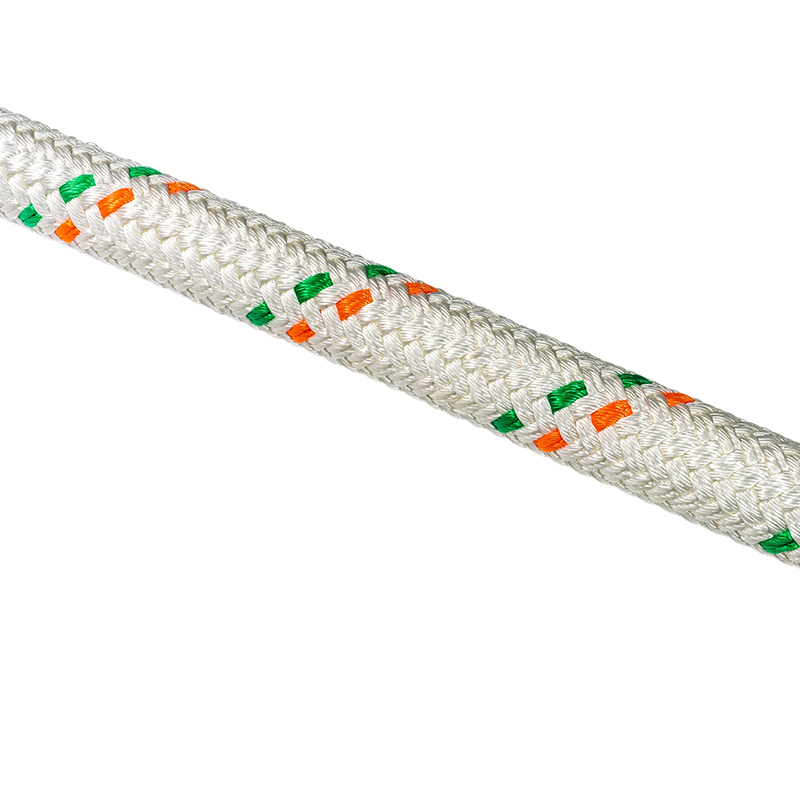
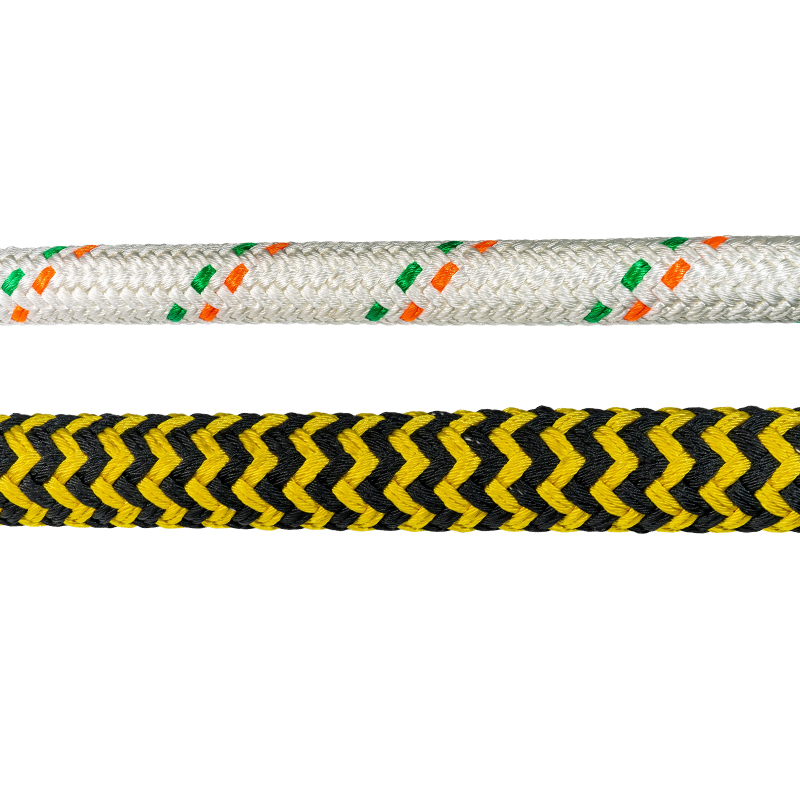 Heavy-Duty 12-Strand Polyester/Polypropylene Mixed RopeA 12-strand polyester/polypropylene blend rope that floats while carrying more load than pure PP, suited to fishing, offshore, and industrial work.View Product →
On the production side we work with diameters from 6 mm to 160 mm and structures from 3-strand through 8-strand and 12-strand to double braid, so the material question is usually settled by six practical factors: working load, acceptable stretch, whether the line must float, UV exposure, abrasion, and how long the rope has to last before replacement. Our plant runs the full process in-house, from fibre to finished rope, under an ISO 9001 quality system with CCS, BV and LR class certificates behind the marine grades.
Custom work is normal rather than exceptional for us. Customers regularly ask for a specific diameter, a particular colour, a spliced eye or a length that ships as one piece, and those requests are handled case by case instead of being pushed into a standard list.
Nylon versus polypropylene is not a contest with one winner. Nylon earns its higher price wherever load, shock and abrasion are the real constraints. Polypropylene earns its place wherever flotation, light weight and budget decide the specification. Choose by the job the rope has to do, not by the label on the reel, and either material will serve you well.
If you are still weighing the two, tell us the application, the diameter and the working load, and we will point you to the construction that fits — and tell you honestly if the cheaper option is the right one.
Mar 12. 2026
What Are the Most Common Practical Uses for Polypropylene Rope?Core Applications of Polypropylene Rope in Marine and Water Activities In the modern rope industry, Polypropylene Rope (often referred to as “PP rope” or “floating rope”) has become an irreplaceable tool for water-based ...
Read MoreMar 12. 2026
Polyester Rope Guide: Types, Uses, Strength & Buying TipsPolyester rope is one of the most versatile and reliable cordage options available today. It outperforms nylon in UV resistance, holds its strength when wet, and stretches far less under load — making it the preferred c...
Read MoreMar 13. 2026
What is polyester rope and why is it the best choice for most applicationsWhat Is Polyester Rope? Understanding the Basics Polyester rope is one of the most widely used synthetic ropes in the world today, valued across industries for its exceptional balance of strength, durability, and resista...
Read More


 English
  русский
  Español
  عربى
عربى